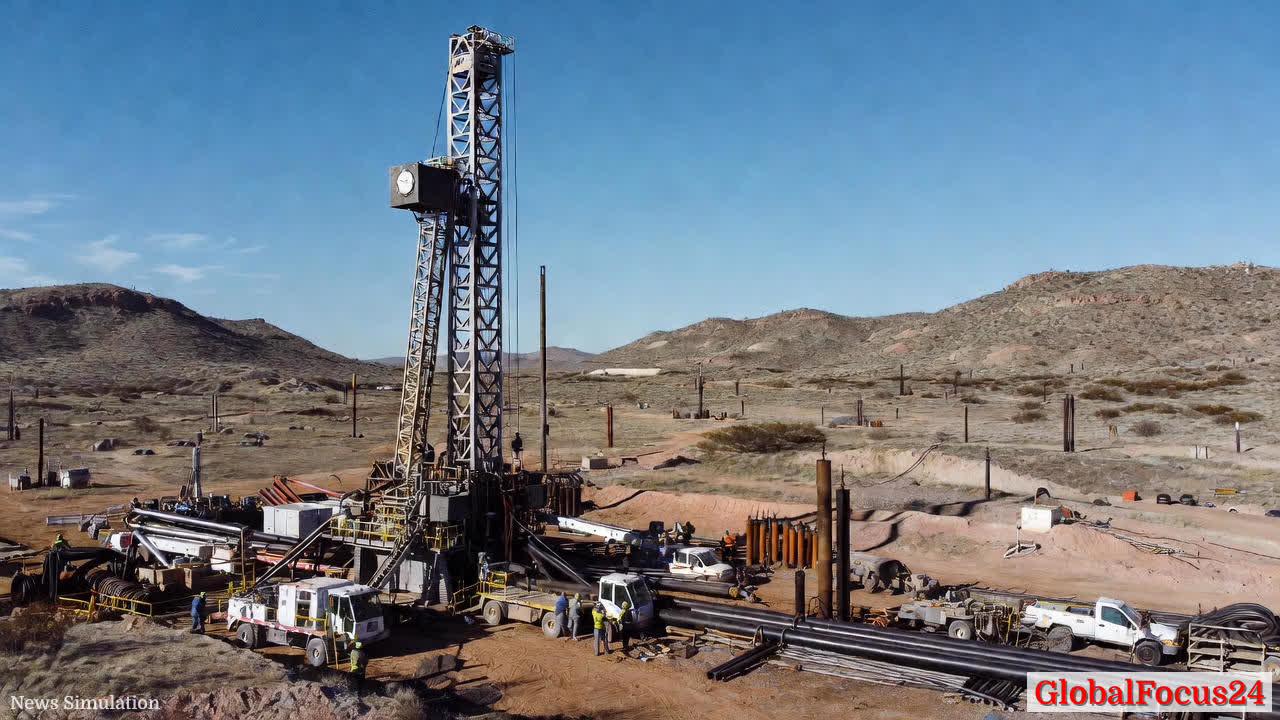
Shale Surge, Strained Basins: The Permian’s Boom Under Pressure
The Permian Basin, long known as a furnace of shale oil and gas, has become a barometer of the global energy market. Over the past decade, the convergence of advanced drilling technology, patient capital, and favorable geology transformed West Texas and southeastern New Mexico into the world’s leading oil-producing region. Today, as production booms continue, industry observers warn of mounting strain—from infrastructure bottlenecks to environmental safeguards—reminding markets that rapid expansion can outpace the systems designed to sustain it.
Historical context: from pioneering wells to a global linchpin
The Permian’s ascent began in earnest in the early 2010s when horizontal drilling and hydraulic fracturing unlocked vast hydrocarbon resources previously considered uneconomical. Operators tapped multiple plays within the basin, notably the Delaware and Midland sub-basins, creating a prolific tapestry of oil-rich formations. This multi-layered geology allowed a tempo of production that distinctively outpaced other shale regions. The Permian’s emergence coincided with a broader shift in United States energy dynamics: a move away from dependence on imported oil toward a robust, self-sufficient supply chain supported by domestic upstream activity.
As output surged, the Permian became more than a regional asset; it evolved into a strategic cornerstone of global energy markets. The region’s output helped reshape price dynamics by expanding supply during periods of volatility and supply chain disruption elsewhere. Markets learned to monitor not only OPEC decisions or geopolitical events but also the Permian’s monthly cadence of well completions, rig counts, and pipeline capacity expansions. The basin’s resilience—and its vulnerabilities—have since informed policy debates, corporate risk assessments, and the long-term planning of refiners, downstream manufacturers, and energy traders worldwide.
Current production landscape: scale, distribution, and operational pressures
Today, the Permian Basin produces a substantial share of United States crude oil and associated liquids, with operators continuing to drill new wells and bring production online at a brisk pace. The region’s capital-intensive model relies on a dense, interconnected network of gathering systems, pipelines, processing facilities, and export routes. The speed of expansion, however, has strained several critical arteries:
- Infrastructure bottlenecks. Pipelines, rail facilities, and loading terminals have faced congestion as volumes rise. Tank storage capacity in some corridors has lagged behind the pace of new production, creating bottlenecks that can affect pricing, reliability, and logistical costs for producers and refiners alike.
- Midstream constraints. Gathering lines and processing plants must scale in tandem with well completions. When throughput hits capacity, operators may need to curtail new drilling or initiate more aggressive permitting and construction timelines for infrastructure projects, often under tight regulatory and environmental scrutiny.
- Environmental and community considerations. The rapid expansion has heightened attention on water management, methane emissions, and surface land use. Operators increasingly deploy advanced monitoring and control technologies, adopt best-practice flare management, and pursue water recycling initiatives to mitigate environmental impacts while sustaining productivity.
- Operational efficiency and innovation. In response to evolving economics, producers continuously refine drilling schedules, well spacing, and completion designs. The industry’s embrace of integrated project planning, digital twins, and real-time data analytics aims to optimize returns while containing costs and risk.
Economic impact: regional prosperity vs. systemic risk
The Permian’s economic influence radiates beyond upstream activity. Employment in associated sectors—manufacturing, logistics, and services—has grown in tandem with drilling activity. Local tax receipts, royalties, and leasing revenues provide critical funding for public services and infrastructure at the county and municipal levels. The region’s economic vitality often serves as a domestically oriented counterweight to external price shocks and supply disruptions.
Yet, the same dynamics that drive prosperity can sow fragility. A sustained period of overproduction, if not matched by commensurate infrastructure investments, can dampen marginal returns for producers and potentially lead to capital discipline. Fluctuations in crude prices, transportation costs, and regulatory expectations can reverberate through the basin’s economy, influencing hiring, project timelines, and regional development plans. The result is a delicate balance: maximizing near-term output while ensuring long-term sustainability for communities and ecosystems.
Regional comparisons: how the Permian stacks up against peers
When compared with other leading shale plays and mature oil-producing regions, the Permian’s scale and pace stand out:
- Compared to the Bakken and Eagle Ford, the Permian’s cumulative production and inventory of drill-ready locations generally outstrip these regions, enabling a more aggressive optimization of economies of scale. However, the resultant strain on midstream infrastructure is more pronounced due to the basin’s sprawling geography and the concentration of activity along key corridors.
- In contrast to offshore environments, the Permian operates under different risk profiles. Onshore development affords more rapid well placement and cost control, but it also imposes higher exposure to surface land use, local permitting dynamics, and environmental oversight.
- Relative to global superfields in other regions, the Permian’s sensitivity to oil price remains acute. When prices rise, investment accelerates; when prices retreat, capital discipline can slow activity, impacting supply and the broader market’s balance of expectations.
Infrastructure strategy: what’s needed to sustain momentum
Sustaining the Permian’s momentum requires an integrated approach that aligns upstream ambition with midstream capacity and regional governance. Key elements include:
- Pipeline and logistics expansion. Strategic investments in new pipelines and reverse-flow capabilities can alleviate bottlenecks and reduce transport times. Expanding rail unloading and loading facilities further diversifies exit routes, enhancing resilience to single-point failures.
- Storage optimization. Enhanced crude and condensate storage capacity near critical hubs can smooth out seasonal and price-driven fluctuations in supply, enabling operators to time sales and reduce cost volatility.
- Water and waste management. Advanced water handling, recycling, and disposal solutions are essential for maintaining efficient fracking operations while minimizing environmental impact. Collaborative water sourcing with regional communities can improve public acceptance and regulatory alignment.
- Emissions management. Capturing and reducing methane emissions, monitoring fugitive emissions, and investing in flare reduction technologies contribute to a cleaner operational profile, supporting social license to operate and potential access to capital.
Public reaction and policy environment
Communities within the Permian corridor generally recognize the economic benefits of drilling activity, while also expressing concern about traffic, noise, and environmental stewardship. Local governments increasingly enforce stricter permitting criteria, environmental impact assessments, and land-use planning to ensure development aligns with community priorities. Federal and state agencies continue to monitor air quality, groundwater integrity, and emission standards, reinforcing the need for vigilant compliance and transparent reporting.
Looking ahead: scenarios for supply, demand, and price
Forecasts for the Permian are inseparable from the global energy matrix. A sustained production plateau in the basin could help balance markets by moderating price volatility and providing a steady flow of supply to refiners and consumers. Conversely, if infrastructure constraints intensify or regulatory constraints tighten, upside risks to costs could emerge, potentially slowing new well completions and altering capital allocation decisions across the upstream sector.
The interplay between OPEC+ policies, global demand recovery, and alternate energy trajectories will continue to shape the Permian’s trajectory. As energy consumers worldwide recalibrate their energy mix—with a continued emphasis on reliability, affordability, and emissions considerations—the Permian’s role as a premier energy hub will likely endure, even as the region navigates the complexities of rapid expansion.
Regional comparisons in resilience and adaptation
Within the United States, the Permian Basin compares favorably in resilience to other oil-rich basins due to its diversified geological plays and proximity to major refining markets. However, the region’s vulnerabilities—such as weather-related disruptions, infrastructure gaps, and the exposure of aging assets to high-volume operations—mean that ongoing investment in maintenance and modernization is essential. Markets that monitor the Permian frequently watch weather patterns, pipeline integrity data, and cross-border logistics developments to gauge potential near-term disruptions or opportunities.
Environmental considerations and sustainability measures
Industry leaders in the Permian have increasingly incorporated sustainability benchmarks into project planning. Emission monitoring and methane reduction targets, improved water stewardship, and habitat protection measures are now integrated into many development plans. The alignment of environmental diligence with economic goals helps mitigate reputational risk and supports long-term access to capital from investors who prioritize environmental, social, and governance criteria.
Public-facing narratives emphasize both the economic benefits of job creation and the importance of responsible resource management. Transparent reporting on environmental metrics, community impact, and safety performance remains a priority as operators balance growth with stewardship.
Conclusion: a basin at a crossroads of growth and prudence
The Permian Basin’s rise as a global energy force is a testament to innovation, capital, and the enduring value of domestic energy resources. As shale drillers push deeper into productive zones and technology refines efficiency, the region’s output continues to influence energy markets around the world. Yet the current moment also serves as a reminder that rapid expansion carries costs—of infrastructure strain, environmental considerations, and community impact—that must be addressed through coordinated planning, prudent investment, and steadfast regulatory alignment.
In the near term, the Permian’s fate rests on the industry’s ability to scale midstream capacity in step with upstream ambitions. If the region can marry production growth with reliable logistics, robust storage, and strong environmental safeguards, it can sustain its pivotal role in meeting global demand while supporting the communities that provide the backbone of its workforce.
Public sentiment will likely continue to ebb and flow with the price of oil, pipeline news, and the progress of local projects. Yet the overarching trajectory remains clear: the Permian Basin is a cornerstone of energy resilience, and its continued health depends on disciplined, coordinated action across the energy value chain.