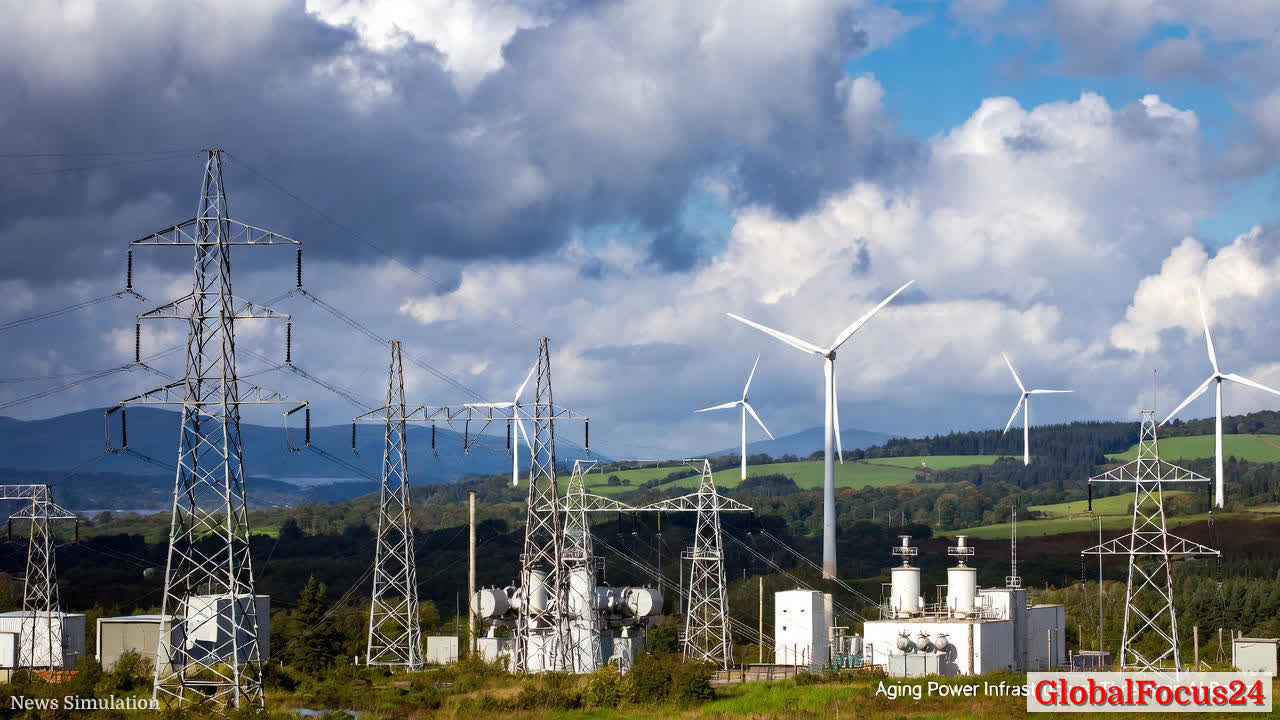
Britain’s Grid Gamble: Green Ambitions Clashing with Aging Electricity Networks
The United Kingdom has long positioned itself at the forefront of the global transition to clean energy, pouring money, policy support, and public enthusiasm into wind and solar installations. Yet as the country rides a wave of renewable capacity, its aging electricity grid stands as a stubborn bottleneck. The mismatch between rapid decarbonization and a transmission system rooted in mid-20th-century design is reshaping risk, economics, and public expectations for energy reliability and affordability.
Historical context: from coal-era guts to a renewable horizon Britain’s power network traces its origins to a sprawling fleet of coal-fired generators and a labyrinth of regional connectors built in the late 19th and early 20th centuries. The transformation accelerated mid-century with centralized generation and long-distance transmission. But the real structural overhaul began in earnest only gradually. In recent decades, policy prompts and investment focused on building more wind and solar farms, particularly in Scotland and the North of England, under the assumption that the grid would evolve in step.
That assumption proved optimistic. The grid largely avoided a comprehensive modernization during decades of comparatively stable demand and centralized generation. The result is a system optimized for a different energy age, one in which power could be measured in predictable, controllable increments, not the variable surges and remote injections created by high-renewables scenarios. The coal plants that once served as reliable peaking assets now exit the stage, and the remaining generation mix relies more on weather and storage than on predictable baseload. The mismatch has become increasingly evident as the nation accelerates toward a data-driven future powered by digital infrastructures and AI workloads that demand high reliability around the clock.
Economic impact: costs, volatility, and the price of progress The economic logic of upgrading the grid is straightforward: long-term savings from reduced curtailment of renewables, lower wholesale prices through better balancing, and the capacity to attract investment in advanced technologies and jobs. The National Grid and its partners have earmarked roughly $40 billion for upgrades over the next five years under a program branded as a sweeping modernization push. The objective is not merely to maintain supply but to unlock the full value of green generation by connecting distant wind farms to dense urban demand centers and by enabling rapid deployment of storage and flexible demand resources.
However, the path to enhanced reliability is costly and contentious. The modernization requires a suite of new transmission lines and pylons, many stretching across rural landscapes with tight planning and public consultation processes. Local opposition is common, with concerns ranging from visual aesthetics and wildlife impacts to noise and hedgerow disruption. In some cases, the project design includes measures like bat habitats and noise barriers, reflecting a broader commitment to environmental stewardship even as the grid expands.
Consumers are bearing a portion of these development costs. Households in Britain already face some of the highest electricity prices among developed economies, with annual bills reflecting the compounded effects of persistent structural bottlenecks and wholesale market dynamics. The friction between the need for large-scale infrastructure and the immediacy of retail price pressures creates a delicate political and social balance for policymakers and utility operators.
Regional comparisons: where Britain fits in the global grid race
- United States: Several regions face aging transmission lines that constrain new energy projects and the integration of large-scale renewables. Upgrades there also balance reliability with environmental and community concerns, underscoring the universal difficulty of modernizing legacy grids in the face of rapid energy transitions.
- Europe: The continent has grappled with significant grid stress, including notable blackout events and cross-border transmission challenges. The urgency to harmonize interconnections and accelerate interregional projects has intensified as member states push renewables while meeting strict reliability standards.
- China: The country’s investment in ultrahigh-voltage transmission networks stands out as a strategic advantage in managing long-distance power flows, enabling centralized renewable resources to supply dense urban and industrial regions efficiently. China’s experience demonstrates how high-capacity lines can improve grid resilience and support AI-driven sectors that require dependable power.
Regional lessons emphasize a common theme: grid modernization is not merely about adding capacity; it is about evolving the network’s topology, control systems, and governance to handle the new energy paradigm. Britain’s approach, which includes overhauling the queue-based connection system and prioritizing projects aligned with national goals, reflects a bold shift toward performance-driven project selection. This shift aims to shorten construction timelines and reduce the bottlenecks that have historically delayed important infrastructure.
Operational challenges: the practical realities of upgrading
- Transmission distances and topology: Wind resources are plentiful in Scotland and the North, while demand centers lie in the south and east. The geographic mismatch requires long, high-capacity lines that can carry power across challenging terrain. Building these lines involves complex routing, land rights, and environmental clearances.
- Permitting and public engagement: The statutory and social processes for approving new lines can stretch across many years. The operator has signaled an ambition to cut the timeline in half through policy reform, but the underlying realities of consent and consultation remain the principal constraints to rapid deployment.
- Reliability and intermittency: Solar and wind outputs are weather-dependent, while demand patterns follow complex daily and seasonal rhythms. The grid must balance these fluctuations, a task that becomes easier with storage, demand response, and digital grid management—and harder when transmission capacity lags behind generation capacity.
- Curtailment costs: When transmission constraints prevent export to demand centers, generators may be paid to curtail output to maintain system stability. The recent figure of billions in compensations underscores the financial and operational strains created by an underperforming grid.
Public response and social implications The grid expansion is a national priority, but it is not universally welcomed. Residents and local communities often raise concerns about landscape impact, wildlife corridors, and the potential for new pylons to alter the character of cherished rural areas. Environmental safeguards, including the creation of bat habitats and noise-reducing measures, are part of the mitigation package, highlighting the broader balancing act between energy security, environmental stewardship, and local rights.
Meanwhile, the push for greener energy is inseparable from broader economic and employment prospects. A robust grid is essential to attract investment in high-tech manufacturing, data centers, and AI-related industries that rely on reliable, affordable electricity. The AI surge, in particular, is catalyzing a demand for resilient infrastructure, as data centers and associated services require steady power to maintain performance and prevent disruptions that can ripple through sectors ranging from finance to healthcare to telecommunications.
Technological and strategic implications The Great Grid Upgrade represents more than a maintenance project; it signals a strategic pivot toward a transmission backbone capable of supporting a digital economy that depends on near-zero downtime and rapid power delivery. This is a shift from a purely supply-side emphasis—more wind, more solar—to a demand-side and system-wide emphasis that prioritizes connectivity, storage, and real-time grid management.
The modernization also intersects with the evolving market design. As storage technologies mature and demand-side participation grows, the grid can better respond to variability and reduce peak stress. The integration of battery storage, pumped hydro, and other technologies will be critical to smoothing supply and enabling higher renewable penetration without sacrificing reliability. The country’s ability to synchronize renewable output with consumption will hinge on a combination of transmission investments, smart grid controls, and policy incentives that align generation with real-time demand.
Strategic outlook: what to watch next
- Timeline and policy reforms: Government and industry stakeholders are pursuing policy changes aimed at accelerating project approvals and reducing bureaucratic delays. The effectiveness of these reforms will shape the pace of grid modernization and the project backlog.
- Economic signals: The balance between upfront capital expenditures, ongoing maintenance costs, and consumer energy prices will influence the pace and scale of grid upgrades. Market participants will watch wholesale prices, curtailment expenses, and investment inflows for grid-related technologies.
- Regional energy flows: The expansion of interconnections between Scotland, the North, and the Southeast will be a bellwether for how effectively the grid can move green energy from generation hotspots to consumption centers. Improved cross-regional transmission could reduce price volatility and support broader energy security.
- Environmental safeguards: Ongoing attention to wildlife impacts and community consent processes will continue to shape project designs. Successful mitigation strategies can set benchmarks for future infrastructure projects across Europe and beyond.
Conclusion: a pivotal moment for Britain’s energy future Britain’s renewable leadership is notable for its ambition and scale, yet the path to a fully modernized grid is neither simple nor immediate. The Great Grid Upgrade embodies a critical investment in the country’s ability to capitalize on its clean energy assets, reduce residential electricity costs over time, and position the United Kingdom as a competitive hub for AI and digital industries. The stakes are high: without a more capable transmission network, the benefits of wind and solar could be muted, undermining progress toward a low-carbon economy and the broader economic vitality of regions that stand to gain the most from a resilient, affordable, and reliable power system.
As planners and policymakers navigate this complex transition, the public’s role remains central. Transparent communication about timelines, expected impacts, and mitigations will be essential to sustaining support for projects that promise long-term gains even as they pose short-term inconveniences. The coming years will reveal whether Britain can harmonize its renewable expansion with a grid capable of delivering on the promise of a cleaner, more prosperous energy future.