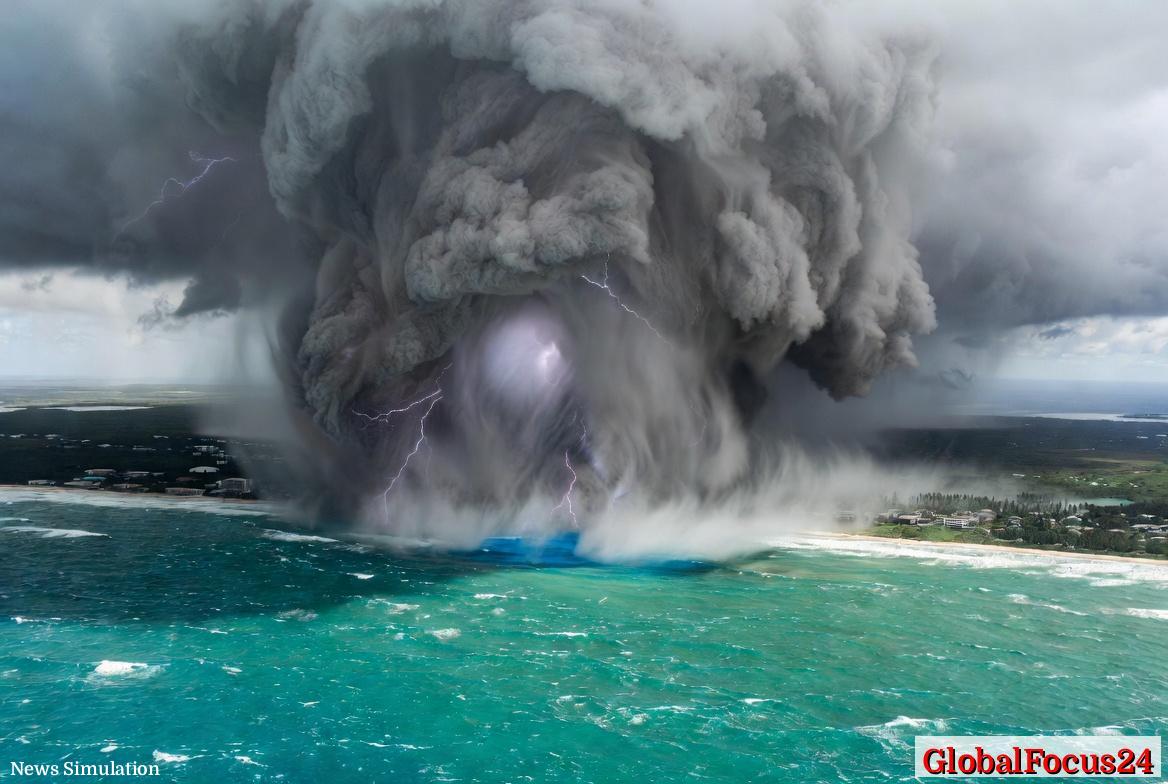
Marine Heatwaves Nearly Double Economic Damage from Tropical Cyclones
Intensifying Storms over Scorching Seas
Tropical cyclones are wreaking unprecedented havoc as ocean temperatures climb. New research reveals that storms undergoing rapid intensification while passing over marine heatwaves cause nearly twice as much economic damage as similar cyclones that strengthen without those warm ocean conditions. Between 1981 and 2023, nearly 800 land-falling tropical cyclones were analyzed, showing that those fueled by marine heatwaves sustained higher wind speeds, dumped heavier rainfall, and triggered more destructive flooding and storm surges before making landfall.
These storms were responsible for 71 billion-dollar disasters worldwide, compared to just 45 for cyclones developing in cooler waters—even after accounting for rising coastal development and population density. The data demonstrate how extreme bursts of ocean heat, often lasting weeks or months, supercharge cyclones beyond historical norms.
The Science Behind Marine Heatwaves
Marine heatwaves—extended periods of abnormally high sea surface temperatures—have become more frequent and intense as global oceans absorb excess atmospheric heat. They act as massive energy reservoirs, feeding tropical cyclones with warm, moist air that accelerates wind formation and destabilizes storm systems. When cyclones pass over such overheated zones, they often experience “rapid intensification,” a meteorological process where wind speeds increase by at least 35 miles per hour within 24 hours.
Warmer water enhances evaporation, loading the atmosphere with water vapor that fuels thunderstorms and strengthens the eye wall—the cyclone’s power center. These interactions extend the storm’s lifespan and raise the likelihood of catastrophic landfall conditions. Scientists note that even modest temperature differences—just one to two degrees Celsius above average—can determine whether a cyclone remains manageable or becomes devastating.
Economic Toll and Global Impact
The economic cost of marine heatwave-influenced tropical cyclones is staggering. Adjusted analyses estimate these events inflict 93 percent higher economic losses than their counterparts intensifying over normal ocean temperatures. Damages encompass physical destruction of homes and infrastructure, long-term business disruptions, agricultural losses, and reconstruction costs that ripple through local economies.
In hurricane-prone regions such as the Caribbean, Southeast Asia, and the western Pacific, these intensified storms threaten to erase decades of development progress. Coastal cities, already challenged by sea-level rise, face spiraling recovery costs and insurance crises. Reconstruction expenses have soared as nations rebuild more climate-resilient structures, demanding heavier investments in offshore barriers, improved drainage, and sustainable urban design.
Historical examples underscore the pattern. Hurricane Otis in 2023 transformed from a tropical storm to a Category 5 cyclone within mere hours as it crossed waters warmer than 30°C off the coast of Mexico. It delivered catastrophic winds and torrents of rain to Acapulco, destroying thousands of homes, collapsing communication networks, and inflicting billions of dollars in losses. Similar dynamics have been observed in Typhoon Hinnamnor in the western Pacific and Cyclone Amphan in the Bay of Bengal, both of which were amplified by marine heatwaves.
Historical Context of Ocean Warming and Storm Behavior
The interplay between ocean warming and storm intensity has evolved sharply since the early 1980s. Before 1990, relatively few marine heatwave-related storm intensifications were documented. However, satellite data and ocean monitoring since the 2000s show a sharp increase in both the frequency and geographic spread of these warm anomalies. The North Atlantic, North Indian Ocean, and eastern Pacific have all witnessed recurrent marine heatwaves that coincide with elevated cyclone formation rates and intensity.
Historically, tropical cyclones relied on steady, predictable seasonal temperature gradients. Today, climatic irregularities produce extended warm periods far outside traditional storm seasons. Marine heatwaves disrupt these cycles, creating unexpected pockets of high energy that facilitate off-season or unusually strong tropical systems. As a result, previously lower-risk regions have started encountering stronger storms, forcing governments and industries to adapt their disaster preparedness strategies.
Regional Comparisons: Where the Heat Hits Hardest
The North Atlantic has shown the clearest link between extreme ocean heat and storm losses. Hurricanes such as Harvey, Irma, and Maria—all forming over anomalously warm waters—caused cumulative damages exceeding $265 billion in 2017 alone. Meanwhile, the western Pacific remains the world’s most cyclone-active region, where countries like the Philippines and Japan consistently endure devastating typhoons intensified by marine heatwaves around the warm Kuroshio Current.
In the Indian Ocean, the recent trend of hotter Arabian Sea waters has led to stronger systems making unusual northward tracks toward Oman and Pakistan, reversing long-held expectations of storm paths. The southwestern Pacific, encompassing island nations like Fiji and Vanuatu, faces even greater vulnerability due to minimal geographic protection and heavy reliance on coastal industries such as tourism and fisheries. Compared to these basins, the South Atlantic remains comparatively calm, largely because its cooler waters limit heatwave formation—but scientists warn that ongoing warming could alter that stability.
The Economics of Adaptation and Resilience
As marine heatwaves reshape cyclone behavior, governments and financial institutions are racing to quantify and mitigate the risk. The insurance industry faces ballooning premiums and reduced coverage availability in high-risk zones. Coastal nations are channeling funds into climate adaptation, including early warning systems, resilient building codes, and sustainable energy infrastructure that can withstand intense storms.
Investment in research and forecasting also plays a crucial role. Improved satellite monitoring helps identify emerging marine heatwaves weeks in advance, allowing meteorologists to anticipate rapid intensification and issue timely evacuation notices. Economists emphasize that prevention spending yields the highest returns: every billion dollars invested in climate resilience can avert several billions in future damages.
Stellate innovations—like artificial coral reefs and floating barriers designed to reduce wave energy—are being tested in several regions. Some nations are exploring “managed retreat,” strategically relocating communities away from high-risk coastlines where recurring heatwaves make future habitability uncertain.
Ecological and Human Consequences
Beyond economic tolls, the environmental repercussions of these intensified storms are severe. Marine heatwaves bleach coral reefs, decimate fish stocks, and destabilize entire ecosystems. When paired with cyclone-driven turbulence, the outcome can be ecological collapse—sediment plumes smothering reefs, mangroves uprooted, and coastal wetlands overwhelmed by saline intrusion.
Communities dependent on fisheries suffer not only from destroyed boats and harbors but also from depleted marine life. Agriculture experiences parallel shocks, as storm surges inundate farmland with saltwater and erode topsoil. Public health impacts accumulate through waterborne disease outbreaks, mental health crises, and extended displacement following reconstruction delays.
Looking Ahead: A Warming Future
Global climate projections indicate that marine heatwave frequency may increase by 25 to 50 percent by mid-century, heightening cyclone risk across tropical and subtropical zones. This shift has profound implications for global trade routes, humanitarian response systems, and urban planning in vulnerable regions. Nations along cyclone corridors—from the U.S. Gulf Coast to southern China—are preparing for a future where supercharged storms are the norm rather than the exception.
International scientific networks are emphasizing integrated solutions: reducing greenhouse emissions to curb overall ocean heating, enhancing transnational disaster response cooperation, and investing in regional meteorological capabilities. The message is clear—warming seas are rewriting the script of tropical cyclones, and economic resilience will depend on how quickly humanity can adapt.
Conclusion: Heatwaves at the Heart of the Storm
The growing convergence of marine heatwaves and tropical cyclone activity is redefining the boundaries of natural disaster economics. As seas continue to warm, the traditional scale of hurricane and typhoon damage may no longer suffice to measure their impact. The difference between a destructive storm and a catastrophic one increasingly hinges on ocean temperature anomalies spanning vast regions of the globe.
With nearly double the financial toll and mounting ecological costs, the world faces an urgent call to understand—and respond to—the hidden force beneath the waves.