By [Your Name], Newswire Correspondent
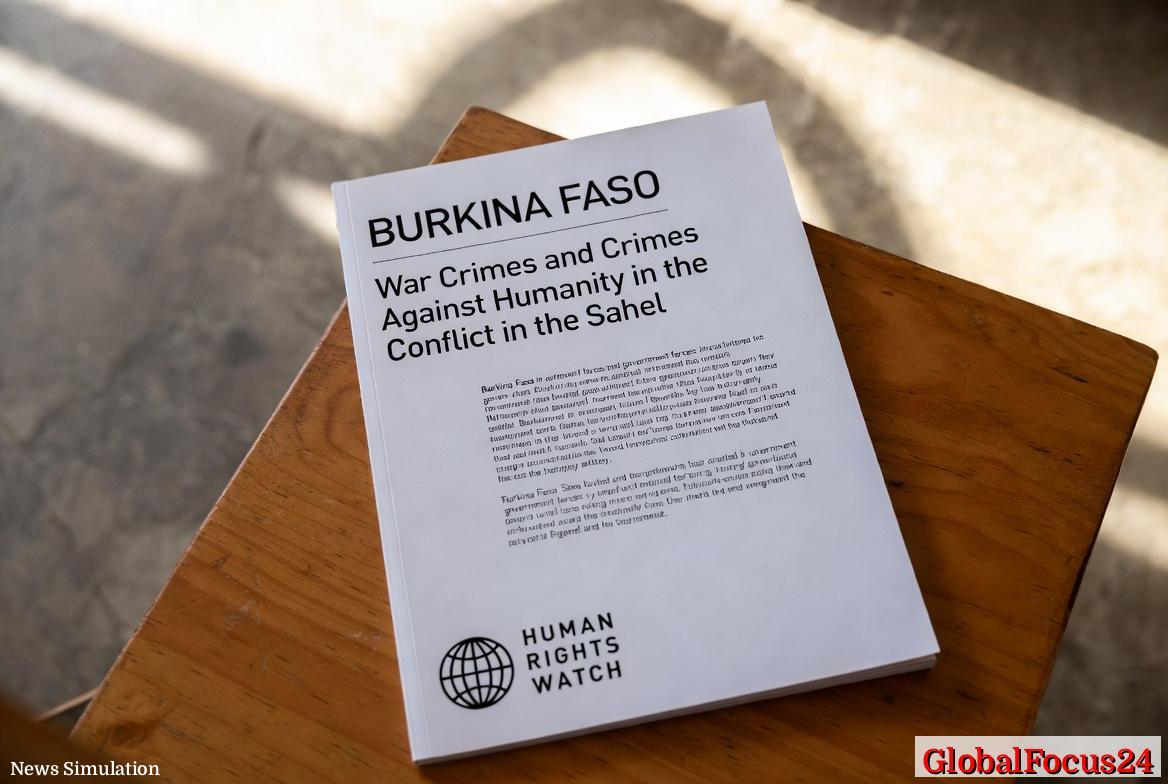
Ouagadougou, Burkina Faso – A comprehensive new report has exposed a harrowing pattern of war crimes and crimes against humanity committed by government forces in Burkina Faso, plunging the Sahel nation deeper into a humanitarian crisis amid its protracted insurgency. Documenting over 1,800 civilian deaths across 57 incidents from January 2023 to August 2025, the findings underscore the devastating toll on ordinary people caught between military operations and jihadist groups. As Burkina Faso grapples with insurgency and internal strife, these revelations demand urgent attention to the human cost of the conflict.
Escalating Violence in Burkina Faso's Sahel Heartland
Burkina Faso, a landlocked West African country once known for its cotton fields and vibrant markets, has become a battleground since jihadist insurgencies erupted in 2015. The violence intensified after military coups in 2022, with Captain Ibrahim Traoré assuming leadership and prioritizing counterinsurgency efforts. Government forces, bolstered by allied militias called Volunteers for the Defense of the Homeland (VDP), have launched sweeping operations against Al-Qaeda-linked Jama’at Nusrat al-Islam wa al-Muslimin (JNIM), the dominant armed group in the region.
These operations, while aimed at reclaiming territory, have frequently targeted civilians, particularly from the Fulani ethnic group, whom forces accuse of collaborating with insurgents. In one documented case from December 2023, military and VDP units raided a neighborhood in Bouro, killing 19 relatives of a survivor simply because they lived in a JNIM-influenced area. Such incidents are not isolated; the report details massacres during large-scale sweeps, where entire villages face summary executions, looting, and arson, forcing mass displacement.
The Fulani, Burkina Faso's second-largest ethnic group and traditionally pastoralists roaming the arid Sahel plains, have borne the brunt. Accusations of insurgency support—often unsubstantiated—have led to ethnic cleansing tactics, including forced displacement of hundreds of thousands. This mirrors patterns seen in neighboring Mali, where similar dynamics displaced over a million since 2012, highlighting a regional crisis fueled by ethnic tensions and resource scarcity.
War Crimes and Crimes Against Humanity: A Legal Reckoning
The documented abuses by Burkinabè military and VDP forces constitute war crimes such as willful killing, attacks on civilians, pillage, and torture, alongside crimes against humanity including murder, forcible displacement, arbitrary imprisonment, and persecution on ethnic grounds. JNIM, for its part, has also perpetrated atrocities, killing civilians in ambushes and punishing perceived collaborators, contributing to a cycle of violence where no side spares non-combatants.
Command responsibility looms large, with the report identifying President Traoré, six military leaders, JNIM's Iyad Ag Ghaly, and four of his deputies as potentially liable for failing to prevent or punish these acts. International law, including the Geneva Conventions and Rome Statute, classifies these as grave breaches when systematic or widespread, as appears here. In Burkina Faso's 11 affected regions—stretching from the volatile north to central provinces—these crimes have become central to both government and insurgent tactics, eroding any semblance of protected civilian space.
Public reaction has been muted domestically due to curtailed reporting and junta controls on media, but survivor testimonies paint a picture of terror. Families recount hiding in bushlands for weeks, children orphaned overnight, and communities shattered. "None can run away," as the report poignantly titles, captures the inescapable dread permeating daily life.
Historical Context: From Stability to Insurgency Hotspot
Burkina Faso's descent into chaos traces back decades. Formerly Upper Volta under French colonial rule until 1960, it endured cycles of coups and instability, with Thomas Sankara's 1980s revolution promising agrarian reform before his 1987 assassination. Stability under Blaise Compaoré lasted until 2014 protests ousted him, ushering in democratic experiments upended by jihadist spillover from Mali's 2012 Tuareg rebellion.
JNIM, formed in 2017 as an Al-Qaeda affiliate, exploited porous borders, poverty, and ethnic divides, controlling swathes of territory by 2022. The September 2022 coup by Traoré's junta shifted strategy toward aggressive militarization, arming civilian VDPs—often ethnic non-Fulani—to supplement under-resourced troops. This approach echoes Mali's use of ethnic militias, which fueled revenge cycles and expanded jihadist recruitment.
Historically, Sahel conflicts blend Islamist ideology with local grievances over land, cattle routes, and state neglect. Burkina Faso's insurgency has killed tens of thousands since 2015, displacing 2.3 million—10% of its 23 million population—surpassing rates in Niger or Chad proportionally. Regional bodies like ECOWAS have suspended Burkina Faso over the coups, complicating aid flows and exacerbating vulnerabilities.
Economic Impact: A Nation on the Brink
The war crimes and ensuing displacement have crippled Burkina Faso's economy, once buoyed by gold (Africa's fourth-largest producer) and cotton exports. Gold output, which hit 57 tons in 2022 fueling 80% of exports, plummeted as mines in the north shut down amid insecurity, costing billions. Cotton, vital for 80% of rural livelihoods, faces similar woes; fields lie fallow as farmers flee, slashing yields by 40% in affected zones.
Humanitarian needs strain global resources: 2.3 million displaced require food, shelter, and medical aid, with malnutrition rates soaring above emergency thresholds in camps near Ouagadougou and Bobo-Dioulasso. Economic contraction reached 10% GDP loss in 2023-2024, per estimates, outpacing Mali's 6-8% war-related dips. Inflation spiked 15% from disrupted supply chains, hitting urban poor hardest as fuel convoys face ambushes.
Remittances, a lifeline for many, dwindled as migrant workers in Côte d'Ivoire and Ghana repatriate amid xenophobia. Gold smuggling to Togo and Niger sustains some revenue but funds illicit arms trades, perpetuating violence. Compared to regional peers, Burkina Faso's crisis rivals Sudan's, where conflict halved GDP, but lacks that scale of international intervention, leaving recovery prospects dim without accountability.
Regional Comparisons: Sahel's Shared Agony
Burkina Faso's plight reflects broader Sahel instability. In Mali, UN peacekeeping (MINUSMA) withdrawal in 2023 left vacuums filled by ethnic purges akin to Fulani targeting here, displacing 400,000. Niger's 2023 coup similarly empowered militias against jihadists, but abuses persist, with civilian deaths up 50% per ACLED data.
JNIM's cross-border operations link these nations: attacks in Burkina Faso mirror Burkina Faso's in Benin, where 2024 saw 200+ civilian killings. Unlike Chad's more contained Boko Haram fight, Sahel insurgencies thrive on state fragility post-coups. Displacement rates—Burkina Faso's 10% exceeds Niger's 7%—signal a refugee wave straining neighbors: 200,000 Burkinabè in Ghana alone, overwhelming border towns.
Economic parallels abound; Mali's artisanal gold sector collapsed similarly, fostering informal economies rife with exploitation. Regional initiatives like the Alliance of Sahel States (AES) aim for joint defense, but human rights lapses hinder cooperation. Lessons from Somalia's al-Shabaab war show accountability curbs insurgent gains—Burkina Faso could pivot similarly, but impunity risks entrenching cycles.
Civilian Toll and Public Outcry
Survivors' voices amplify the urgency. In central provinces like Ouahigouya, mass graves from 2024 operations hold dozens, per witness accounts. Women and children, 60% of displaced, face gender-based violence and famine; acute malnutrition affects 500,000 kids under five. Schools shuttered—over 6,000 since 2019—doom a generation, with dropout rates tripling regional averages.
Public reaction simmers: protests in Bobo-Dioulasso demand VDP disbandment, met with crackdowns. Exiles in Abidjan share videos of razed villages, fueling diaspora advocacy. International NGOs report aid blockages, with convoys attacked 150 times last year, underscoring access perils.
Path Forward Amid Crisis
As Burkina Faso's conflict rages into 2026, the report spotlights accountability's role in breaking violence cycles. Regional bodies and partners urge investigations, pressing for prosecutions to rebuild trust. With 10% of citizens uprooted and economy teetering, restoring civilian protections is paramount.
The Sahel's interconnected fates mean Burkina Faso's war crimes reverberate, demanding coordinated response. For now, families in makeshift camps cling to hope, their plight a stark reminder of conflict's human ledger. (Word count: 1,248)