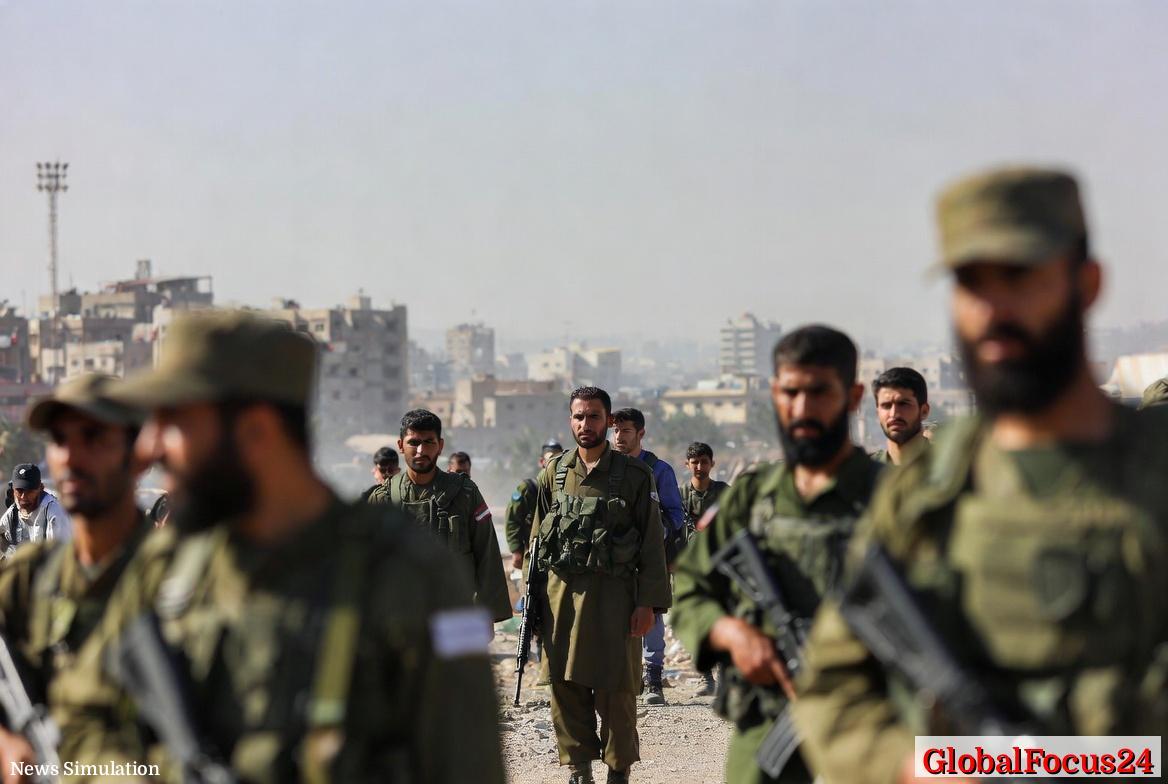
Iran and U.S. Seek Ceasefire Extension as Israel Intensifies Operations in Lebanon
Ongoing diplomatic negotiations between Iran and the United States have entered a critical phase this week, as both sides work to extend their fragile ceasefire agreement. The talks, aimed at preventing renewed escalation in the Persian Gulf, come amid heightened regional tension and continued Israeli military operations in Lebanon. Western and Middle Eastern observers describe the current moment as a delicate intersection of diplomacy and conflict, where progress in one sphere could be undone by deterioration in another.
Renewed Diplomatic Efforts in a Volatile Season
Negotiations between Tehran and Washington resumed quietly in an undisclosed Gulf location, following a series of indirect exchanges facilitated by regional intermediaries. The existing ceasefire, first brokered late last year after months of confrontation, has helped reduce military provocations in proxy regions but remains brittle. Both sides have expressed interest in extending it beyond its scheduled expiry, yet stark disagreements persist regarding defense commitments and sanctions relief.
According to individuals familiar with the process, Iran seeks assurances that economic restrictions will continue to ease if it maintains limits on certain military activities, while U.S. negotiators are focused on verifying compliance and preventing any covert violations. The talks coincide with intensified Western scrutiny of Iran’s support networks in Lebanon and Syria, which have historically placed Tehran at the center of wider Middle Eastern disputes.
The United States views the ceasefire extension as an essential foundation for maintaining maritime security and energy stability across the Gulf—a region still recovering from last year’s disruptions to shipping routes and oil production. Iranian officials, meanwhile, frame the negotiations as part of a broader effort to ensure national sovereignty while stabilizing relations with regional neighbors.
Israeli Operations Challenge Regional Detente
Against the backdrop of these diplomatic overtures, Israel continues to pursue military objectives in Lebanon. Over the past week, Israeli forces have carried out a new wave of airstrikes and artillery fire across border areas, focusing on infrastructure and militant positions believed to be linked to neighboring threats against northern Israeli towns. The operations form part of what Israeli defense officials describe as a campaign to “eliminate persistent cross-border attacks” that intensified earlier this year.
Residents along Israel’s northern frontier have reported recurring warning sirens and evacuation advisories, underscoring the strain felt by communities near the conflict zone. The Israeli military maintains that its actions are preventive and justified, citing repeated rocket launches and infiltration attempts organized from Lebanese territory. The Lebanese government and international agencies have urged restraint, but the situation remains volatile.
Analysts note that Israel’s firm stance complicates regional diplomacy. While efforts led by the United States, European Union, and Gulf states aim to cool tensions across multiple fronts, Israel’s unwillingness to scale down its operations underscores deep-rooted security concerns dating back decades.
Historical Context: A Cycle of Conflict and Conciliation
Lebanon’s southern border has long been a flashpoint in Middle Eastern geopolitics. The area witnessed major conflicts in 1982, 1996, and 2006, each reshaping Israel’s security doctrine and Lebanon’s internal balance of power. Despite numerous international interventions, no lasting settlement has resolved underlying hostilities.
The 2006 war, though devastating, resulted in an uneasy ceasefire overseen by United Nations forces. Since then, sporadic clashes have flared whenever regional crises or political shifts weakened diplomatic engagement. Israel’s current operations evoke memories of those past confrontations, though officials emphasize advanced precision targeting and intelligence capabilities meant to minimize civilian harm.
Iran’s role in Lebanon, primarily through its relationship with Hezbollah, remains a core factor in the calculus driving Israeli actions today. For many policymakers, Iran’s ceasefire with the United States carries implications beyond the Gulf itself—it could influence the flow of resources and strategic support to militias operating in Lebanon and Syria. This interconnected arena makes separate negotiations difficult to isolate from one another.
Economic Impact Across the Region
Economic reverberations from these overlapping developments are being felt across multiple sectors. In global energy markets, traders are monitoring Gulf stability as Iranian export levels and maritime traffic depend on a sustained ceasefire environment. Any abrupt end to the agreement could send oil prices upward, compounding inflationary pressures in Asia and Europe.
For Lebanon, ongoing conflict threatens to exacerbate an already severe financial collapse. The country’s currency continues to weaken, power supplies remain inconsistent, and reconstruction efforts after earlier skirmishes have stalled. Each new airstrike undermines investor confidence and deters foreign aid, leaving local communities reliant on humanitarian assistance and remittances from abroad.
In Israel, continued operations at the northern frontier have drawn budgetary strain on the defense sector. Emergency mobilizations and missile defense upgrades require significant funding, redirecting resources that might otherwise support civilian infrastructure or social programs. Economists warn that without a reduction in hostilities, long-term fiscal planning could suffer, especially if border tensions spill into broader regional disruptions.
Regional Diplomatic Landscape
The ceasefire talks between Iran and the United States also reflect a wider realignment of diplomatic strategies across the Middle East. Gulf nations that once maintained cautious distance from direct involvement are now actively mediating between rival powers. Oman and Qatar, in particular, have expanded roles as facilitators—hosting informal dialogues, offering logistical support, and encouraging confidence-building measures.
While progress has been incremental, these efforts underscore the growing recognition that stability hinges on multilateral cooperation rather than unilateral military action. Yet, the persistence of localized fighting—such as in Lebanon—demonstrates the challenge of translating high-level agreements into durable peace on the ground.
Europe’s involvement has similarly intensified. The European Union has expressed concern about the economic and humanitarian fallout of renewed border violence and has called for all parties to respect international law. Humanitarian agencies warn of potential displacement in southern Lebanon, where hundreds of families have reportedly begun leaving high-risk zones near the border.
A Region on the Brink but Still Engaged
Despite mounting pressures, officials within several Western and Middle Eastern governments remain optimistic that continued dialogue could avert a wider crisis. The prevailing view among diplomats is that failure to renew the Iran-U.S. ceasefire would trigger cascading instability—heightening risks not only in the Gulf but also among Lebanon’s already fragile population centers.
Analysts emphasize that both diplomatic traction and deterrent operations are happening simultaneously. The duality underscores a defining feature of modern Middle Eastern politics: equilibrium through managed tension. Neither war nor peace remains static; each evolves through gestures, signals, and adaptive strategies shaped by domestic and international priorities.
Public sentiment within Iran and Israel reflects similar fatigue. In both nations, citizens express eagerness for safety and predictability amid years of disruptions. Online forums, opinion pieces, and grassroots statements consistently highlight the toll of uncertainty on personal and economic well-being.
Comparison with Past Regional Realignments
Historically, ceasefire negotiations involving Iran and major Western powers have often coincided with periods of redefinition in broader regional structures. Agreements during the late 2010s and early 2020s offered temporary calm but rarely led to comprehensive normalization. In many cases, progress in Gulf diplomacy came alongside turmoil elsewhere—from Yemen’s civil war to unrest along Israel’s borders.
The present juncture mirrors those earlier transitions but under more layered conditions. The interplay among three theater zones—the Persian Gulf, Lebanon, and Syria—renders diplomatic calculation far more complex. Each actor seeks security guarantees that others perceive as concessions, creating intricate cycles of negotiation and reaction.
Economic shifts further complicate the agenda. The global energy landscape, now shaped by renewable investments and diversified supply chains, adds urgency to stability efforts in oil-producing territories. Analysts observe that regional cooperation, if sustained, might offer new investment opportunities in infrastructure and technology—outcomes that rely heavily on maintaining peace.
Outlook: Fragile but Focused Diplomacy
As negotiations continue, officials caution that an extended ceasefire does not equal resolution. It offers breathing room—a temporary shield against escalation—while underlying disputes remain unresolved. Future progress will depend on verification mechanisms and the credibility of enforcement steps agreed by both sides.
Meanwhile, Israel’s operations in Lebanon show no immediate sign of slowing. Military sources suggest preparations for prolonged engagement unless cross-border attacks cease entirely. That persistence amplifies the delicate balance confronting diplomats: one conflict’s persistence can undermine another’s peace-building effort.
Observers predict that the coming weeks will prove decisive. If Iran and the United States finalize their extension, international focus may shift toward stabilizing Lebanon. If talks falter, expectations of renewed friction across multiple fronts will rise sharply. Either outcome will influence oil prices, humanitarian priorities, and broader perceptions of Middle Eastern security.
In a region where diplomacy often teeters between breakthrough and breakdown, this moment captures both hope and hazard. The stakes, once confined to separate theaters, now interlock across borders—drawing global attention once again to the urgency of sustained peace, credible dialogue, and the prevention of another spiral into conflict.