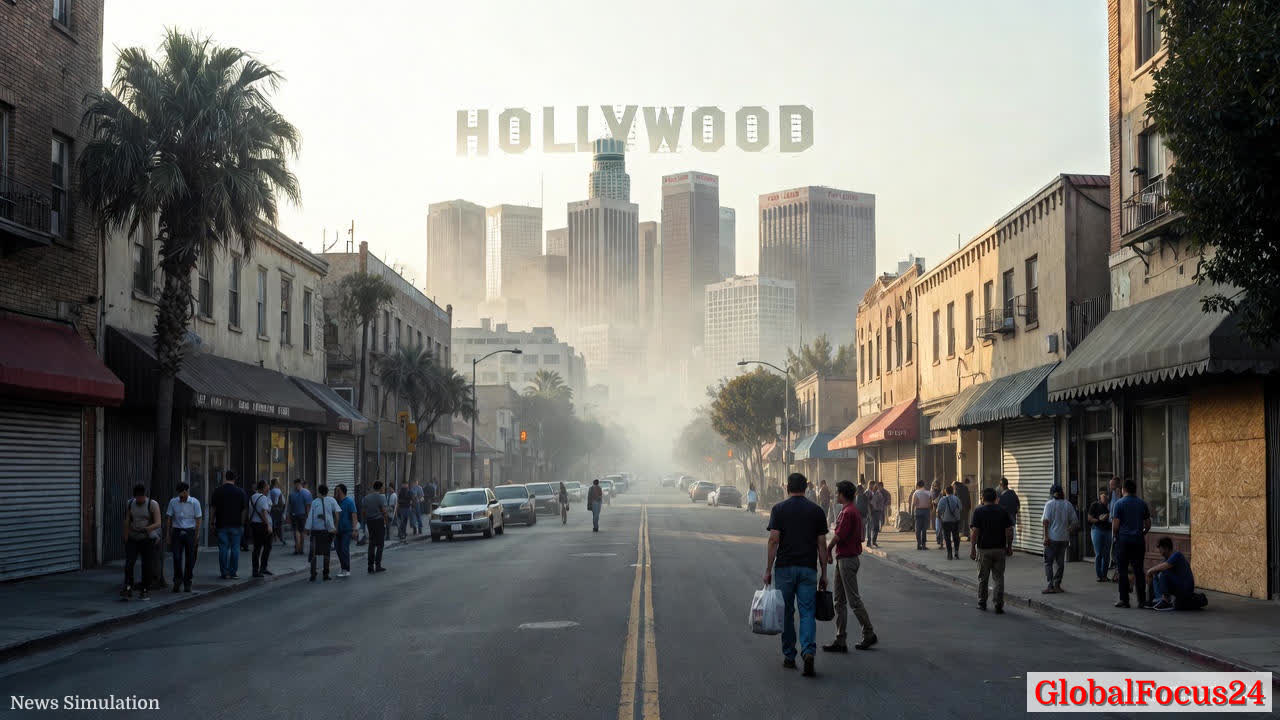
L.A.’s Entertainment Economy Faces Sharp Decline as Jobs Erode and Businesses Close
Los Angeles, CA — The city long celebrated as the global capital of film, television, and live entertainment is grappling with a sustained downturn that is reshaping its economic landscape. From stages to soundstages, post-production suites to street-front businesses, signs of strain are visible across the sprawling entertainment ecosystem. Industry leaders, workers, and policymakers are watching closely as projects shrink, recruitment slows, and the once-robust creative middle class confronts a precarious future.
Historical Context: A City Built on Show Business
To understand the current pressures, it helps to revisit Los Angeles’ arc of entertainment growth. In the mid-20th century, Hollywood established itself as the epicenter of motion pictures, drawing talent from across the country and around the world. The downstream effects created a layered economy: producers, directors, writers, technicians, makeup artists, and a sprawling network of vendors and service providers. The city’s appeal lay not only in cinematic glamour but in a deep, interconnected supply chain that sustained millions of livelihoods—from studio executives in Bunker Hill towers to grip crews in the Valley’s backlots.
Over decades, the industry diversified. Television produced new demand in production hubs beyond traditional Hollywood, while talent agencies and post-production facilities expanded to accommodate rapid output. The rise of streaming accelerated content creation, pushing growth in digital editing, visual effects, and international co-productions. Yet this expansion carried vulnerabilities: heavy reliance on cyclical project pipelines, capital intensity, and geographic concentration, all of which expose the local economy to shifts in demand, financing conditions, and regulatory environments.
Current State: The Downshift in Projects and Jobs
Recent years have underscored a shift from robust production pipelines to a more uneven terrain. Several macro factors are contributing to the slowdown:
- Financing and risk aversion: As streaming platforms recalibrate their content strategies, capital is allocated more conservatively. Fewer high-budget projects can translate into fewer long-term jobs on soundstages and in post-production.
- Global competition: International hubs offer competitive incentives and scalable production ecosystems, drawing some projects away from traditional Los Angeles venues. This shift is reshaping where and how content is created.
- Inflationary pressures: Rising costs for labor, facilities, and talent have narrowed margins for many productions, prompting cuts and renegotiations on smaller projects and independent features.
- Workforce transitions: Senior crew members watch for succession planning as younger professionals face entry barriers, creating a bottleneck in certain specialty trades. At the same time, freelancing remains prevalent, with income volatility a persistent challenge for many workers.
Economic Impact: Ripple Effects Across the City
The downturn is reverberating beyond studio gates and into neighborhoods that have historically depended on entertainment-driven prosperity. Several channels illustrate the breadth of impact:
- Direct employment: While some large studios maintain a steady headcount, many mid-sized production companies report leaner staffing. Gigs for editors, colorists, and sound designers have become shorter in duration, complicating career planning for individuals pursuing long-term professional paths.
- Ancillary businesses: Catering services, costuming houses, equipment rental, and post-production facilities report reduced demand. Retail corridors near studios—hotels, cafes, and gear shops—often reflect softer foot traffic and slower sales cycles.
- Real estate and corridors: Office and studio space face shifting demand, affecting rent levels and occupancy rates. Some districts historically clustered around film trades have seen adjustments as activity concentrates in fewer hubs or shifts to virtual production environments.
- Public revenues: Local governments rely on a mix of tax receipts and permit fees tied to entertainment activity. A slowdown in production activity can influence budgets for public services, infrastructure, and cultural programs.
Regional Comparisons: Los Angeles vs. Other Creative Hubs
Examining the broader landscape reveals both shared pressures and distinctive local dynamics:
- New York City remains a major rival for television production and high-budget features, supported by a dense talent pool and strong state incentives. Yet New York’s mix of industries and urban dynamics means it experiences its own ebbs and flows, with certain seasons seeing spikes tied to limited-series demand and stage availability.
- Atlanta and Georgia's incentives have drawn significant volumes of work away from traditional West Coast bases, particularly for mid-range projects seeking cost efficiency. This shift has helped compete with Los Angeles in attracting productions, even as the region grapples with its own housing and wage pressures.
- Canadian hubs like Vancouver and Toronto offer competitive incentives and skilled labor pools, sustaining a steady stream of international co-productions. While these markets benefit from policy support, they also underscore the volatility of production-centric economies that can abruptly shift with financing decisions.
- Other U.S. cities with burgeoning tech and media clusters, such as Chicago or Austin, increasingly host content production, yet Los Angeles retains a unique advantage in the convergence of talent, studios, and post-production ecosystems.
Workforce Realities: Voices from the Ground
Interview narratives from industry professionals illuminate the human dimension behind the statistics. A veteran sound engineer with two decades of experience described a tightening market for long-term employment opportunities, noting that freelancers are taking on shorter contracts and juggling multiple projects to bridge income gaps. A costume designer spoke of rising material costs and tighter budgets on mid-tier features, which ripple into smaller jobs and delayed productions. In neighborhoods near studio districts, small business owners report decreased patronage and longer lead times for service offerings, reflecting a broader slow-down in the local economy.
Policy and Market Responses: What Is Being Done
Local policymakers and industry groups are exploring a suite of responses to stabilize the ecosystem and support workers who depend on it:
- Incentive optimization: Streamlining or expanding tax incentives for productions can help attract and retain projects. Transparent, predictable programs reduce risk for studios and independent producers alike.
- Workforce retraining: Programs targeted at upskilling in high-demand areas such as post-production, VFX, and motion graphics can help bridge gaps between veteran professionals and new entrants. Scholarships, apprenticeships, and on-the-job training initiatives align with industry needs.
- Infrastructure resilience: Investments in studio spaces, equipment-sharing facilities, and digital infrastructure can improve efficiency and reduce turnaround times for projects, potentially generating longer, more stable engagements for workers.
- Regional diversification: Encouraging productions to use multiple neighborhoods and cross-industry collaborations—such as tourism-driven storytelling, live events, and multimedia installations—can broaden the economic footprint of entertainment-related activity.
Technological Shifts: The Path Forward for Production
Technology continues to reshape how content is created and delivered, with both opportunities and challenges for Los Angeles:
- Virtual production and LED stages: These tools enable flexible shooting environments, reducing travel and on-location costs. They also shift demand toward technicians skilled in real-time compositing, camera tracking, and immersive set design.
- Remote collaboration and cloud workflows: Streamlined digital pipelines enable editors, colorists, and sound designers to work across time zones. While this can increase efficiency, it also requires robust cybersecurity, data management, and standardized workflows.
- Visual effects ecosystems: The demand for high-end VFX remains strong, yet competition in pricing and talent pools compels studios to seek efficiencies and forge international partnerships. This dynamic influences the geographic concentration of certain career paths within the city.
Public Reaction and Cultural Footprint: Beyond the Balance Sheets
The cultural implications of a contracting entertainment economy extend beyond dollars and jobs. Community sentiment reveals a city that values storytelling as a civic and cultural mirror. Local theaters, independent studios, and community arts organizations report both risk and resilience as audiences adapt to changing formats and streaming landscapes. Public enthusiasm for film festivals, museum exhibitions tied to cinema history, and educational programs indicates an enduring appetite for media production and storytelling in the region. However, concerns persist about the long-term talent pipeline, housing affordability for workers, and the maintenance of a diverse creative ecosystem that welcomes emerging voices.
Supply Chains and Global Interconnectivity: Why the Los Angeles Model Matters
Los Angeles’ entertainment economy is deeply integrated with a global supply chain that includes international financiers, post-production houses, distribution networks, and streaming platforms. Shifts in any one link—financing, talent supply, or audience demand—reverberate through the entire system. The city’s ability to adapt hinges on maintaining its competitive advantages: a dense, highly skilled workforce; access to world-class facilities; and a culture that fosters collaboration across disciplines. When demand surges, the city can mobilize quickly; when it tightens, the resilience of its networks—the networks that link writers, directors, technicians, and vendors—becomes a critical asset.
Long-Term Outlook: Navigating a Transitional Era
Analysts suggest that the current downturn may accelerate a broader structural reorientation rather than a return to prior highs. Several scenarios could unfold:
- Stabilization through selective investments: Targeted funding and incentives for high-potential projects could stabilize employment and reinforce the city’s role as a premier production hub.
- Growth in ancillary sectors: As streaming platforms shift toward shorter-form content and branded entertainment, there could be opportunities in ancillary services such as location management, creative consulting, and live-event integration.
- Spatial and labor market adjustment: Growth in regional studios and satellite production facilities could redistribute activity across the metropolitan area, diversifying jobs and reducing congestion around traditional studio districts.
Conclusion: A City Known for Resilience
Los Angeles has repeatedly weathered industry shifts by leaning on its strengths: a deeply rooted culture of storytelling, a vast and skilled talent pool, and a willingness among institutions to experiment with new production models. The current period of decline underscores the need for coordinated efforts that safeguard livelihoods while embracing technological progress and strategic investment. For workers, studios, and communities alike, the road ahead will require innovation, collaboration, and a renewed commitment to sustaining the city’s reputation as a dynamic, global center for entertainment.
Public and Stakeholder Takeaways
- Workforce protection remains a priority as projects ebb and flow. Durable career pathways, fair compensation, and accessible training help the middle tier of the labor market weather volatility.
- Strategic incentives and predictable policy frameworks reduce financing risk and encourage long-term commitments from producers.
- A broader regional development approach that leverages adjacent industries—tourism, technology, education—can help diversify the economic base and cushion the downturn.
- Continued emphasis on infrastructure and digital capabilities positions Los Angeles to capitalize on evolving production techniques and new audience behaviors.
In sum, while the present climate poses real challenges to Los Angeles’ entertainment economy, the interwoven nature of its creative ecosystem, coupled with adaptive policy and industry strategies, offers a path toward renewed vitality. The city’s legacy as a cradle of storytelling remains intact, even as the mechanics of production evolve in the face of changing global dynamics.