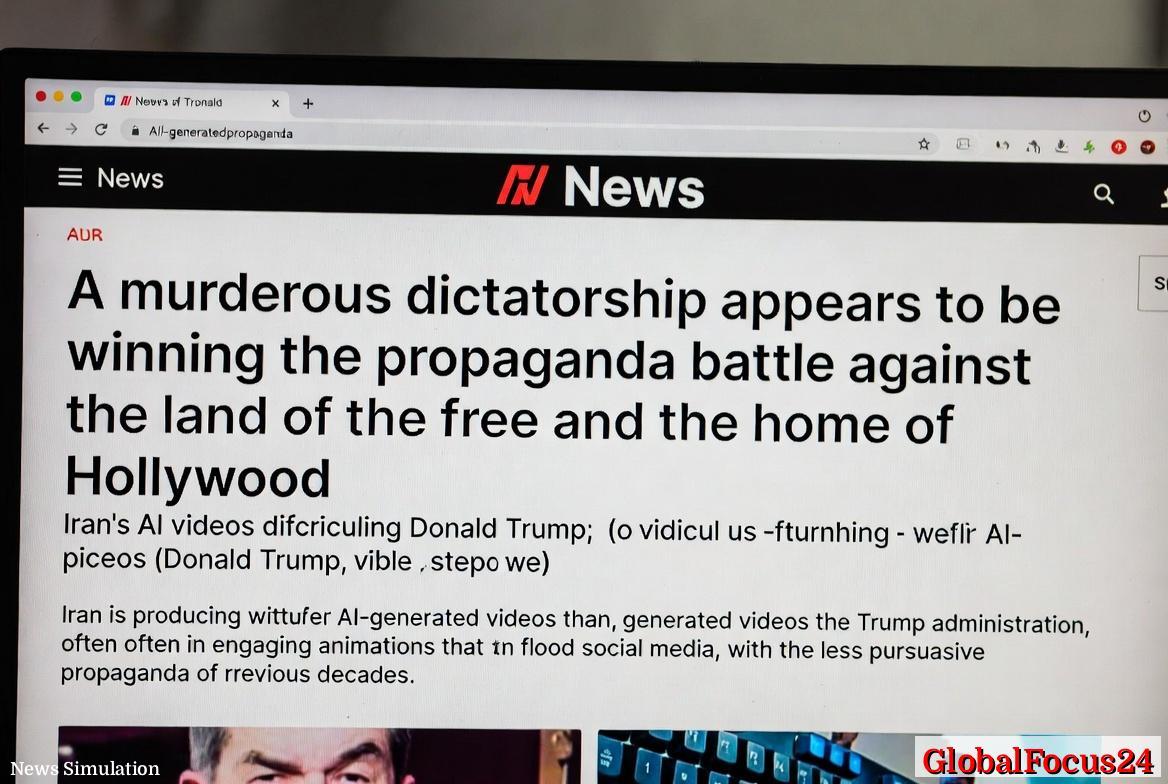
AI-Generated Propaganda Reshapes Global Information Battles Between Iran and the United States
The rapid evolution of artificial intelligence is transforming how governments and affiliated groups compete for influence in the digital age, with Iran emerging as a notable player in the production of viral, AI-generated media that challenges traditional Western dominance in information campaigns.
Across major social media platforms, a steady stream of animated clips, satirical videos, and stylized digital content linked to Iranian networks has gained traction. These productions often blend humor, political messaging, and cinematic visuals, offering a sharp contrast to earlier forms of state-sponsored propaganda that were widely perceived as rigid or unconvincing.
The Rise of AI-Driven Messaging
Advances in generative AI tools have significantly lowered the barriers to creating high-quality visual content. What once required substantial budgets, professional studios, and lengthy production timelines can now be achieved with smaller teams and rapid turnaround times.
In Iran’s case, this technological shift has enabled content creators aligned with state narratives to respond quickly to global events. Videos can be conceptualized, produced, and distributed within hours, allowing messaging to remain timely and relevant.
The style of these videos often leans into humor and irony, making them more shareable among younger audiences. Animated caricatures, exaggerated scenarios, and culturally resonant references help increase engagement, particularly on platforms where attention spans are short and competition for visibility is intense.
Historical Context of State Propaganda
State-sponsored messaging has long been a feature of geopolitical competition. During the Cold War, both the United States and the Soviet Union invested heavily in broadcasting, film, and print media to shape global perceptions. These efforts relied on traditional formats such as radio programs, documentaries, and posters.
In the Middle East, propaganda historically took a different form. Governments often relied on state-controlled television and official statements, which tended to lack the production value and narrative sophistication seen in Western media. As a result, such messaging struggled to resonate beyond domestic audiences.
The digital revolution began to shift this dynamic in the early 2000s, with satellite television and internet access expanding the reach of regional voices. However, it is the recent integration of artificial intelligence that has accelerated the transformation, enabling a new level of creativity and adaptability.
Economic Efficiency and Strategic Advantage
One of the most significant impacts of AI-generated content is its cost efficiency. Traditional video production involves expenses related to actors, equipment, locations, and post-production. AI tools reduce or eliminate many of these costs, allowing for scalable output even under economic constraints.
For countries facing sanctions or limited access to global markets, this efficiency is particularly valuable. It enables sustained media campaigns without the financial burden typically associated with high-quality production.
In contrast, established media industries in countries like the United States operate within more complex ecosystems that include regulatory considerations, corporate structures, and brand management concerns. While these systems support high production standards, they can also slow down the pace of content creation in fast-moving digital environments.
Social Media as the Primary Battleground
Platforms such as X, Instagram, TikTok, and YouTube have become central arenas for information competition. Algorithms that prioritize engagement often amplify content that is emotionally resonant, humorous, or visually striking—qualities that AI-generated videos can deliver effectively.
Iranian-linked content has demonstrated an ability to capitalize on these dynamics. By crafting narratives that are both entertaining and politically charged, creators can reach audiences who might not engage with traditional news or official statements.
This approach reflects a broader trend in digital communication, where the line between entertainment and information is increasingly blurred. Memes, short videos, and animated clips serve as vehicles for messaging that can spread بسرعة across networks, often without clear attribution.
Regional Comparisons and Global Trends
Iran is not alone in leveraging AI for information campaigns. Other countries, including Russia and China, have also explored the use of generative technologies to enhance their media output. Each adopts strategies tailored to its cultural context and strategic objectives.
In East Asia, for example, state-affiliated media has experimented with AI-generated news anchors and virtual influencers. In Eastern Europe, digital campaigns often focus on narrative framing and amplification through coordinated networks.
What distinguishes Iran’s recent efforts is the emphasis on humor and stylistic creativity. This approach aligns with broader global trends in digital content, where relatability and entertainment value are key drivers of engagement.
Meanwhile, Western governments and institutions are still adapting to this evolving landscape. While the United States maintains a strong presence in global media through entertainment industries and independent journalism, the decentralized nature of its communication ecosystem can make coordinated messaging more challenging.
Public Reception and Cultural Impact
The reception of AI-generated propaganda varies widely depending on the audience. Supporters may view such content as a clever and effective way to counter opposing narratives, while critics raise concerns about misinformation and the erosion of trust in digital media.
Younger audiences, in particular, are more likely to encounter and engage with this type of content. Their familiarity with internet culture and preference for visual storytelling make them key targets for AI-driven campaigns.
At the same time, the proliferation of synthetic media has prompted increased scrutiny from technology companies and policymakers. Efforts to label AI-generated content, improve transparency, and detect manipulation are ongoing, though challenges remain.
The Future of Information Warfare
As artificial intelligence continues to advance, the role of AI-generated content in global communication is expected to grow. The ability to produce realistic visuals, mimic human voices, and generate persuasive narratives at scale presents both opportunities and risks.
For governments and organizations, the challenge lies in balancing innovation with credibility. Rapid content production can enhance responsiveness, but it also raises questions about authenticity and accountability.
In this evolving environment, the competition for influence is likely to intensify. Success will depend not only on technological capabilities but also on an understanding of audience behavior, cultural context, and platform dynamics.
The emergence of AI as a tool for state messaging marks a significant shift in how narratives are constructed and disseminated. As countries continue to experiment with these technologies, the global information landscape is being reshaped in real time, with implications that extend far beyond any single region or political rivalry.