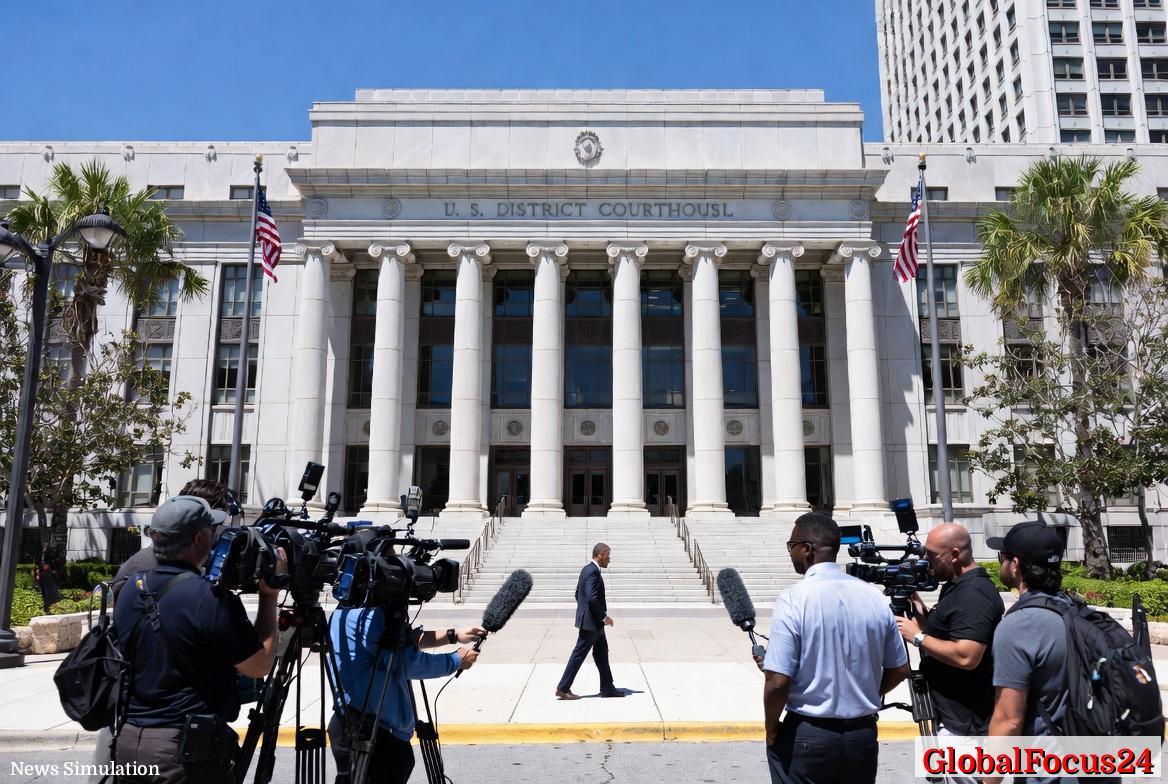
Trump Defamation Suit Over Epstein Letter Dismissed, Setting Up Possible Refile in Miami
A federal judge in Miami has dismissed President Donald Trump’s $10 billion defamation lawsuit over a newspaper report describing a sexually suggestive 2003 birthday letter that he allegedly sent to financier Jeffrey Epstein. The ruling marked an early legal setback for Trump, but it did not end the dispute, as his legal team said it plans to return with an amended complaint.
Judge Rejects Defamation Claim
U.S. District Judge Darrin Gayles found that Trump had not plausibly alleged the publication acted with actual malice, the demanding legal standard public figures must meet in defamation cases. In practical terms, that means Trump had to show the publisher either knew the story was false or recklessly ignored obvious doubts about it. The court concluded that his filing did not clear that bar.
The article at the center of the lawsuit described a letter bearing Trump’s signature and said it included a drawing of a naked woman, along with references to shared secrets between Trump and Epstein. Trump has denied writing the letter and has said it was fake. A copy matching the reported description was later released by congressional investigators reviewing Epstein-related records.
The Letter at Issue
The disputed letter has become the latest flashpoint in the long-running public interest surrounding Epstein’s relationships with prominent figures. According to accounts surrounding the controversy, the note appeared in a birthday album compiled for Epstein in 2003 and included language that prosecutors, reporters and investigators later examined closely. Its tone and imagery drew immediate attention because of the contrast between the seemingly lighthearted format and the darker legacy of Epstein’s criminal conduct.
Trump has repeatedly denied authorship, and his legal position rests on the claim that the letter is not authentic. The newspaper article, however, was based on material it reported as reviewed and described in detail, and the later release of a matching copy by congressional investigators added further weight to the public debate over the document’s provenance.
Legal Standard And Public Figures
Defamation cases brought by public officials and other public figures are notoriously difficult to win because U.S. law requires proof of actual malice. That rule, established decades ago, was designed to balance reputational interests against broad First Amendment protections for reporting on matters of public concern. For high-profile figures such as a sitting president, courts typically expect a strong factual showing before allowing a damages claim to proceed.
This is why the dismissal matters beyond the immediate dispute. It reinforces how hard it can be for public figures to use defamation law as a remedy after unfavorable reporting. Even when a plaintiff strongly denies a story, the legal threshold focuses not on whether the story is embarrassing or politically damaging, but on whether there is enough evidence that the publisher knowingly crossed the line.
Epstein Context Still Looms
The case also revived attention on the broader Epstein saga, which has remained a source of public fascination, legal scrutiny and institutional fallout for years. Epstein’s death in federal custody in 2019 ended any prospect of a direct criminal trial against him, but it did not close the book on his network, his finances, or the extent of his social ties. Investigations, civil claims and document releases have continued to generates and controversy.
Public interest in those records extends well beyond Washington. In New York, where Epstein moved in elite financial and social circles, the case intersected with long-running questions about wealth, influence and access. In Florida, where Epstein had a residence and where some prior legal resolutions were handled, the story has carried a distinct regional dimension because of the state’s role in earlier investigations and plea-related negotiations. Miami, in particular, has now become the setting for the latest courtroom chapter.
Economic And Media Impact
Beyond the legal dispute, the lawsuit underscores the economic stakes that often accompany high-profile defamation fights. Such cases can carry major costs for both sides, including legal fees, discovery expenses and the burden of prolonged litigation. For media organizations, defending a prominent reporting dispute can be expensive even when the underlying article is ultimately upheld. For a plaintiff, especially one seeking billions in damages, the financial and reputational risks are equally significant.
The story also highlights how politically sensitive investigations and elite misconduct allegations can shape the broader media economy. Major national coverage tends to draw intense readership, television discussion and online engagement, especially when it involves a former or current president. That attention can amplify the commercial value of the reporting while also deepening the legal and public-relations stakes for everyone involved.
Regional Comparisons
The Miami ruling fits a pattern seen in other major media-law disputes across the United States. Courts in New York, where many national publishers are headquartered, have long handled defamation and press-freedom cases tied to national figures. Florida, by contrast, has often been the stage for politically charged and media-heavy litigation because of its active federal docket and its role in high-profile public controversies. Miami’s federal court system has become a familiar venue for cases where national politics, celebrity, and reputational claims collide.
Compared with more routine commercial defamation suits, cases involving presidents or former presidents tend to travel farther in public consciousness. They are watched not only for the immediate outcome but also for what they may signal about the limits of press coverage, the strength of documentary evidence, and the willingness of courts to keep the actual-malice standard firmly in place. That makes a Miami dismissal potentially significant even if it is later challenged through an amended filing.
What Comes Next
Trump’s legal team said it intends to refile the case with an amended complaint. That suggests the current dismissal may be the opening round rather than the final word. An amended filing could attempt to sharpen the factual allegations, better address the legal standard or point to additional evidence supporting the claim that the publication acted improperly.
Even so, the path ahead remains difficult. Defamation cases involving public figures are rarely resolved quickly, and courts generally scrutinize them closely when the claims arise from reporting on matters already in the public domain. In this instance, the combination of a disputed historical document, a prominent defendant, and an already documented congressional release ensures the story will continue to draw attention.
The result is a case that sits at the intersection of presidential politics, media law and the enduring fallout from the Epstein scandal. For now, the judge’s ruling gives the newspaper a procedural victory and leaves Trump with the challenge of trying again under a stricter legal lens.