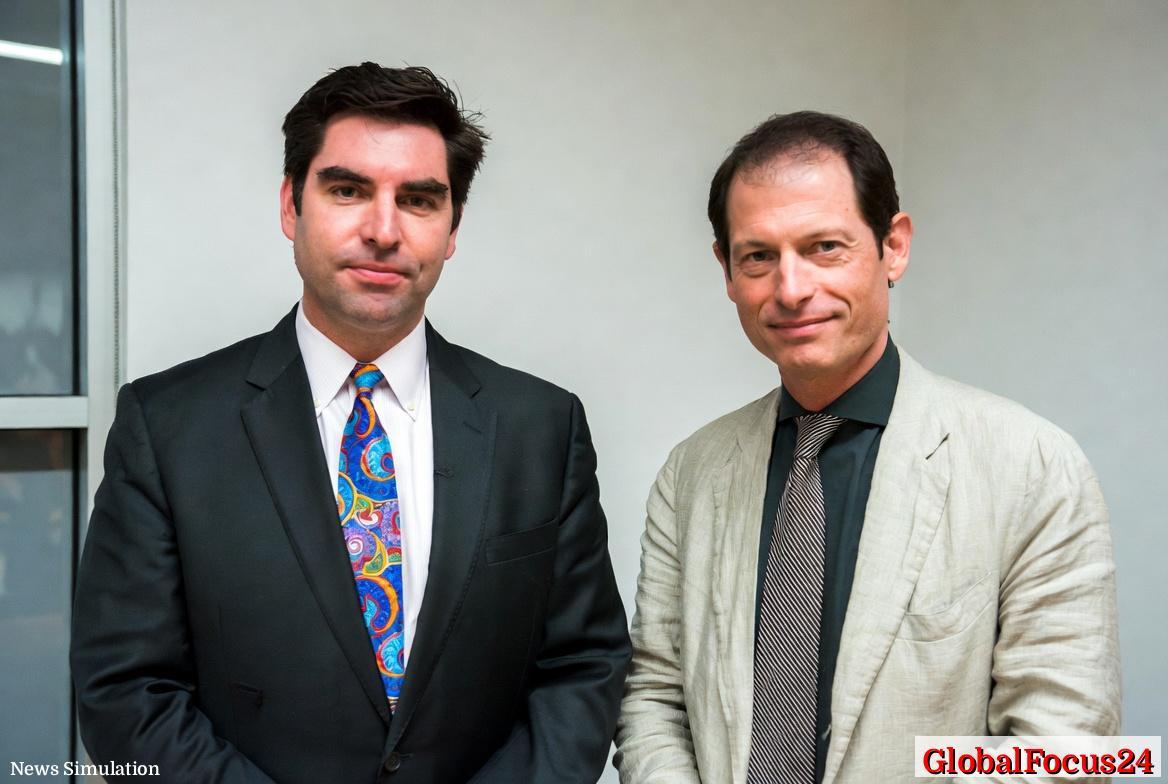
Eric Swalwell and Anthony Weiner Draw Public Calls to Launch Joint Podcast
Public Curiosity Spurs an Unlikely Idea
In a twist few could have predicted, social media chatter has recently turned toward the idea of a joint podcast hosted by Eric Swalwell, the U.S. Representative from California, and Anthony Weiner, the former congressman from New York. The suggestion, which began as a ripple on various online platforms, has quickly become a topic of fascination among political insiders, communications strategists, and media analysts who see potential—and controversy—in such a pairing.
The notion of two former and current lawmakers, each with high-profile histories and distinct public reputations, sitting down together behind a microphone raises questions about redemption, relevance, and how political figures reinvent themselves in the digital media landscape. Podcasts have become one of the most dynamic arenas for public figures to reshape narratives and engage directly with audiences, far beyond the filtered platforms of traditional journalism.
From Congress to the Court of Public Opinion
Eric Swalwell, currently serving California’s 14th Congressional District, rose to national recognition during his tenure on the House Intelligence Committee and his brief bid for the Democratic presidential nomination in 2020. Over the years, he has built a reputation as an outspoken presence on national security, technology, and governmental ethics. Supporters describe him as media-savvy—quick-witted, disciplined, and adept at navigating the modern political communication environment.
Anthony Weiner, by contrast, experienced a very different trajectory. Once a rising star in New York politics, Weiner served seven terms in Congress before resigning in 2011 following a widely reported personal scandal. He attempted a political comeback in 2013 with an unsuccessful mayoral campaign but later served a prison sentence related to charges stemming from online communications. Since completing his sentence, Weiner has cautiously reentered public life, occasionally appearing on talk radio and participating in long-form interviews to discuss rehabilitation, accountability, and privacy in the internet age.
Their personal stories, though divergent, intersect on the theme of intense public scrutiny—an experience that could make a joint venture both compelling and fraught.
The Podcast Boom and Political Reinvention
The backdrop for this unexpected suggestion is the explosive growth of the podcast industry. Since 2020, the U.S. has seen a surge in politically themed podcasts, many hosted by journalists, commentators, or ex-politicians seeking to maintain influence and independence from traditional party structures. High-profile examples have demonstrated how digital platforms allow for a more personal, less filtered form of communication with voters.
Political podcasts have become a proving ground for ideas and a refuge for voices marginalized from mainstream cable and print formats. Figures such as former campaign strategists and ex-lawmakers have found success by embracing authenticity, humor, or even sharp self-reflection. The intimacy of the podcast medium often allows hosts to discuss controversial issues in ways that traditional interviews rarely permit, creating both opportunities for redemption and risks of renewed controversy.
In this context, the idea of a Swalwell-Weiner collaboration is provocative. Both men have strong experiences with public attention—one as a sitting congressman deeply engaged in national issues, the other as a cautionary figure navigating the long arc of public accountability. Together, they would possibly illustrate two contrasting paths of political survival in the modern era.
Historical Context: From the Airwaves to the Earbuds
The idea of politicians turning to broadcast media to shape their public image has deep historical roots. Franklin D. Roosevelt’s “Fireside Chats” in the 1930s transformed radio into a tool for direct connection between a president and American households. In the 1990s and early 2000s, television appearances, town halls, and call-in shows emerged as the preferred channels for outreach.
The 2010s brought a digital transformation. Podcasts, social media livestreams, and online town halls began replacing traditional broadcast appearances as the dominant modes of communication. Former officials, journalists, and pundits seized on these platforms to control their narratives without intermediaries. The appeal of unfiltered dialogue and long-form discussion resonated with younger listeners disillusioned by sound-byte politics.
If Swalwell and Weiner pursued such an endeavor, they would be joining a tradition of figures using new technology to redefine their voices after significant public exposure. However, they would also be entering a crowded and unforgiving marketplace where digital audiences expect candor and intellectual rigor in equal measure.
A Shifting Media Landscape and Economic Potential
The podcast industry’s economic potential is an important part of this story. According to recent analytics, global podcast revenues are projected to exceed $5 billion by the end of 2026, driven by advertising, subscriptions, and sponsored content. Major platforms such as Spotify, Apple Podcasts, and YouTube have heavily invested in talk-show formats, particularly those featuring recognizable names or polarizing public figures.
For sitting politicians or former lawmakers, the shift toward digital engagement presents both opportunity and risk. On the one hand, podcasts allow unrestricted access to supporters and the chance to humanize policy discussion. On the other, the nature of free-form conversation exposes participants to potential missteps, off-script remarks, and renewed public judgment.
In a regional sense, California and New York have long been twin epicenters of both political innovation and media experimentation. California’s Silicon Valley anchors the technology driving digital content creation, while New York remains the traditional capital of media production and broadcasting. A collaboration between two individuals representing these symbolic poles would highlight the merging of West Coast tech culture and East Coast media tradition—a symbolic fusion of America’s political storytelling engines.
Public and Online Reactions
Reactions to the public suggestion of a Swalwell-Weiner podcast have been mixed. Some commentators view it as an intriguing exercise in transparency and reflection, while others see it as a premature gamble that could overshadow more substantive policy discussions. On social media platforms, users have alternated between humor and genuine curiosity, often proposing potential show titles playing on themes of redemption, political candor, and second chances.
A subset of users has noted that such a project could serve as a cultural case study in how modern audiences perceive political renewal. In an era when podcasting increasingly functions as a venue for personal storytelling and confessional narratives, a podcast hosted by two men defined by divergent experiences with public accountability would naturally attract both fascination and skepticism.
From an audience-growth perspective, the viral nature of the initial public discussion already demonstrates the power of online speculation to generate attention. Even absent any official confirmation, the mere possibility has ignited interest across media outlets that monitor political communication trends.
Regional Comparisons and Broader Trends
California and New York share a long history of producing national political figures with comparably strong media profiles. Figures from both states have often leveraged local platforms to gain national resonance, whether through radio, cable, or online streaming. The difference today lies in the decentralized media ecosystem, where individual personalities, rather than entire organizations, drive engagement.
Across the U.S., similar transformations are evident. Former governors, senators, and staffers have launched podcasts discussing leadership, crisis management, or legislative insights. These shows tend to blend journalistic storytelling with personal reflection, lending a quasi-documentary quality that suits contemporary attention patterns.
If pursued, a Swalwell-Weiner podcast would be part of this growing lineage, though distinguished by the stark contrast in background and experience between its potential hosts. Observers argue that such contrast may actually enhance engagement, appealing to audiences seeking candid exchanges over polarized rhetoric.
The Challenges of Public Perception
The challenge for any project involving politically charged figures lies in navigating credibility and tone. Public trust, once broken, is difficult to rebuild. For Weiner, transparency and contrition would be essential to any lasting engagement. For Swalwell, a current lawmaker, staying within ethical parameters and maintaining legislative focus would be central to protecting his professional standing.
The optics of collaboration between a sitting member of Congress and a former representative with well-documented controversies could raise questions regarding intent and propriety. Yet it might also serve as a model of dialogue between individuals who have experienced both institutional power and personal fallibility—topics at the heart of modern democratic discourse.
Media analysts suggest that any successful formulation of such a program would depend on strong editorial boundaries, consistent structure, and a clear emphasis on public service over self-promotion.
Looking Ahead
Whether the speculation becomes reality remains to be seen. Neither Swalwell nor Weiner has publicly indicated interest in a collaborative project, though both have engaged on media platforms before—Swalwell through frequent cable appearances and op-eds, Weiner through interviews and local radio segments addressing social reintegration and civic engagement.
Regardless of outcome, the very discussion surrounding the idea captures the spirit of a changing era in American politics, where reputation, communication, and entrepreneurship now coexist in unprecedented ways. The evolution from traditional media figures to digital personalities reflects the broader transformation of civic engagement in the 21st century, where microphone and message are increasingly inseparable.
As the digital frontier of politics expands, the public fascination with such hypothetical ventures suggests a deeper cultural shift: Americans are not only consuming politics but also curating its voices. Whether Eric Swalwell and Anthony Weiner choose to join that conversation—or become the subject of it—will likely say much about the future of political communication itself.