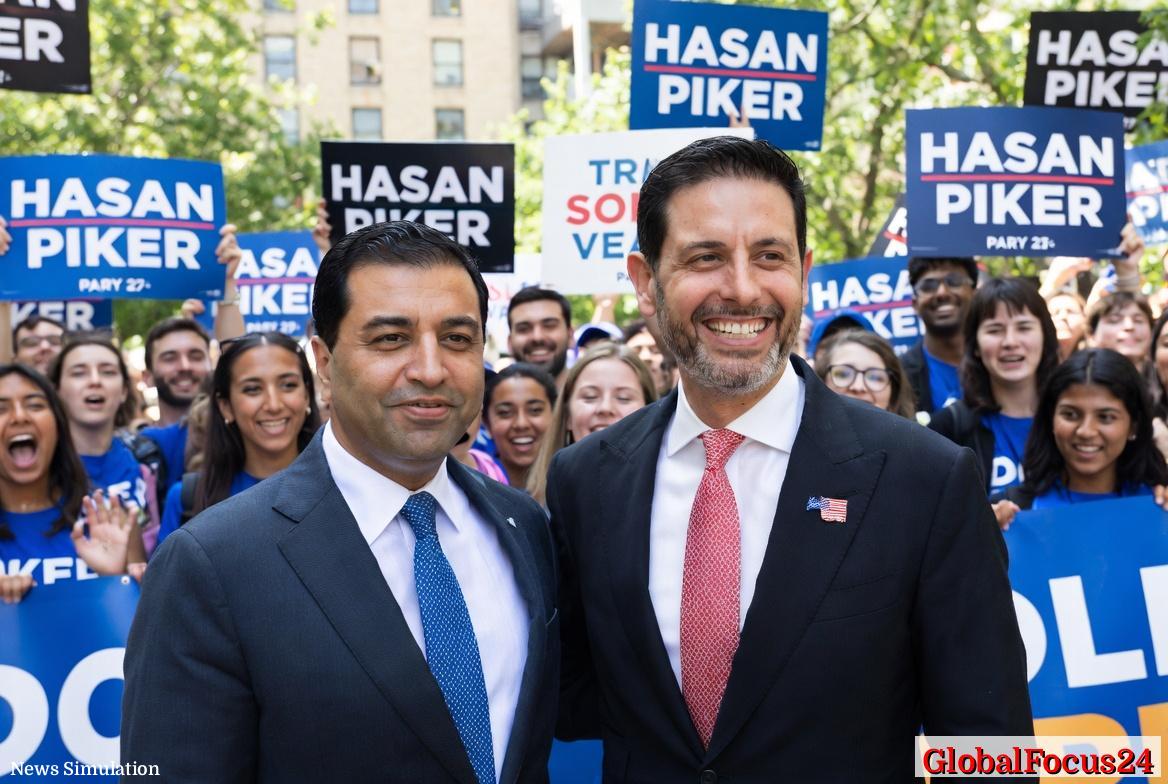
Democrats Turn to Hasan Piker in Bid to Reconnect With Disillusioned Young Voters
A New Outreach Strategy After 2024 Losses
In the wake of disappointing results in the 2024 election, Democratic officials are recalibrating their approach to young voters, a demographic that once served as a cornerstone of their success. Facing mounting frustration from within the party and skepticism from political observers, several prominent Democrats have begun collaborating with Hasan Piker, a 34-year-old Twitch streamer known for his far-left commentary and outspoken political style.
Figures including Rep. Ro Khanna of California, New York City Council member Zohran Mamdani, and political strategist Saikat Chakrabarti have all appeared on Piker’s streaming show in recent months. California Gov. Gavin Newsom has publicly stated that he is open to joining as well. Piker has also appeared at campaign events with progressive Democrats like Rep. Summer Lee of Pennsylvania and Michigan Senate candidate Abdul El-Sayed, signaling a deliberate push by the party’s progressive wing to reconnect with young, disengaged male voters.
The move reflects an urgent recalibration within the Democratic Party after a cycle in which turnout among voters under 30 dropped significantly, particularly among young men. Once energized by issues such as climate change, healthcare reform, and student debt cancellation, younger voters have shown signs of political fatigue and disillusionment, prompting strategists to seek unconventional ways to reach them.
Hasan Piker’s Influence and Controversy
Piker, known online as HasanAbi, commands an audience of over 3 million followers on Twitch, making him one of the most influential political commentators on streaming platforms. His broadcasts combine high-energy political analysis with blunt, often provocative opinions that resonate with segments of young progressive audiences. However, Piker’s online persona—and his history of inflammatory remarks—present a complex challenge for Democrats seeking to leverage his popularity without alienating moderate or older voters.
Over the years, Piker has faced rebuke from Jewish groups and bipartisan critics for comments perceived as antisemitic or anti-American. He has denied those claims, asserting that his remarks are directed at governments, not individuals, and arguing that mainstream media often misrepresents his positions. Nonetheless, the controversy surrounding him complicates efforts by Democratic officials to present their outreach as inclusive and unifying.
For some within the party, partnering with Piker reflects desperation rather than strategy. “I’m a young man, and it’s belittling to say we need this antisemitic jerk to get young men,” said one Democratic congressional staffer, who spoke under condition of anonymity. “He gives Republicans ammo for all the negative stereotypes against Democrats — that we’re weak, hate America, and are Communists.”
The Struggle to Win Back Young Men
The Democrats’ difficulty connecting with young men has become a source of concern among campaign strategists and demographic experts. Exit polls from 2024 showed a widening gender gap: young women continued to lean left, while support among young men drifted rightward. This shift was most pronounced among voters without college degrees, a group that economists and political scientists say has grown increasingly alienated from institutions and distrustful of both major parties.
A former Biden administration appointee, himself a Gen Z voter, described the turn toward Piker as “a symptom of confusion.” “The Democrats are looking for answers as to how they lost young men so badly,” he said. “Hasan Piker doesn’t seem like the right person to lead that charge. He’s a champagne Marxist who’s exclusively focused on politics — not on the real-world frustrations that drive young men away from civic engagement.”
This growing divide has profound implications for future elections. In regions like the Midwest and South, where the margins between parties can be razor-thin, the disengagement of even a fraction of young voters could alter statewide results. Michigan, Wisconsin, and Pennsylvania—three states that will once again play pivotal roles in 2028—illustrate how critical the youth vote remains. Piker’s appearances at universities in Michigan suggest that progressives see those battlegrounds as fertile ground for reenergizing young activists.
Historical Context: The Shifting Youth Vote
For much of the 21st century, Democrats have relied heavily on young voters to build electoral momentum. Barack Obama’s 2008 campaign set a high-water mark for youth engagement, with nearly two-thirds of voters under 30 backing him. That enthusiasm endured, albeit unevenly, through the Trump years, as progressive movements like Black Lives Matter and climate activism rekindled civic participation among younger demographics.
However, the 2024 election signaled a subtle but significant shift. Many younger voters cited disillusionment with party politics, slow progress on economic reform, and skepticism toward corporate influence in Washington. The proliferation of online influencers and content creators has also changed how information spreads among Gen Z and Millennials, upending traditional campaign playbooks that relied on television ads and celebrity endorsements.
By 2024, platforms like Twitch, YouTube, and TikTok had all evolved into battlegrounds for political messaging. Democrats experimented heavily with influencer-driven outreach, promoting figures such as TikTok personality Harry Sisson, but the effort largely failed to gain traction. Critics argued that the content felt contrived and lacked the authenticity that resonates with online audiences. In contrast, figures like Piker built their followings through consistent engagement, candor, and a distinctive personality — qualities that traditional political campaigns struggle to replicate.
Economic Backdrop and Voter Disillusionment
Underlying the political shifts are persistent economic anxieties that weigh heaviest on younger generations. Rising rent costs, stagnant wages, and record levels of student debt have fueled cynicism about political institutions. Despite policymakers’ rhetoric around affordability and fairness, many young Americans see limited prospects for upward mobility.
Economic analysts note that younger men, especially those in non-college-educated or blue-collar sectors, have experienced some of the sharpest economic dislocations over the past decade. Manufacturing decline, automation, and the gig economy have reshaped traditional paths to stability. This environment has made themes of self-reliance, authenticity, and skepticism of elites more resonant—traits that online personalities like Piker or his ideological opposites tend to embody.
Some strategists argue that Democrats’ challenge lies not in outreach tactics but in substance. “You can’t livestream your way out of structural problems,” one Democratic consultant noted. “Until the party shows clear policy results on jobs and housing, young voters, men especially, won’t believe the rhetoric.”
Reactions From Across the Political Spectrum
Reactions to the Democrats’ alliance with Piker have varied widely. Progressive activists praise the willingness to experiment and break from traditional campaign models. They argue that bringing political debate into the spaces where young people already spend time — such as gaming platforms and livestreams — is a pragmatic evolution. To them, Piker represents a bridge between activism and online culture, a figure fluent in both political discourse and internet vernacular.
Yet other voices across the political spectrum question whether this strategy risks conflating visibility with persuasion. Conservative Gen Z influencer Jayme Leagh Franklin, for example, argues that Democrats often appear “cringey and poll-tested” in their youth outreach, lacking the authenticity younger voters crave. She pointed to previous efforts involving heavily scripted influencer partnerships that fell flat, suggesting Piker’s controversies might further alienate centrists.
Republican strategists, meanwhile, have reportedly welcomed the move, seeing it as an opportunity to portray Democrats as beholden to fringe elements within their coalition. They note that while figures like Piker dominate online spaces, they represent a narrow ideological band that may not translate into broad electoral appeal.
Regional Comparisons and Broader Implications
The Democratic Party’s youth outreach challenges mirror trends seen in other Western democracies. In the United Kingdom and parts of Europe, center-left parties have struggled to maintain young male support, as economic insecurity and cultural polarization push segments of youth toward either political apathy or anti-establishment movements. Analysts draw parallels between these developments and the U.S. context, suggesting that both economic realities and cultural alienation play stronger roles than simple messaging failures.
In California—long a liberal stronghold—Piker’s collaboration with figures like Khanna and Chakrabarti illustrates how local progressive leaders are trying to infuse campaigns with media-savvy, youth-oriented messaging. In Michigan and Pennsylvania, states that oscillate between parties, Democratic strategists see potential in Piker’s outreach to university audiences, even as moderates within the party urge caution.
The experimental nature of this approach underscores how fluid modern political communication has become. Traditional advertising, door-to-door canvassing, and televised debates are being supplemented by livestream chats, social media collaborations, and influencer endorsements. Whether these tools can reverse generational disengagement—or merely amplify existing echo chambers—remains an open question.
The Road Ahead for Democratic Outreach
As Democrats look toward the 2028 cycle, the effort to reengage young voters will likely expand beyond individual personalities like Hasan Piker. The emerging consensus among party strategists is that genuine connection must rest on credibility, transparency, and tangible results. Without progress on affordability, climate action, and labor reform, messaging alone may not suffice.
Piker’s growing presence in campaign spaces captures both the promise and the peril of political experimentation in the digital age. His influence among young men is undeniable, but his controversies risk overshadowing the very outreach effort he symbolizes. What Democrats decide to do next — whether to double down on collaboration with online influencers or refocus on grounded, policy-driven engagement — will shape how effectively they rebuild trust with a generation that increasingly defines politics on its own terms.