DOJ Review Finds Bias in Enforcement of FACE Act Under Biden Administration
Internal Review Uncovers Uneven Prosecution of Pro-Life Defendants
A newly released Department of Justice internal review has revealed evidence of uneven enforcement of the Freedom of Access to Clinic Entrances (FACE) Act under the Biden administration, raising questions about prosecutorial fairness and coordination between government officials and abortion advocacy organizations.
The nearly 900-page report analyzed more than 700,000 records detailing the DOJ’s enforcement practices related to cases involving access to abortion clinics and religious facilities. It found that from 2021 through 2023, prosecutors often pursued more aggressive tactics and sought stiffer penalties against pro-life activists than against individuals associated with pro-abortion demonstrations.
Background of the FACE Act
The FACE Act, passed in 1994, was originally intended to protect both abortion clinics and places of worship from threats, violence, or obstruction. The law made it a federal crime to use force, threat, or physical obstruction to interfere with access to reproductive health services or religious observances. Its bipartisan intent was to preserve public safety and prevent clashes at clinics and churches that had become flashpoints in the early 1990s.
Since its passage, successive administrations have interpreted and enforced the statute differently. Under President Bill Clinton, the law primarily focused on preventing blockades at abortion facilities. During the George W. Bush years, prosecutions declined sharply, reflecting an emphasis on voluntary compliance and mediation. The Obama administration took a more assertive approach, especially following a series of violent incidents targeting clinics. However, no previous administration recorded the level of imbalance now alleged under the Biden-era review.
Report Findings and Alleged Collaboration with Advocacy Groups
According to the internal report, DOJ officials worked closely with several prominent abortion advocacy organizations, including the Planned Parenthood Federation of America, the Feminist Majority Foundation, and the National Abortion Federation’s security team. These groups reportedly provided the Department with tip-offs on pro-life activists and tracked demonstrators for extended periods prior to charges being filed.
Former Attorney General Merrick Garland established a “national task force” in July 2022 to coordinate FACE Act cases nationwide—just one month after the Supreme Court overturned Roe v. Wade. Emails cited in the review indicate that task force director Sanjay Patel, a civil division attorney, praised abortion-rights groups for helping to identify potential defendants. In some cases, their input directly guided investigative priorities or charging decisions, a practice that internal auditors said blurred the line between independent law enforcement and advocacy coordination.
High-Profile Cases Highlight Enforcement Disparities
Among the cited examples is United States v. Houck, a case that drew national attention in 2022. Mark Houck, a Philadelphia-area pro-life activist, was charged after a confrontation outside a Planned Parenthood clinic involving his teenage son and a clinic escort. Despite internal DOJ emails showing concern over weak evidence and litigation risks, prosecutors approved an armed raid on Houck’s home involving more than a dozen FBI agents. A jury later acquitted him of all charges in early 2023.
Another case, U.S. v. Zastrow, revealed that prosecutors prepared internal jury selection documents labeling Christian jurors as potentially biased toward pro-life defendants. Staff communications described pro-life activists as “culty” before edits were made to tone down the language prior to court submission. The review labeled this conduct as “highly unprofessional and inconsistent with DOJ standards.”
Sentencing Patterns and Statistical Disparities
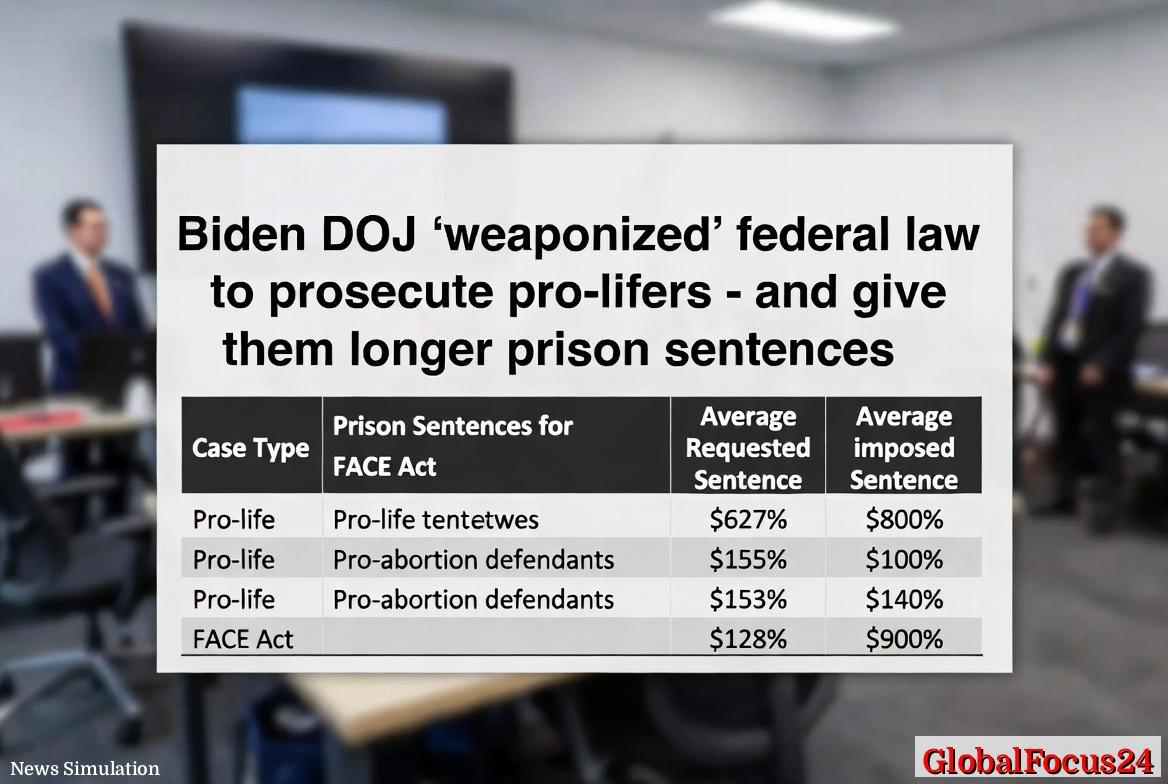
Data compiled in the report show a striking sentencing gap between pro-life and pro-abortion defendants charged under the same statute. Between 2021 and 2023, average prosecutorial recommendations for pro-life defendants accused of nonviolent FACE Act violations were 26.8 months, while comparable cases involving pro-abortion defendants averaged 12.3 months. Judges imposed average sentences of 14 months for the pro-life group versus just 3 months for pro-abortion defendants.
Auditors also found that several cases against pro-abortion demonstrators charged with vandalism or property damage resulted in plea deals or deferred adjudication, while pro-life defendants were less frequently offered such alternatives.
Broader Legal and Institutional Implications
Acting Attorney General Todd Blanche stated that the review underscores a “need to restore impartiality and transparency” within the Department. “The weaponization that happened under the Biden administration will not happen again,” Blanche said during a brief press conference. He added that DOJ’s Office of Professional Responsibility will examine whether disciplinary action or criminal referrals are warranted for prosecutors who may have engaged in misconduct.
Legal analysts note that the episode could prompt the Department to revisit enforcement guidelines for politically sensitive laws like the FACE Act. Historically, the DOJ’s Civil Rights Division has used the act to balance competing interests—protecting access to abortion services while ensuring religious communities and pregnancy centers receive equal protection. The review’s findings suggest that balance may have tilted significantly during the years in question.
Historical Context: Shifting Enforcement Priorities
Since the early 1990s, the FACE Act has been among the most contentious federal civil rights statutes. The law’s bipartisan origins—spearheaded by then-Senator Joe Biden and signed by President Clinton—reflected a consensus that violence at either side of the abortion debate had gone too far. However, interpretation and enforcement have consistently depended on the political climate and social tensions of the time.
Following Dobbs v. Jackson Women’s Health Organization in 2022, which returned abortion regulation to the states, face-offs at clinics, churches, and pregnancy centers intensified. Dozens of pro-life organizations reported vandalism or threats, while abortion rights groups alleged worsening harassment outside clinics. The DOJ faced mounting pressure from both camps to act decisively, amplifying the challenges of maintaining neutrality.
The reported imbalance now risks reviving long-standing debates about selective justice and the use of federal power in culturally divisive matters. For legal historians, it echoes earlier eras—such as the mid-20th-century civil rights prosecutions—where enforcement zeal sometimes clashed with procedural fairness.
Economic and Community Impact
The legal disparity has also carried measurable social and economic consequences for communities affected by the FACE Act. Pro-life advocacy groups, many of them faith-based and volunteer-run, report steep declines in participation at clinics due to fear of prosecution. Several organizations have redirected resources toward legal defense funds, diverting aid that once supported pregnancy counseling or maternal health programs.
Conversely, some clinics and security contractors have benefited from expanded federal coordination and funding after 2022, including grants for security enhancements and personnel training. Experts note that these divergent outcomes may deepen public perceptions of unequal treatment and further polarize the nation’s health advocacy landscape.
In regions like the Midwest and South, where abortion restrictions have tightened since Dobbs, FACE Act enforcement has increasingly centered on pregnancy resource centers rather than abortion providers. In coastal states such as California and New York, the opposite has been true. This regional divide mirrors broader demographic and legal shifts, underscoring how the same federal statute can produce very different real-world effects depending on local politics and prosecutorial discretion.
Reactions from Legal and Advocacy Communities
Reaction to the review’s findings has been immediate and intense. Pro-life organizations hailed the report as long-overdue confirmation of what they describe as systemic discrimination. Several plan to petition for dismissed or reduced sentences and to pursue civil claims alleging abuse of power.
Meanwhile, civil rights advocates warn against politicizing prosecutorial reviews, emphasizing the need for clear standards and renewed oversight. Some former DOJ officials argue that any perception of bias—whether or not intentional—damages public trust and hinders the Department’s ability to enforce sensitive laws effectively.
Future Oversight and Accountability Steps
The report concludes with recommendations for reform, including improved internal auditing, mandatory political neutrality training for prosecutors involved in FACE Act cases, and tighter restrictions on external coordination with advocacy groups. It also suggests that certain individuals, including former task force director Patel, could face referral to the Office of the Inspector General or state bar associations for possible misconduct reviews.
If implemented, these steps could reshape how the Justice Department handles politically charged civil rights enforcement going forward. Law professors and policy experts alike stress that maintaining impartial enforcement is not merely a legal requirement but a prerequisite for public confidence in democratic institutions.
The Path Ahead for the FACE Act
As the Justice Department navigates the aftermath of the internal findings, officials face the dual challenge of rebuilding trust while ensuring safety and access on all sides of the abortion debate. The FACE Act remains a vital yet deeply polarizing instrument in America’s legal landscape—one that has evolved with every administration but continues to test the nation’s commitment to equal justice under law.
Whether this latest review leads to lasting institutional reform or becomes another chapter in the enduring tug-of-war over reproductive rights and religious freedom may depend on the Department’s next steps—and its willingness to reassert neutrality in one of the most sensitive areas of federal law enforcement.