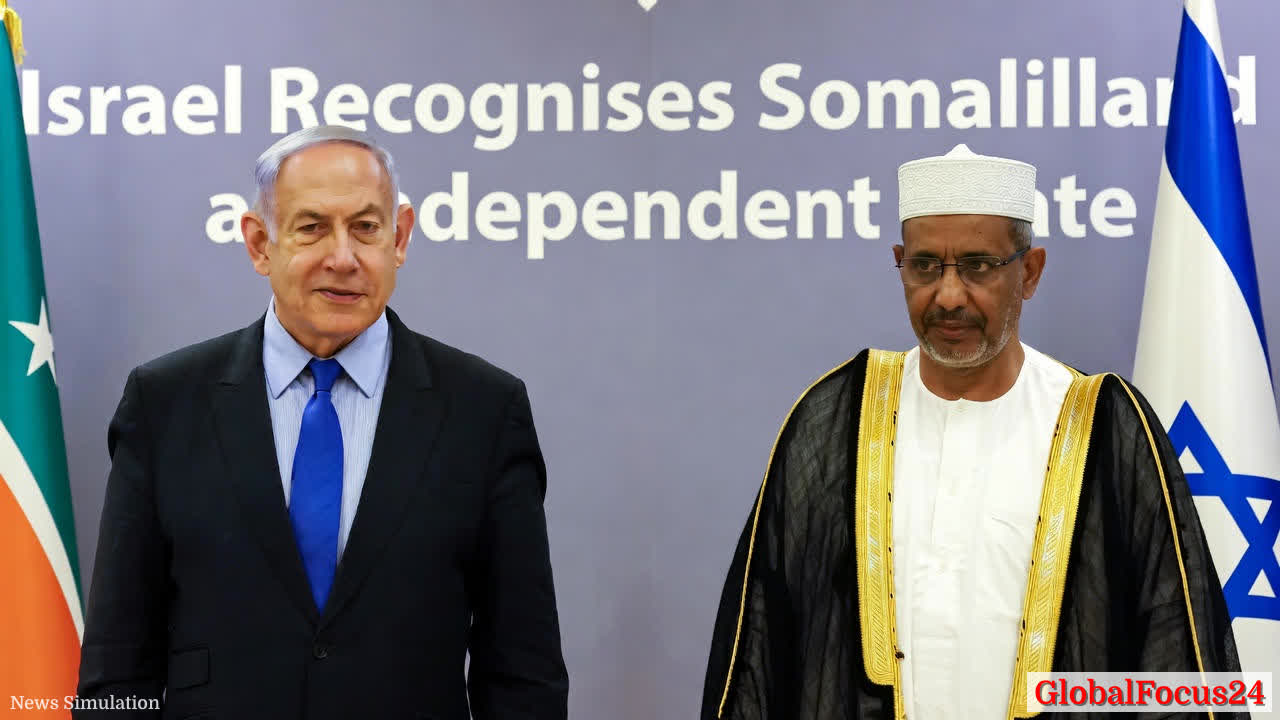
Israel Recognizes Somaliland: Global Implications and Regional Reactions
In a historic move that reshapes regional dynamics, Israel formally recognizes Somaliland as an independent state. Prime Minister Benjamin Netanyahu announced that the recognition encompasses immediate steps to expand cooperation across agriculture, health, and technology, signaling a willingness to deepen diplomatic and economic ties. Somaliland’s president, Abdirahman Mohamed Abdullahi, hailed the decision as a historic moment and emphasized a commitment to advancing regional peace through new partnerships. The development stands to alter strategic calculations in the Horn of Africa and the Middle East, while drawing both praise and condemnation from international actors.
Historical context: decades-long complexity in Somaliland’s status
Somaliland declared independence from Somalia in 1991 following a protracted civil conflict. Though the move has been celebrated by its inhabitants and recognized by a handful of states in limited capacities, Somaliland has not secured wide-ranging international recognition or a seat at the United Nations. The region has nonetheless built stable institutions, including its own currency, passport system, and police force, and has maintained a functioning government and security apparatus. This relative political and administrative stability contrasts with neighboring areas that have faced ongoing turmoil, underscoring Somaliland’s unique position within the Horn of Africa.
From a historical perspective, the question of Somaliland’s independence has long intersected with questions of Somali sovereignty, regional security, and international law. Somalia has consistently asserted territorial integrity and urged other states to refrain from recognizing breakaway entities. The international community has largely adhered to a position of non-recognition that respects Somalia’s sovereignty, while engaging Somaliland in non-state or limited capacity engagements in areas such as development aid and humanitarian cooperation. The present decision by Israel adds a new layer to this historical arc by introducing a formal bilateral framework that could influence the stance of other states and potentially recalibrate regional alignments.
Economic impact: potential shifts in trade, investment, and supply chains
The recognition is likely to catalyze economic activity across several sectors. Somaliland’s strategic location on the Gulf of Aden provides potential advantages for regional trade routes, maritime access, and port-related development. Immediate opportunities are anticipated in agriculture, where Somaliland has comparative advantages in pastoral and crop production, and in technology sectors where Israeli expertise in water management, cybersecurity, and agri-tech could yield cross-border collaborations. Health partnerships may focus on public health systems, pharmaceutical supply chains, and telemedicine, leveraging Israel’s experience in medical innovation and diagnostics.
Developing formal diplomatic ties opens channels for investment and access to international markets. For Somaliland, enhanced legitimacy could translate into improved terms for development loans, infrastructure financing, and participation in regional value chains. For Israel, expanded ties with Somaliland could diversify its geographic footprint in Africa and the Horn of Africa, potentially complementing existing Abraham Accords alignments and reinforcing its role as a technology and innovation partner in transitioning economies.
However, the move also introduces risks. Somalia and several regional actors have condemned the recognition, warning that unilateral steps threaten state cohesion and could set dangerous precedents under international law. International financial institutions and multinational corporations will likely monitor the evolving legal and regulatory landscape to assess compliance requirements, asset protection, and risk management. The policy shift may influence insurance costs, risk underwriting, and project feasibility analyses in the region, especially for large-scale infrastructure or port-related ventures.
Regional comparisons: parallel cases and lessons
To understand potential trajectories, it helps to compare Somaliland’s situation with other self-proclaimed or partially recognized entities. In some cases, such entities have secured limited international engagement and informal economic ties while avoiding full UN membership. These arrangements can yield selective investment, capacity-building programs, and trade opportunities, but often come with ongoing political uncertainty and dependence on external recognition for broader legitimacy. The Somaliland-Israel development echoes broader patterns where recognition by a technologically advanced economy can accelerate knowledge transfer, private-sector partnerships, and policy reform in a relatively stable but diplomatically isolated region.
In contrast, other regions that achieved broad recognition typically benefited from formal membership in international organizations, more robust access to development finance, and clearer integration into global supply chains. The Somaliland case represents a nuanced middle path: enhanced bilateral cooperation without immediate, universal diplomatic acceptance, yet with tangible benefits in areas like agriculture technology, water management, and healthcare delivery.
Geopolitical implications: shifting alliance structures and strategic calculus
Analysts anticipate several possible geopolitical consequences. First, the move could prompt realignments among regional actors, who may recalibrate their diplomacy and investment priorities in response to new bilateral dynamics between Israel and Somaliland. Second, neighboring states—especially Somalia, Egypt, Turkey, and Djibouti—have publicly rejected the decision, citing commitments to territorial integrity and regional stability. Their reactions may influence subsequent coordinated regional responses, including statements of support for sovereignty and calls to maintain existing international norms.
Third, the development intersects with broader regional security concerns in the Horn of Africa and the Middle East. The Gulf of Aden remains a critical chokepoint for international trade, and enhanced cooperation between Israel and Somaliland could have ripple effects on maritime security initiatives, technological collaboration in critical infrastructure, and joint research in disaster resilience. Fourth, the recognition could influence diaspora and humanitarian channels, potentially enabling new forms of cultural and educational exchanges that reinforce ties between communities across continents.
Public reaction and societal context
Public sentiment surrounding such a landmark diplomatic development tends to be multifaceted. In Somaliland, reactions are likely to be cautiously optimistic, reflecting a sense of validated ambition and a belief that formal recognition could unlock external investment and development programs. In Israel, the decision may be welcomed as a strategic advance in regional diplomacy and economic diversification, while facing scrutiny from critics who urge careful management of regional stability and adherence to international norms.
Beyond these capitals, civil society, business communities, and think tanks will monitor the implementation phase closely. Public commentary often emphasizes the need for transparent governance, responsible investment, and strict adherence to international humanitarian and human rights standards as new partnerships take shape.
Implementation framework: institutional steps and timelines
With the announcement, both governments outlined concrete steps to institutionalize ties. The plan includes the appointment of ambassadors, the opening of embassies, and expanded cooperation across agriculture, health, and technology sectors. Foreign ministry channels are expected to accelerate policy coordination, regulatory alignment, and joint projects that leverage expertise in water resource management, agribusiness, cybersecurity, and biomedical research. The operational phase will likely involve ministerial negotiations, public-private partnerships, and coordinated outreach to regional chambers of commerce and international development organizations.
Legal and diplomatic considerations will guide the partnerships. Potential implications for sanctions, international agreements, and treaty obligations require careful navigation, particularly given Somalia’s unified stance on sovereignty. The international community will likely seek assurances that collaboration respects existing treaties and sovereignty principles, while supporting peaceful development and humanitarian protections in the region.
What to watch next: indicators of success
Several indicators can signal whether this diplomatic development translates into sustained regional benefits. Trade flows and investment commitments in the joint agriculture and technology sectors will be early barometers. The scale and impact of joint research initiatives, technology transfer, and public-health programs will provide tangible evidence of collaboration. Additionally, the pace of embassy operations, visa and travel facilitation, and mutual recognition of professional licenses or qualifications will reflect practical integration.
Livelihood outcomes for local communities—such as job creation in technology-enabled farming, healthcare access improvements, and enhanced food security—will be crucial in assessing the broader social impact. Finally, regional stability metrics, including adherence to international norms, processes for dispute resolution, and the maintenance of peaceful inter-state relations, will gauge the sustainability of the new cooperation framework.
Regional inference: Somaliland’s role in a changing African and Middle Eastern map
Somaliland’s emergence as a recognized partner of Israel, even on a limited bilateral basis, could recalibrate regional power dynamics. The Horn of Africa has long been a nexus of maritime trade, security concerns, and development opportunities. By linking with Israel’s technology and innovation ecosystem, Somaliland could amplify its profile as a hub for agro-tech and digital solutions designed for arid and semi-arid environments. The potential for collaborative projects in water management, early warning systems for drought, and climate-resilient farming aligns with broader development agendas in the region and with international climate resilience goals.
At the same time, neighboring countries will assess risk and opportunity through a regional lens. For Somalia, the priority remains national unity and territorial integrity, and the international community’s gentle insistence on non-secessionist policies will continue to shape regional discourse. Djibouti and Egypt, with strategic ports and shared security concerns, may adopt complementary approaches that balance openness to new partnerships with a preference for maintaining existing diplomatic frameworks.
Conclusion: a pivotal moment with long-term consequences
The formal recognition of Somaliland by Israel marks a pivotal moment in both regional diplomacy and economic development. The move has the potential to unlock new streams of investment, technology transfer, and cross-border cooperation in agriculture, health, and digital innovation. It also invites careful scrutiny of international legal norms and sovereignty principles, as neighboring states and global actors weigh the implications for regional stability and multilateral order.
As implementation unfolds, observers will watch for concrete outcomes: how quickly ambassadors are appointed, how joint projects are funded and executed, and how smooth the regulatory alignment proves to be. The broader question remains whether this diplomatic shift can contribute to sustainable development and lasting peace in a historically complex region, while balancing the legitimate interests and concerns of all regional stakeholders.