Aliko Dangote’s Expanding Industrial Empire Reshapes Africa’s Economic Future
A Vision Rooted in African Self-Reliance
Aliko Dangote, Africa’s richest man and one of the world’s most influential industrialists, stands at the forefront of a sweeping transformation of the continent’s economic landscape. With an estimated fortune of $28.5 billion, Dangote has built an empire unlike any other in African history — a conglomerate that bridges energy, agriculture, materials, and logistics. His expansive projects now span nearly every corner of the continent, driven by a single idea: African-led industrialisation as the foundation of long-term prosperity.
At the centre of his vision lies the Dangote Group, an enterprise that has grown beyond cement and consumer goods to encompass oil refining, mining, fertilizers, power generation, and processing industries. The group’s steady evolution from a domestic business to a continental powerhouse underscores Africa’s changing industrial narrative — one increasingly defined by local investment, complex infrastructure, and regional integration rather than reliance on imports or extractive industries dominated by foreign corporations.
The Dangote Refinery: A Landmark in Continental Industry
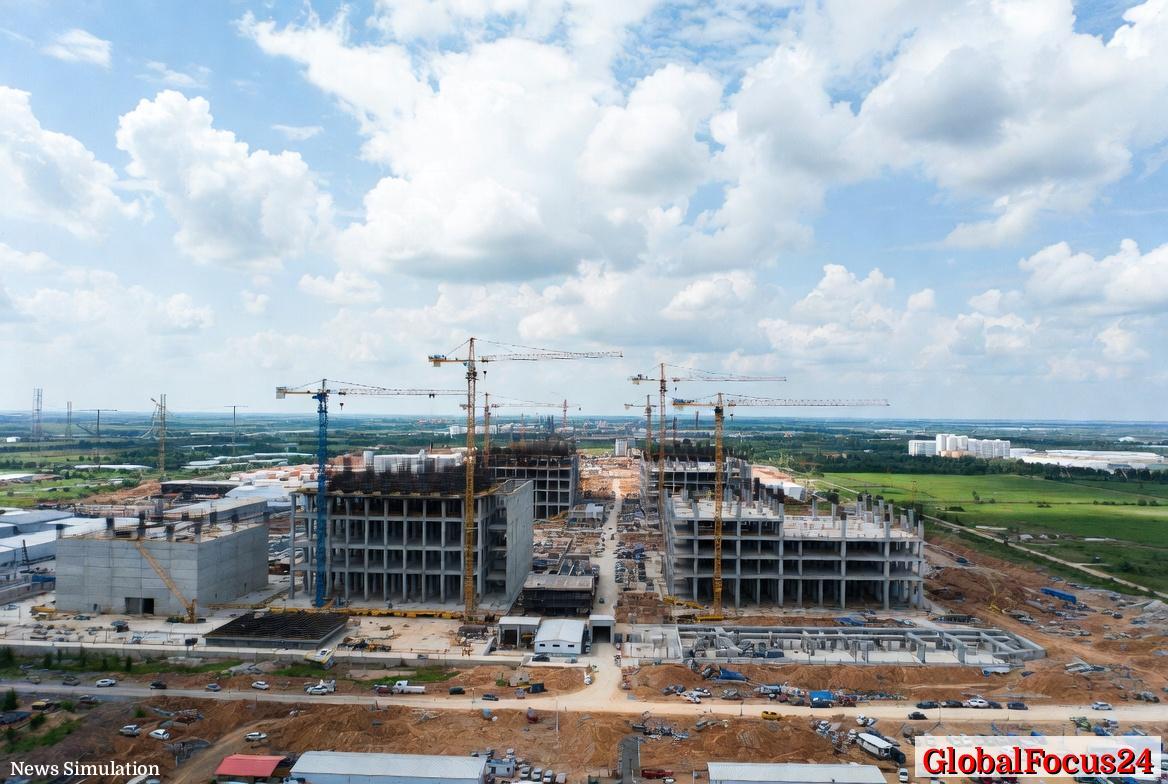
The opening of the Dangote Refinery complex outside Lagos in 2023 signaled a new era for Africa’s energy independence. Spanning an area nearly half the size of Manhattan, the $19 billion mega-project became Africa’s largest single-location oil refinery and petrochemical hub. Designed to process 650,000 barrels of crude daily, the facility intends to not only meet Nigeria’s domestic fuel needs but also supply refined petroleum products across West, Central, and East Africa.
Dangote’s plans to expand the refinery’s capacity over the next three years suggest ambitions that stretch far beyond regional markets. If realized, the expanded output would approach nearly half the combined refining capacity of all Saudi Arabian facilities — a remarkable feat for a continent that still imports over 80% of its refined fuel products. The implications are profound: reduced dependency on foreign refiners, stabilization of fuel prices, creation of thousands of skilled jobs, and an estimated export potential of $11 billion annually.
The billionaire has also hinted at listing a portion of the refinery on the Nigerian Stock Exchange, with a secondary offering in London. Financial analysts view this potential dual listing as a milestone — not only for Nigeria’s capital markets but for Africa’s integration into global industrial supply chains. It would open a new chapter of transparency, global funding access, and corporate governance standards in African manufacturing.
Continental Expansion: From Fertilizers to Minerals
Beyond Nigeria, Dangote’s industrial footprint extends into 16 other African nations, each hosting projects tailored to local needs and resources. In Ethiopia, the group is developing a $2.5 billion joint-venture fertilizer plant — a project envisioned to rival the Nigerian refinery in scale and importance. Fertilizer production has emerged as a strategic priority amid Africa’s push for agricultural modernization, aiming to reduce reliance on imported inputs and sustain food security across the continent’s fertile but underutilized lands.
Further south, Dangote is investing more than $1 billion in combined cement and power projects in Zimbabwe. The initiative seeks to revitalize industrial sectors weakened by decades of instability and energy shortages. The cement industry, long seen as the backbone of infrastructure development, remains central to Dangote’s strategy — binding together transportation networks, housing, ports, and industrial zones through local production that reduces construction costs and boosts employment.
In Zambia, the conglomerate is exploring copper processing facilities designed to add value to one of Africa’s most vital exports. Similarly, in Ghana and Ivory Coast, Dangote’s companies are stepping into cocoa processing — a sector historically dominated by foreign corporations. By processing raw cocoa domestically, these ventures could capture more of the $130 billion global chocolate market, representing a structural shift toward retaining value within Africa rather than exporting raw materials.
Additionally, plans to develop potash and phosphate mines and to construct a petroleum pipeline linking Namibia to central Africa highlight the group’s long-term focus on regional connectivity and supply chain resilience. These efforts not only lower transportation costs but also open trade corridors that could reshape logistics across sub-Saharan Africa.
Industrialization and Historical Context
Dangote’s ascent aligns with a broader historical transformation in Africa’s economic identity. For much of the 20th century, African economies revolved around raw material exports — oil, minerals, and agricultural commodities — often controlled by foreign corporations. The continent’s industrial base remained limited, constrained by infrastructure gaps, political instability, and capital shortages.
The late 1990s marked a shift, as economic liberalization and regional collaboration began to attract private investment. But large-scale, African-owned enterprises remained rare. Dangote’s model of indigenous industrial investment breaks decisively with that legacy. His businesses are structured to manufacture, process, and distribute within Africa itself, providing the missing link between resource extraction and industrial output.
Historically, Africa has seen industrial champions arise in isolation — in Egypt, South Africa, or Kenya — but few have operated with continental reach. The Dangote Group’s integrated approach recalls historical developmental phases in other regions, such as Asia’s industrialization under locally driven conglomerates in South Korea, India, and Indonesia. In those nations, domestic giants catalyzed modernization through vertically integrated industries, from steel to petrochemicals and shipping. Africa, long positioned as a supplier of raw materials, now sees a parallel transformation emerging through Dangote’s enterprise.
Economic Ripple Effects Across Africa
The economic impact of Dangote’s ventures extends well beyond corporate profits. The refinery alone is projected to save Nigeria more than $10 billion annually in fuel import costs while earning billions more from exports. The multiplier effects reach into logistics, retail, transport, and construction sectors, fostering skills transfer and improving regional trade balances.
In countries like Ethiopia and Zimbabwe, new industrial hubs bring not only direct employment but also secondary growth in engineering services, utilities, and trade infrastructure. Lagos, already Nigeria’s commercial nerve center, now hosts Africa’s most sophisticated refining ecosystem — attracting investors in ancillary industries including plastics, fertilizers, and lubricants.
Moreover, Dangote’s expansion signals growing confidence in intra-African trade, in line with the African Continental Free Trade Area (AfCFTA) agreement. His network of factories, pipelines, and ports complements the free trade framework by physically linking regions with industrial corridors. By manufacturing fertilizer in Ethiopia and selling it to West African farms, or refining Nigerian oil for East African markets, Dangote effectively embodies the vision of a self-sustaining, interconnected African economy.
Regional Comparisons: Lessons From the Global South
Comparing Dangote’s approach with industrial movements in other developing regions offers further insight. Asia’s economic resurgence was driven by conglomerates that built domestic refining, shipping, and consumer industries — reducing foreign dependency and nurturing skilled labor. Latin America’s modernization, by contrast, was slowed by uneven infrastructure and external control over key industries. Africa’s future may depend on whether local investors like Dangote can replicate Asia’s model of integrated development.
Countries such as Saudi Arabia and India illustrate how strategic industrial investments can redefine global economic roles. Dangote’s efforts mirror these paths through aggressive diversification: petroleum refining, mineral processing, and renewable energy all working together to anchor local economies. His refinery expansion plans — aiming for capacity rivaling half the Saudi network — position Nigeria as a potential energy hub for all of sub-Saharan Africa.
Public Reaction and Emerging Challenges
Across the continent, Dangote’s projects have drawn a mix of admiration and cautious optimism. In Nigeria, the refinery’s launch was greeted with national pride as a turning point toward self-sufficiency. Economists praised its size and ambition, viewing it as an anchor for long-term industrial growth. Yet logistical challenges remain. Power grid reliability, supply chain bottlenecks, and regulatory constraints could slow progress in some regions. Environmental groups have also urged stricter oversight to ensure sustainable development.
In nations hosting new Dangote ventures, governments are preparing infrastructure upgrades to support the incoming industrial flow. Ports in Namibia, rail lines in Zambia, and energy grids across East Africa could all benefit from private-sector investment and public-private partnerships inspired by the Dangote model.
A Continental Blueprint for Transformation
Aliko Dangote’s expanding industrial empire represents far more than the success of a single entrepreneur. It marks the emergence of Africa’s long-awaited industrial age — one powered not by foreign aid or extraction, but by domestic vision and capital. The Dangote Group’s reach across oil, fertilizer, minerals, and agriculture is gradually constructing a continental manufacturing architecture that could redefine Africa’s role in the global economy.
If his projects continue to mature as planned, they may set the stage for a new wave of African industrialization — one built around cooperation, innovation, and strategic investment. From Lagos to Addis Ababa, Accra to Harare, Dangote’s influence is helping redraw the map of African enterprise, pushing the continent closer to economic self-reliance and shared prosperity.