Tensions Rise as China and Japan Face War of Rhetoric over Prime Minister’s Comments
Beijing – Chinese officials have voiced strong disapproval of remarks delivered by Japan’s prime minister in November, framing the comments as a challenge to China’s sovereignty and a pointed reminder of Japan’s imperial era. The public response from Beijing has included formal diplomatic notes, synchronized messaging across state media, and a demonstrable readiness to respond to perceived provocations. The episode underscores how historical grievances and regional security concerns continue to shape East Asia’s political landscape.
Historical Context and the echo of history in today’s politics The latest flare-up sits against a dense backdrop of more than seven decades of postwar governance, reconciliation efforts, and a lingering memory of earlier conflicts. Japan’s imperial expansion in the first half of the 20th century left enduring scars in China’s collective memory, a factor that continues to influence contemporary policy debates and public sentiment. In China, official narratives often frame past aggression as an ongoing cautionary tale about regional security and national sovereignty. Japan, meanwhile, has emphasized its postwar constitutional commitments, economic modernization, and peaceful diplomacy as the core of its national identity. The juxtaposition between these perspectives helps explain why a single sermon-like remark can escalate into a wider strategic conversation about trust, regional influence, and interpretive histories.
Economic implications and the ripple effects across markets The rhetoric surrounding sovereignty and historical memory frequently intersects with economics, particularly in a densely interconnected regional economy. China and Japan are major trade and investment partners, with supply chains, manufacturing corridors, and financial linkages that extend across industries such as electronics, automotive, and advanced materials. Shifts in diplomatic tone can influence market expectations about bilateral trade, corporate investment decisions, and cross-border collaboration on technology and infrastructure projects. While official channels aim to keep economic activity stable, analysts monitor the potential for sanctions chatter, consumer sentiment shifts, or supplier risk reassessment in industries sensitive to political risk.
Regional comparisons illuminate a broader pattern To understand the potential trajectory of the current tension, it helps to compare the incident with similar historical dynamics in other regions. In Southeast Asia, diplomatic spats tied to history and territorial claims have periodically influenced regional blocs, investment climates, and defense postures. In Europe, the post-Cold War balancing act between major powers shows how symbolic statements can lead to real-world deterrence measures, increased defense spending, and opportunities for international mediation. These patterns suggest that while the current friction between China and Japan carries a unique East Asian context, the mechanics—assertive rhetoric, sovereignty claims, military signaling, and economic caution—are part of a familiar global playbook.
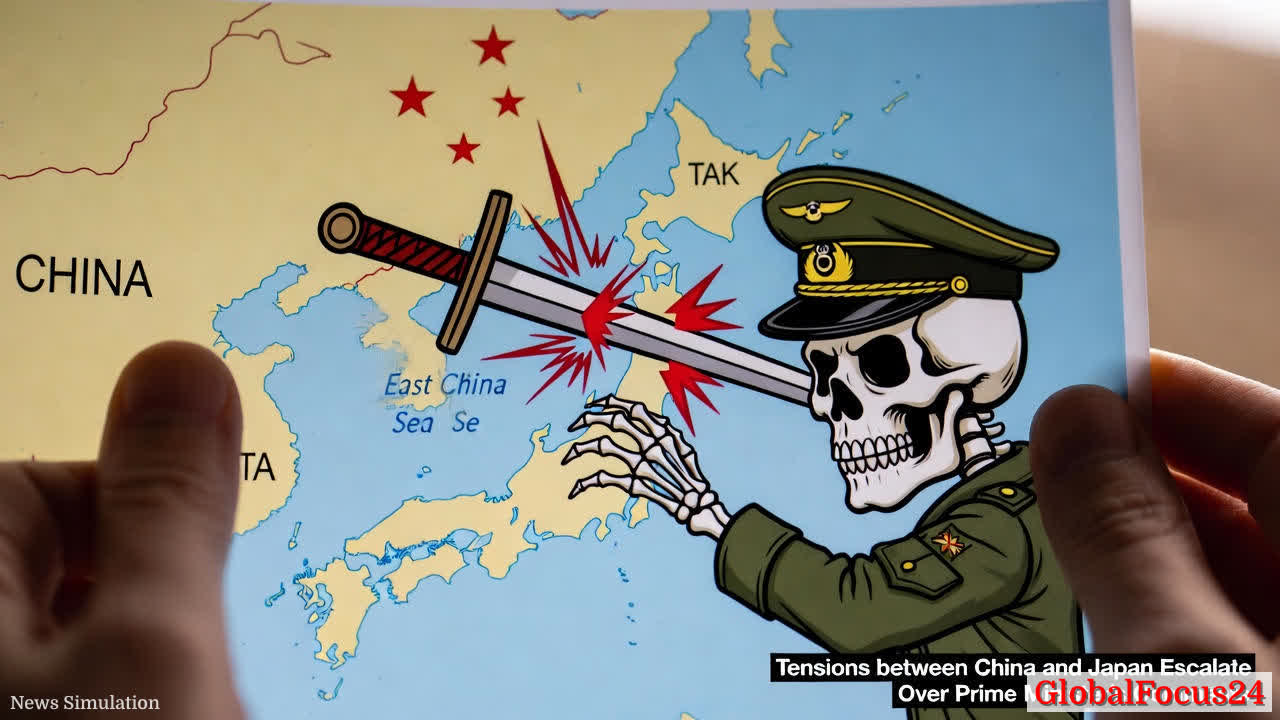
Military signaling and public messaging China’s response to the prime minister’s remarks included public signaling that emphasizes resolve and readiness. A state-backed publication of a poem and accompanying imagery is a conventional tool in the era of strategic communication, intended to project seriousness and unity at home while signaling deterrence abroad. Whether such cultural artifacts translate into concrete military actions depends on a broader assessment of risk, alliance dynamics, and gray-zone pressures in the region. Analysts note that maritime patrols, exercises in contested zones, and defense modernization programs are often aligned with diplomatic messaging to convey that security concerns are real and persistent.
Public reaction and the social dimension Public sentiment in both countries tends to reflect a mix of national pride, historical memory, and pragmatic concerns about daily life, jobs, and future opportunity. In metropolitan centers and industrial hubs, business leaders and workers often weigh the potential for disruption against the benefits of continued cooperation. The social discourse also includes scholarship, journalism, and cultural exchanges that help illuminate the complexities of the dispute. While a portion of the public may rally around a strong stance on sovereignty, others advocate for pragmatic dialogue and confidence-building measures to prevent disruptions to commerce and people-to-people ties.
Diplomatic channels and potential pathways to de-escalation Even amid sharp rhetoric, there remain avenues for diplomacy that can help stabilize the situation. Multilateral forums, back-channel diplomacy, and confidence-building measures targeting maritime norms, incident transparency, and crisis communications are often deployed to prevent miscalculations. Practical steps might include codified lines of communication between naval commands, joint humanitarian initiatives, and reciprocal visits designed to demonstrate commitment to peaceful coexistence. The effectiveness of these measures depends on sustained political will, credible commitments, and transparent reporting that reduces the likelihood of accidental confrontations.
Implications for global supply chains Global supply chains are increasingly resilient when multiple economies maintain stable, transparent relations. However, political strains between major producers can affect investment confidence, inventory planning, and currency stability. Companies across sectors should monitor policy developments, regulatory changes, and potential impact on trade routes. Diversification strategies, such as regionally balanced sourcing, geographic risk assessment, and scenario planning, can mitigate exposure to sudden shifts in bilateral relations. In practice, firms may accelerate procurement from alternative suppliers, adjust production schedules, or reconfigure international logistics to preserve continuity.
Historical memory and future prospects The current exchange highlights how memory, identity, and national narratives continue to shape strategic choices in the region. Decades of experience with governance, diplomacy, and economic integration have shown that sustained engagement paired with principled dialogue is often the most reliable path to stability. The future trajectory will likely depend on a mix of domestic political considerations, regional security dynamics, and international responses that encourage restraint and constructive collaboration.
Key takeaways for readers
- Historical grievances remain a powerful influence on contemporary policy in East Asia, shaping both diplomatic language and strategic postures.
- Economic ties between China and Japan are substantial enough that sustained tensions can have rippling effects on markets and supply chains across multiple sectors.
- Diplomatic engagement, crisis communication channels, and confidence-building measures offer practical means to de-escalate tensions while preserving regional stability and economic continuity.
Policy considerations for stakeholders
- Governments may prioritize restoring clear lines of communication between relevant ministries and military authorities to reduce risk of misinterpretation or miscalculation during periods of heightened rhetoric.
- Businesses should implement robust risk management practices, including scenario planning for bilateral disruptions, contingency planning for supply chain interruptions, and ongoing monitoring of regulatory developments that could affect cross-border trade.
- Civil society and academic institutions can contribute to a more nuanced public understanding by hosting forums that discuss historical contexts, security implications, and avenues for peaceful cooperation.
Economic resilience in a tense environment In a period marked by strategic competition and sensitive historical memory, resilience becomes a central theme for both economies. Investment decisions, consumer confidence, and tech industry dynamics are all influenced by perceptions of stability. Whiles may signal momentary volatility, the underlying economic ties and the mutual benefits of cooperation provide a foundation for continued growth if both sides choose to engage constructively.
Regional cooperation prospects Despite friction, there are numerous regional avenues for collaboration that transcend bilateral disputes. Joint research initiatives in semiconductor fabrication, climate resilience, and urban infrastructure can create shared incentives to maintain dialogue. Regional trade agreements, cultural exchange programs, and joint disaster-response exercises also serve as practical channels for maintaining positive interactions even when political narratives run intense.
Conclusion: navigating a delicate balance The moment captures a broader pattern in which history, identity, and strategic calculation intersect on the world stage. As Beijing articulates its concerns and Tokyo weighs its own strategic priorities, the international community watches with a mix of concern and cautious optimism. The path forward rests on disciplined diplomacy, transparent communication, and a recognition that economic interdependence, coupled with a commitment to peaceful dispute resolution, remains the strongest buffer against escalating tensions.
Note: This article presents an objective review of the current developments, incorporating historical context, economic considerations, and regional comparisons to provide a comprehensive understanding of the situation without endorsing any political viewpoint.