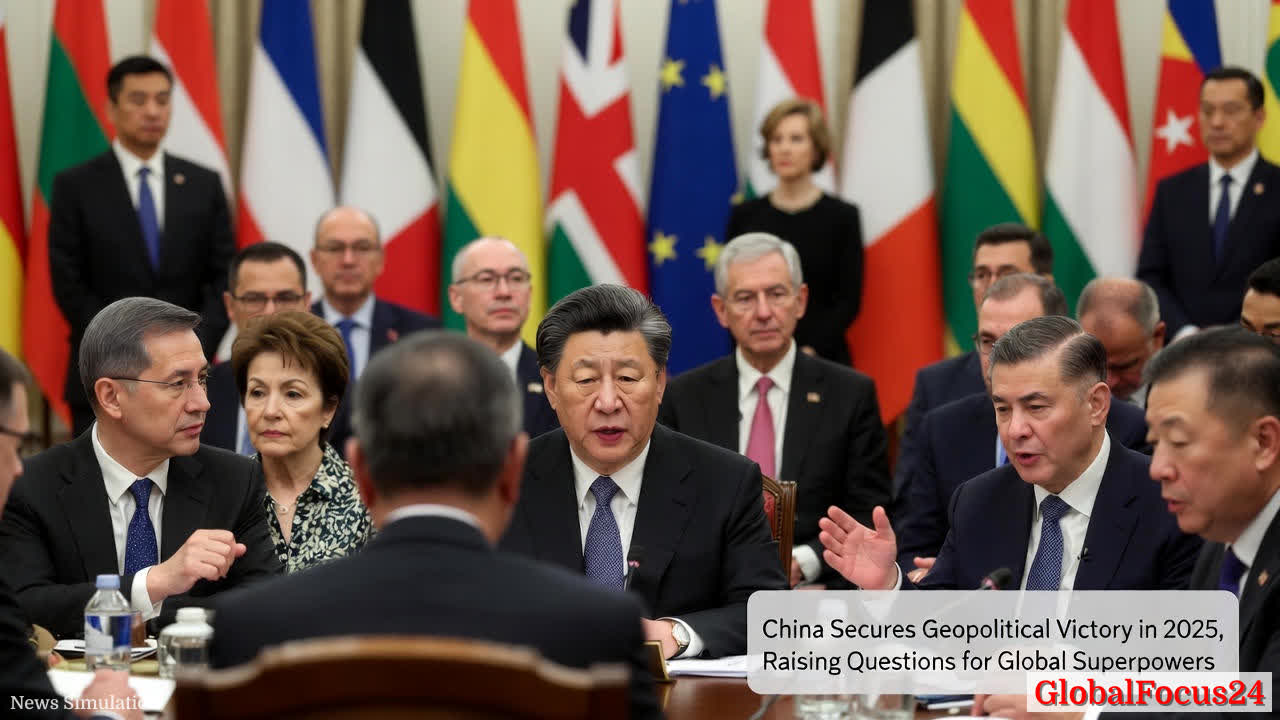
China Secures Geopolitical Victory in 2025: Implications for Global Power Dynamics
In 2025, a pivotal shift in global power dynamics unfolded as China asserted a decisive geopolitical victory that reshaped how nations view influence, security, and economic leadership. The outcome did not hinge on a single event but rather on a confluence of strategic initiatives, sustained economic growth, regional diplomacy, and a reshaped international order that favors coordinated development and resilience in supply chains. While the specifics of any single moment can be debated, the net effect has been a rebalancing of strategic weight, with ripple effects spanning trade, technology, and regional alliances across the Asia-Pacific, Europe, the Americas, and beyond.
Historical context: a long arc toward influence
China’s ascent is often traced to a series of deliberate reforms, investment in infrastructure, and a multi-decade push to diversify the economy beyond export-led growth. The country’s leadership has emphasized a long-term vision of national rejuvenation, seeking greater representation in global institutions and more autonomy in critical sectors such as energy, telecommunications, and advanced manufacturing. In the years leading up to 2025, this trajectory intersected with shifts in global demand, evolving technology ecosystems, and the reorientation of multinational supply chains following previous disruptions. As a result, China’s geopolitical standing evolved not through isolated episodes but through a gradual, methodical expansion of influence across diplomacy, finance, and technology ecosystems.
Economic impact and resilience: reshaping growth patterns
The 2025 development accelerated a broader realignment of economic activity. Key channels driving this impact include:
- Trade and investment: A growing network of trade corridors and investment partnerships facilitated more diversified routes for goods and services. This diversification helped mitigate vulnerabilities associated with concentration risk in any single market and supported regional value chains that emphasize resilience and speed to market.
- Technology and innovation: Investments in research and development, artificial intelligence, semiconductor manufacturing, and green technologies positioned China as a central node in global innovation. This shift influenced global competitive dynamics by encouraging collaboration and, in some cases, recalibration of technology supply chains to balance security with efficiency.
- Infrastructure finance and development: Domestic and international infrastructure initiatives improved connectivity across regions, enabling faster movement of goods and people. These efforts contributed to regional growth by lowering logistics costs and creating integrated markets with shared standards.
- Currency and financial diplomacy: A more active role in regional finance and currency cooperation contributed to greater monetary stability in certain markets and helped align financial policies across partner economies. This evolution supported predictable investment environments and enhanced confidence for cross-border projects.
Regional comparisons: how different areas viewed the shift
- Asia-Pacific: The region continued to be the center of gravity for trade and manufacturing. Enhanced collaboration with neighboring economies, advancements in 5G and later-generation networks, and joint initiatives in green infrastructure reinforced the region’s competitiveness. Nations pursued diversified partnerships to ensure supply chain resilience while maintaining proximity to manufacturing hubs.
- Europe: European economies observed nuanced shifts in their strategic posture. While mutual trade remained strong, there was increased emphasis on diversification away from single-source suppliers and stronger protections for critical technologies. Collaborative frameworks and standardized regulatory regimes helped maintain stability while adapting to evolving geopolitical realities.
- Americas: In North and South America, the emphasis was on securing energy, critical minerals, and advanced components. Bilateral agreements and regional trade blocs facilitated greater economic integration, while policymakers weighed national security considerations alongside opportunities for growth.
- Africa and the Middle East: These regions saw intensified investment tied to energy transition projects, infrastructure development, and capacity-building efforts. The geographic diversification of partnerships offered new avenues for growth and systemic diversification of risk.
Public reaction and societal implications
Public sentiment toward the 2025 geopolitical evolution varied by region, reflecting differences in exposure to global supply chains, national security considerations, and domestic economic performance. In many urban centers, a palpable sense of urgency accompanied discussions about preparedness, diversification of supply sources, and investments in high-skilled labor to compete in a rapidly evolving tech economy. Communities that benefited from greater cross-border collaboration—through improved logistics corridors, job creation in manufacturing and tech sectors, and educational opportunities—expressed optimism about long-term stability and prosperity. Meanwhile, policymakers faced ongoing challenges around balancing openness with strategic safeguards, ensuring that growth translates into broad-based improvements in living standards.
Strategic implications for global power architecture
The 2025 turn has prompted several enduring considerations for international governance and security:
- Multilateral institutions and rulemaking: As power dynamics shift, there is heightened focus on reforming international organizations to better reflect current economic realities. This includes approaches to dispute resolution, technology governance, and climate resilience that align with the interests of a broader set of stakeholders.
- Alliance calculus and deterrence: Traditional security architectures are being re-evaluated, with partners seeking assurances that cooperation remains robust in the face of evolving threats. This has prompted renewed conversations about burden-sharing, joint exercises, and capabilities development across regions.
- Supply chain sovereignty and diversification: Companies and governments alike have accelerated plans to diversify suppliers, build regional ecosystems, and invest in domestic capabilities for critical inputs such as semiconductors, rare earths, and energy technologies.
- Green transition and energy security: The convergence of climate goals with economic competitiveness has sharpened the focus on sustainable energy development, grid resilience, and cross-border energy projects that reduce exposure to single-source risks.
Economic strategy and policy considerations for stakeholders
For businesses operating in a shifting geopolitical environment, the 2025 developments underscore several practical considerations:
- Risk management: Firms should incorporate geopolitical risk into long-term planning, including scenarios that consider supply chain disruptions, regulatory changes, and shifts in trade policy.
- Strategic sourcing: Building diversified supplier bases, multiple manufacturing locales, and transparent supplier vetting processes can help stabilize operations amid global fluctuations.
- Innovation investment: Sustained investment in research and development, as well as talent development in high-skill sectors, remains a critical driver of competitiveness and resilience.
- Regulatory clarity: Clear, predictable regulatory regimes facilitate cross-border investment and enable firms to navigate technology transfer, data governance, and IP protection with confidence.
Regional case studies: illustrative snapshots
- Southeast Asia’s manufacturing resurgence: Several economies in Southeast Asia deepened manufacturing capabilities to serve as nearby production hubs for consumer electronics, automotive components, and high-tech goods. This shift contributed to job creation and technology transfer while reinforcing regional economic resilience.
- Central Europe’s advanced manufacturing expansion: Regions with robust industrial bases leveraged cross-border collaboration and EU policy support to upgrade facilities, adopt digital twins and Industry 4.0 standards, and boost export competitiveness.
- Latin America’s energy and infrastructure projects: Strategic investments in clean energy and infrastructure modernization improved energy security and created opportunities for private capital to participate in long-term development initiatives.
Historical parallels and lessons learned
Analysts note that the 2025 environment shares echoes with earlier eras of strategic competition characterized by structural shifts in economic power. Lessons emerge about adapting to new norms, maintaining openness to trade and collaboration while safeguarding critical technologies, and ensuring that growth translates into tangible improvements for citizens. The balance between cooperation and competition remains a central theme as nations navigate a more multipolar world where influence is exercised across economic, diplomatic, and technological domains.
Conclusion: navigating a new era of global influence
The outcome of the 2025 geopolitical contest signals a notable reordering of global influence, underscoring the need for adaptive policy frameworks, resilient economic planning, and collaborative security arrangements. As nations adjust to a landscape where power is more diffusely distributed across networks of partnerships and regional blocs, the focus for governments, businesses, and citizens alike will be on sustaining inclusive growth, safeguarding critical technologies, and fostering stable international cooperation that can withstand the pressures of rapid change. In this evolving milieu, the central question is how to translate geopolitical shifts into real-world benefits—jobs, innovation, energy security, and higher living standards—without sacrificing the openness that has historically underpinned global prosperity.