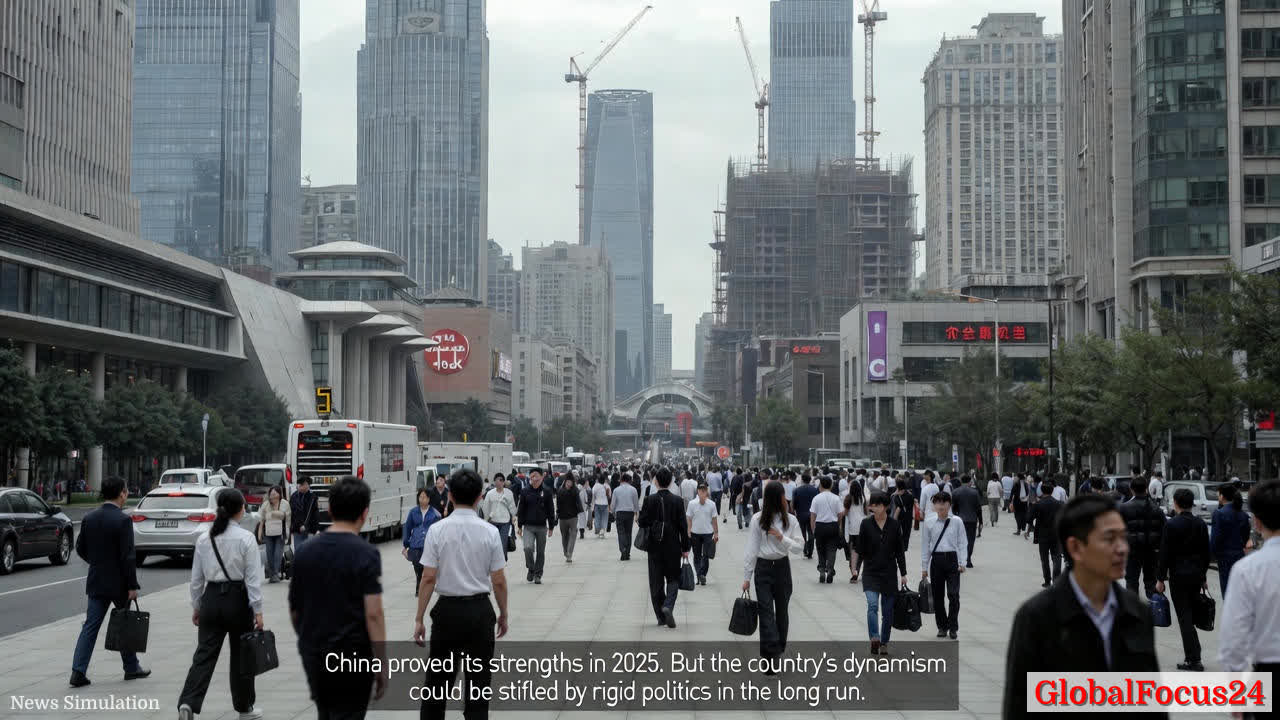
China Demonstrates Strength in 2025 but Faces Long-Term Challenges
China closed 2025 with a clear signal of its growing influence on the global economy, technology sectors, and geopolitical landscape. The year’s developments reflected a nation that has built substantial momentum through industrial modernization, scale-driven manufacturing, and targeted investments in strategic technologies. Yet, observers and market participants alike highlighted persistent concerns about the country’s political mechanics, demographic trajectory, and global economic exposure. The year thus offered a nuanced portrait: notable achievements paired with structural headwinds that could shape the trajectory of growth for years to come.
Historical context sets the stage for 2025’s dynamics. Since reform-era openings and rapid urbanization in the late 20th and early 21st centuries, China has pursued a model that blends state-led investment with a robust export ecosystem and a rising consumer market. The 2020s intensified those tendencies as policymakers leaned into advanced manufacturing, semiconductor supply-chain resilience, green energy deployment, and digital infrastructure. By 2025, this approach had yielded a considerable rebalancing of the economy—from an emphasis on low-cost exports to a more diversified growth strategy anchored by domestic demand, high-tech industries, and services. The year’s data underscores how deeply the country has integrated into global value chains, even as it sought more self-sufficiency in critical sectors.
Economic momentum and sectoral highlights. In 2025, the manufacturing backbone remained a central engine of growth. Large-scale production facilities, efficient logistics networks, and a competitive wage structure continued to attract both domestic and foreign investment. The energy transition—an ongoing priority—strengthened the country’s position in renewables, electric vehicles, and energy storage, fueling jobs and export opportunities across adjacent industries. The tech sector also advanced, with progress in artificial intelligence, 5G and beyond, and domestic chip production routes that aimed to reduce dependence on external suppliers for core components. These advancements helped keep productivity gains elevated, supporting a relatively resilient economy amid global uncertainty.
Yet, the year did not unfold without notable frictions. A critical thread running through 2025 concerns the political framework and its long-term implications for innovation, investment, and international collaboration. The centralized governance model, while delivering swift decision-making and execution on large-scale projects, has sparked debate about administrative flexibility, regulatory adaptability, and the pace at which new industries can experiment and commercialize. Analysts observed that the balance between political control and market-driven incentives remains a delicate equation, where policy shifts can ripple through financial markets and corporate strategies. The tension between maintaining social stability and fostering entrepreneurial risk-taking emerged as a recurring theme in assessment of long-term growth potential.
Demographic and social dimensions shape the outlook. Population aging and shifting labor-force dynamics pose questions about sustainable growth. In recent years, China has implemented measures to adjust retirement ages, boost female participation in the workforce, and encourage higher birthrates through policy and social support. While these steps address medium-term labor supply concerns, the broader demographic transition will influence consumption patterns, savings behavior, and demand for services such as healthcare, education, and elder care. The 2025 period highlighted how demographic factors intersect with productivity and investment cycles, reinforcing the need for continued innovation, urban planning, and human-capital development to maintain momentum.
Regional comparisons illuminate a wider picture. Across Asia, several economies are intensifying competition in high-value manufacturing, digital services, and infrastructure development. China’s scale, logistics efficiency, and integrated supply chains remain an advantage relative to many peers. At the same time, other regional players—such as Southeast Asian economies expanding into electronics assembly and software services—provide alternative hubs for investment, diversified geographic risk, and collaborative opportunities in trade agreements. In Europe and North America, demand for integrated supply chains and resilient sourcing strategies has persisted, with China positioned as a pivotal partner in a broader network of goods and capital flows. The regional context underscores that success in 2025 did not occur in isolation; it reflected a broader wave of innovations and policy shifts reshaping global competition.
Public reaction and market sentiment offer another dimension. Across major urban centers, business leaders, workers, and consumers expressed a mix of optimism and caution. Confidence in manufacturing ecosystems and export-oriented growth remained palpable, particularly where government programs targeted technology upgrades and green infrastructure. However, concerns persisted about the pace of regulatory changes, access to capital for new ventures, and the availability of a stable regulatory environment for foreign investment. The year witnessed active discourse among policymakers, industry stakeholders, and researchers about how to sustain a dynamic economy while maintaining social stability and governance standards. Public sentiment generally supported continued investment in areas with clear long-term benefits, such as clean energy, digital infrastructure, and advanced manufacturing capabilities.
Geopolitical and trade considerations also colored 2025’s narrative. China’s interactions with key partners—be they in Asia, Europe, or the Americas—continued to reflect a nuanced balance of cooperation and competition. Trade flows remained robust in many sectors, while the strategic emphasis on supply-chain resilience led to diversified sourcing and localized production in certain critical industries. Diplomatic engagement with global institutions and regional frameworks was a constant backdrop, guiding norms around technology transfer, standards, and commercial terms. These dynamics contributed to a climate in which business leaders weighed the trade-offs between access to a large, dynamic market and the complexities of navigating an evolving international policy landscape.
Infrastructure and logistical evolution underpinned the year’s performance. Investments in port capacity, rail networks, and urban transit systems supported more efficient movement of goods and people. The expansion of digital infrastructure—cloud services, data centers, and cybersecurity measures—also featured prominently, reflecting a commitment to secure and scalable digital platforms for enterprises and consumers alike. These enhancements not only improved operating efficiency for domestic firms but also facilitated cross-border trade and investment. In parallel, environmental sustainability remained a guiding principle, with efforts to reduce emissions, improve air quality in metropolitan centers, and promote energy-efficient technologies embedded in industrial projects and public works.
Innovation ecosystems and human capital emerged as critical determinants of future growth. Universities, research institutes, and industry partnerships advanced in fields such as materials science, biotechnology, and information technology. The government’s support for research and development, coupled with incentives for private investment in science and technology startups, helped sustain a pipeline of talent and ideas. Skills development and retraining programs sought to align the workforce with evolving industry needs, addressing the gap between rapidly advancing technologies and the availability of workers with the right capabilities. The trajectory of these programs will be decisive for maintaining competitiveness as global demand shifts toward higher-value products and services.
Credit conditions and financial markets reflected the interplay between policy and private sector activity. Institutions maintained liquidity and worked to manage risk in a market characterized by a mix of traditional lending and newer financing instruments. Access to capital for innovation, especially in early-stage ventures and semiconductor manufacturing, remained a focal point of policy attention. Investors scrutinized potential returns against policy risk and regulatory clarity, while central banks monitored inflation and growth signals to calibrate monetary policy appropriately. In this context, corporate balance sheets benefited from strong demand environments in key consumer sectors and export-driven trade activity, even as global uncertainties required prudent risk management.
Environmental, social, and governance considerations gained heightened prominence in 2025. Companies and municipalities emphasized sustainable practices, energy efficiency, and transparent governance. Compliance with evolving environmental standards and reporting requirements became more mainstream, influencing strategic planning and capital allocation. The intersection of sustainability with profitability remained a central theme for executives seeking to balance growth with resilience in the face of climate-related risks and regulatory expectations. Public and investor attention to corporate responsibility reinforced the importance of long-term planning and accountability in capital markets.
Looking ahead, the long-term trajectory will hinge on a combination of policy adaptability, demographic resilience, and continued investment in high-value industries. The economy appears positioned to sustain a credible growth path if it can navigate regulatory evolution, maintain innovation momentum, and cultivate a business environment that supports entrepreneurship while safeguarding social stability. In this framework, regional and global collaboration will continue to influence opportunities for technology transfer, capital investment, and supply-chain diversification. The year’s experience suggests that China’s strength lies in its capacity to mobilize resources at scale, deliver large-scale infrastructure and technological projects, and integrate into a complex network of global trade and investment.
Conclusion. 2025 showcased a nation capable of projecting influence through manufacturing prowess, technological advancement, and strategic governance. It also highlighted the perpetual need to adapt to structural challenges that accompany rapid development. The balance between centralized decision-making and market-driven innovation will shape the next phase of growth, as policymakers, businesses, and workers navigate an ever-evolving global economy. With careful navigation of these dynamics, the coming years could see continued progress in advanced manufacturing, digitalization, and sustainable development, reinforcing China’s role as a key driver in regional and global economic activity.