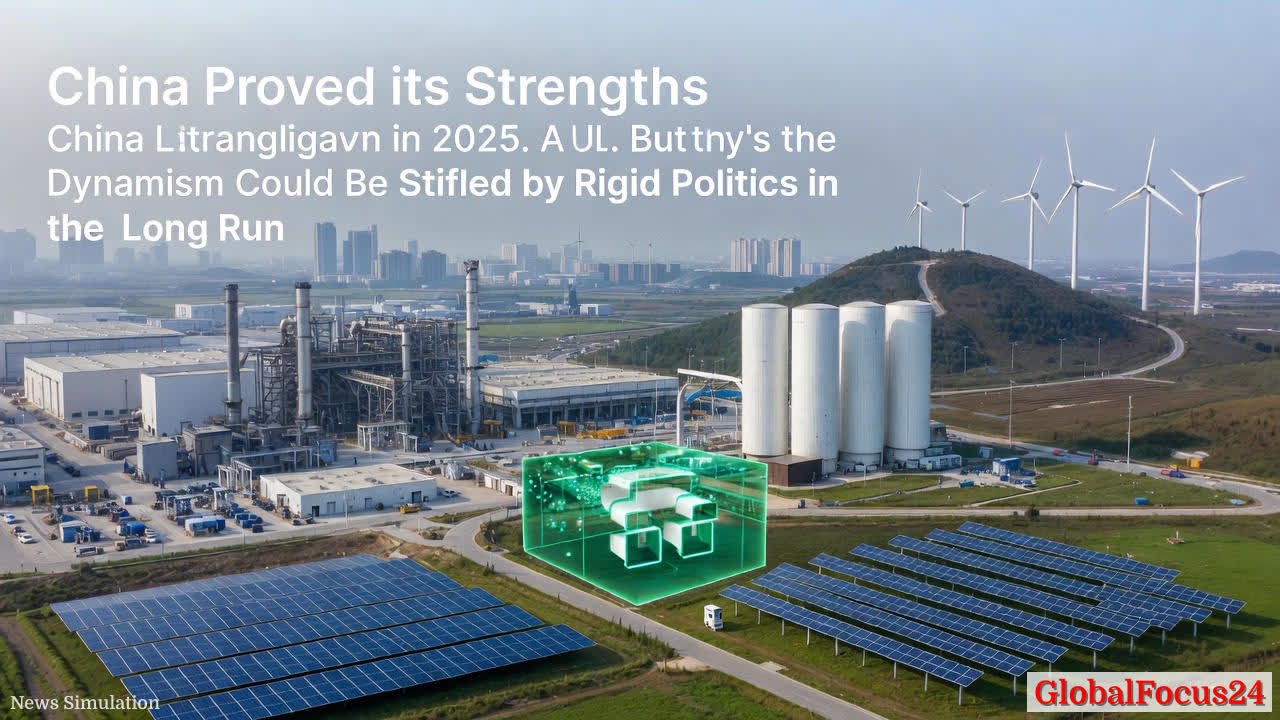
China’s 2025 Economic Momentum: Manufacturing Leadership, Tech Progress, and Global Ripples
In 2025, China reinforced its position as a pivotal force in the global economy, weaving together robust manufacturing capacity, accelerating technological development, and strategic leverage across critical supply chains. The year’s dynamics unfolded against a backdrop of shifting U.S. policy posture, evolving global trade patterns, and ongoing transformations within financial and innovation ecosystems. This article examines the drivers of China’s economic strength in 2025, the broader historical context, the potential regional and global implications, and the challenges that lie ahead.
Historical Context: From Reform Era to Global Manufacturing Powerhouse
China’s ascent as a manufacturing powerhouse began in the late 20th century with policy experiments that opened the economy to foreign investment and export-oriented growth. Over decades, the country built a vast industrial network, deepened specialization, and invested heavily in infrastructure, logistics, and energy efficiency. By 2025, these foundations enabled China to command a substantial share of global manufacturing value added. A broad range of sectors—from solar photovoltaic supply chains to electric vehicles and high-tech electronics—benefit from scale, integrated ecosystems, and evolving capabilities in process optimization and innovation.
The 2025 landscape also reflects a maturation of Chinese research and development, with a concerted push toward strategic sectors deemed essential for national resilience and global competitiveness. This includes green technologies, advanced materials, and artificial intelligence. Taken together, these elements reinforce a longstanding pattern: China’s growth model blends export-oriented manufacturing with domestic market development, while increasingly prioritizing technology-driven productivity and quality improvements.
Economic Impacts: Manufacturing Dominance and Supply-Chain Influence
Manufacturing leadership in 2025 is underscored by China’s substantial share of global manufacturing value added. This position translates into outsized influence over global supply chains, pricing dynamics, and the pace of industrial innovation. In sectors such as solar energy, wind power, and electric mobility, Chinese firms supply a large portion of materials, components, and finished goods. This concentration affords the country a significant role in global decarbonization efforts, energy transition plans, and the scaling of emerging technologies.
Beyond hardware, China’s advances in software and intelligent systems have meaningful economic spillovers. In artificial intelligence and related fields, new platforms and algorithms have progressed, contributing to productivity gains across industries both inside and outside China. Chinese pharmaceutical developers have also intensified clinical trial activity, contributing to faster timelines and broader global collaboration in some therapeutic areas. While regulatory and geopolitical frictions persist, the tempo of innovation in the Chinese ecosystem remains a key driver of economic activity and international investment patterns.
Regional Comparisons: Asia-Pacific Dynamics and Global Counterweights
China’s 2025 performance sits within a broader regional arc characterized by rapid industrial upgrading across Asia-Pacific. Neighboring economies have pursued manufacturing diversification, automation, and climate-resilient infrastructure to compete effectively in global markets. In this context, China’s scale advantages and integrated supply chains provide a compelling counterweight to regional producers, while also shaping regional standards for energy efficiency, logistics, and industrial policy.
Compared with other major economies, China’s blend of manufacturing heft and accelerating tech development yields a distinctive growth trajectory. While some advanced economies emphasize services-led growth or innovation-intensive sectors, China continues to leverage its expansive industrial base and state-aligned investment in strategic sectors to sustain momentum even amid external frictions. The result is a multi-layered economy where export competitiveness, domestic demand, and technology adoption reinforce each other.
Technological and Strategic Developments: Green Tech, AI, and Critical Materials
Green technology remains a centerpiece of China’s 2025 strategy. As the world accelerates decarbonization, China’s leadership in solar, wind, and grid integration technologies positions it as a key enabler of global energy transitions. The country’s capacity to produce high-volume, cost-competitive components helps stabilize international supply chains for renewable energy projects and electric mobility initiatives.
Artificial intelligence and related digital ecosystems also feature prominently in 2025 outcomes. Chinese firms have advanced in areas such as computer vision, machine learning, and autonomous systems, contributing to productivity improvements across industrial sectors, healthcare, and logistics. These developments are paired with continued progress in areas like edge computing and AI-enabled manufacturing, which support efficiency gains and quality control across complex supply chains.
Critical materials, including rare earths, remain strategically important. China’s role in the supply of these materials gives it leverage in certain high-tech industries, reinforcing the importance of diversification, recycling, and international cooperation to manage dependencies and resilience concerns. The broader global discussion around critical materials highlights the need for transparent governance, sustainable extraction practices, and diversified sourcing strategies to reduce risk for all economies.
Policy Context: U.S. Policy Shifts and Global Repercussions
The 2025 policy environment in the United States—encompassing tariffs, domestic reforms, and research- and talent-focused strategies—has had wide-ranging consequences for global trade and innovation. Tariffs intended to influence manufacturing location and supply chain configurations also affect allied economies in ways that ripple through regional markets. At the same time, investments in science, immigration policy, and education systems shape the talent pipeline essential for sustained technological leadership. These dynamics interact with China’s strategy to attract investment, bolster domestic demand, and push forward on strategic manufacturing capabilities.
Public reaction to shifts in global trade and policy tends to be mixed. In many economies, business communities emphasize continuity, adaptability, and the importance of predictable rules of trade. In others, policymakers and analysts watch closely for signs of risk to supply chains, inflation, and long-term competitiveness. Across markets, the enduring lesson is that strategic sectors—such as energy, healthcare, and advanced manufacturing—demand coordinated policy and robust infrastructure to unlock growth while maintaining resilience.
Deflationary Pressures and Domestic Challenges
Despite its outward strength, China in 2025 confronted domestic macroeconomic headwinds. Factory-gate prices experienced persistent declines, reflecting overcapacity, competitive intensity, and ongoing efforts to rebalance the economy from export-oriented growth toward domestic demand and services. Real estate adjustments also highlighted structural adjustments in the property market, with property prices retreating from peak levels. These dynamics underscore the perennial challenge of balancing growth with price stability, financial sector soundness, and social expectations.
In the longer run, China’s economy faces the task of rebalancing toward sustainable growth drivers. Persistent debt levels, especially in local government and some state-linked sectors, require careful consolidation and reform. Export environments may continue to face tariff-related pressures or non-tariff barriers, complicating the path to a broad-based recovery. Yet, policymakers have signaled a focus on stimulating domestic demand, expanding consumer spending, and strengthening strategic manufacturing to maintain momentum in a world where demand volatility and geopolitics can influence trade flows.
Public and Market Reactions: Confidence, Caution, and Outlook
Public sentiment around China’s 2025 performance often blends optimism about technological progress and manufacturing strength with caution about external risks and internal vulnerabilities. Investors monitor indicators such as industrial production, credit conditions, and consumer confidence to gauge the durability of growth. In regional markets, businesses look for greater transparency, reliable policy signals, and opportunities to participate in supply chains that pass through Chinese-based hubs.
Outlook: Navigating the Path Forward
Looking ahead, several themes will shape China’s trajectory in the coming years:
- Domestic demand and urbanization: Expanding middle-class consumption, improved services, and continued urban development can provide a durable counterweight to external demand fluctuations.
- Industrial upgrading: Continued investment in high-value manufacturing, automation, and green technologies will be central to sustaining productivity gains and competitive differentiation.
- Global supply-chain reshaping: The integration of China’s manufacturing ecosystem with regional and global partners will influence trade patterns, cost structures, and resilience planning.
- Innovation ecosystems: Strengthened collaboration between academia, industry, and government can accelerate breakthroughs in AI, biotechnology, and clean energy technologies.
Conclusion: A Complex yet Steady Engine of Global Growth
China’s economic posture in 2025 reflects a mature, multifaceted system that blends scale, innovation, and strategic leverage. Its manufacturing leadership and advances in green technology and AI contribute to global decarbonization efforts and digital transformation, while policy frictions and domestic challenges underscore the need for ongoing reforms and prudent risk management. For observers around the world, China’s trajectory remains a central thread in the evolving tapestry of global economics—one that requires careful analysis of supply chains, policy signals, and the delicate balance between growth and stability.
Note: This article presents a synthesis of observable economic patterns and policy trends in 2025, intended to provide context and analysis for readers seeking a clear, factual understanding of China’s economic landscape.