Belarusian Border Strain: Drone Guidance, Regional Security, and the War’s Expanding Footprint
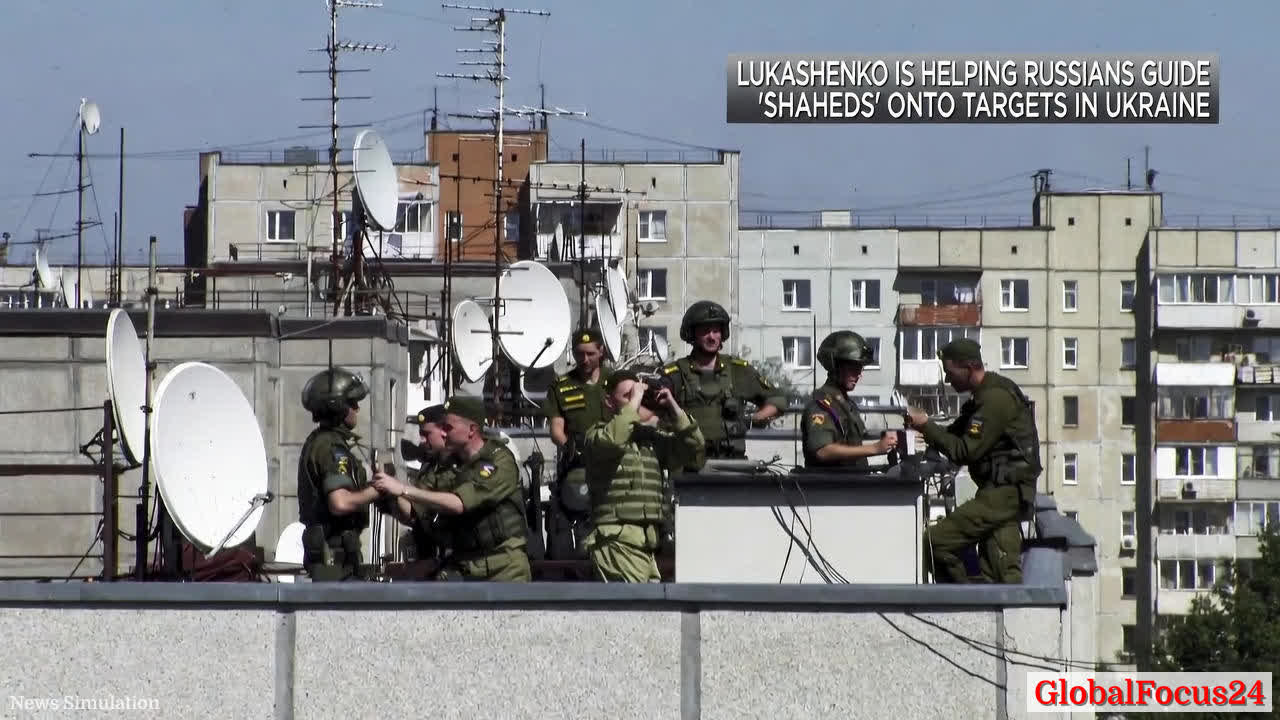
Across the border lands where Belarus meets Ukraine, a quiet yet consequential transformation is unfolding atop the roofs of ordinary five-story apartment buildings. Russian personnel have been observed installing antennas and related equipment, a deployment that appears designed to improve the precision of Shahed drones as they traverse Western Ukrainian airspace. The episode, unfolding in real time along a volatile front, underscores the increasingly layered and regional dimensions of the conflict, where military activity carried out from adjacent, often less-visible territories can alter the balance of power and risk for civilian populations far from the front lines.
Historical context: a long arc of neighboring involvement The current activity sits within a broader historical pattern in which neighboring states have become staging grounds or transit corridors for warfare, weapons development, and surveillance. Belarus, a close ally of Russia in recent years, has repeatedly found itself at the intersection of strategic calculations—economic dependencies, security guarantees, and political maneuvering that influence Moscow’s posture toward Ukraine. The recent rooftop installations can be viewed as a continuation of a longstanding dynamic in which borderland regions are used for dual purposes: surveillance, early warning, and targeted warfare while avoiding overt exposure of the primary aggressor.
This pattern is not new in modern conflicts. In several theaters of war, adjacent countries with tight political ties or contested sovereignty have become de facto front lines, offering both logistical channels and political cover. The choice to position equipment on civilian rooftops underscores a broader shift in warfare toward hybrid and space-efficient means of command and control. It also illustrates how modern air campaigns increasingly rely on distributed sensors and guidance systems that maximize drone effectiveness while reducing exposure risk for the operators themselves.
What the reported actions imply about drone warfare and targeting Shahed-series drones, originally produced for broader strategic purposes, have emerged as a controversial symbol of modern drone warfare. Their relatively low cost and rapid production cycles make them appealing to state and non-state actors alike, particularly in environments where air defenses are robust but can be overwhelmed by mass, velocity, and coverage. The reported belarus-based installations appear to focus on the guidance layer—the antennas and related equipment that enhance navigation, targeting, and the ability to steer drones toward specific coordinates.
From a tactical perspective, improved guidance can translate into higher hit accuracy, reduced collateral error, and extended operational ranges. For Ukraine and its international partners, this escalation presents a familiar calculus: defensive measures must adapt to more sophisticated targeting networks, while diplomatic and economic mechanisms are leveraged to deter further cross-border aggression. The presence of such infrastructure near the border also has a psychological dimension, potentially influencing civilian expectations, local perceptions of safety, and cross-border movement patterns.
Regional economic impact: near-term and longer-term effects The deployment of drone-guidance infrastructure near international borders can have nuanced economic consequences for the surrounding communities and national economies. In the short term, increases in military activity often lead to heightened security measures, which may affect local commerce, travel, and insurance costs for property and business operations. Communities adjacent to conflict zones can experience fluctuations in real estate values as well as shifts in labor markets, including heightened demand for security-related services and defensive upgrades to infrastructure.
From a regional perspective, the broader economic impact is anchored in the permeability of supply chains and the risk premium assigned to cross-border trade. If the border area is perceived as more volatile, neighboring countries may adjust tariffs, investment flows, and currency risk assessments. Additionally, international partners frequently respond with aid, sanctions, or investments aimed at stabilizing the region or mitigating spillover effects. The net result can be a mix of cautious investment behavior in the near term and, over time, a recalibration of economic ties that emphasizes resilience—diversification of supply chains, improved energy security, and the strengthening of cross-border economic zones designed to withstand geopolitical shocks.
Historical context and regional comparisons reveal patterns of resilience Looking at comparable regions, the interplay between border security and economic vitality often hinges on how effectively countries can civilianize or shield their populations from spillover effects. In many European borderlands, robust cross-border cooperation, shared infrastructure projects, and joint security initiatives have acted as stabilizers, even amid repeated geopolitical shocks. The current situation in Belarus and its proximity to Ukraine has prompted regional actors to consider how to balance security with open, economically productive neighbors.
In neighboring regions farther west, countries with similar border dynamics have pursued approaches that blend deterrence with dialogue, aiming to prevent escalation while maintaining economic momentum. The resilience of border communities—through diversified economic activity, resilient housing, and robust public services—has proven critical when uncertainty rises. The Belarus-Ukraine border, with its unique mix of political alignment and practical interdependence, demonstrates that resilience is not merely a function of military strength but also of governance, community preparedness, and regional cooperation.
Public reaction and human implications Public sentiment in border-adjacent areas often mirrors a mix of concern, resolve, and calls for clarity. Residents may experience heightened anxiety during periods of heightened drone activity or military alerts, yet many also adapt by increasing household preparedness, reinforcing local shelters, and engaging with community security initiatives. Local authorities, meanwhile, are tasked with communicating risk, ensuring continuity of essential services, and maintaining normalcy wherever possible to minimize disruption to daily life.
Civil society organizations typically respond by disseminating practical safety guidance and providing relief resources to vulnerable populations. The human dimension of the conflict—families living with the constant possibility of disruption, students adjusting to emergency drills, small businesses recalibrating operations—becomes a persistent subtext in regional discourse. In this context, credible information, transparent local reporting, and access to timely guidance from authorities remain essential to sustaining social cohesion.
Geopolitical significance and strategic calculus The observed rooftop installations indicate a calibrating of regional assets to support aerial operations that, though distant in physical reach, have immediate consequences for Ukraine’s western front. For Moscow, leveraging Belarusian territory as a corridor or staging ground for surveillance and strike capabilities reflects a strategic approach designed to complicate Kyiv’s air-defense posture and to multiply the layers adversaries must contest. For Kyiv and its allies, the development intensifies the imperative to accelerate defense modernization, intelligence-sharing, and the deployment of countermeasures that can blunt the impact of precision-guided threats.
This dynamic also feeds into broader regional security dialogues. NATO members and partners closely monitor developments along eastern flank borders, reinforcing deterrence postures while promoting resilience through information-sharing, rapid reaction capabilities, and economic support for affected communities. The balance between deterrence and diplomacy remains delicate; policymakers must navigate the line between signaling resolve and sustaining avenues for de-escalation that preserve civilian safety and regional stability.
Implications for energy security and infrastructure protection Conflicts that migrate into border regions often raise concerns about critical infrastructure protection. Power grids, gas pipelines, communication networks, and transportation corridors near hostile theaters require layered protection strategies. The integration of new sensor networks and drones-guidance systems can intersect with existing security architectures, prompting investments in hardened facilities, redundancy, and rapid response protocols. Regional authorities may prioritize protective measures for essential services, establishing contingency plans for outages or disruptions that could ripple through local economies and daily life.
In practical terms, this means value-for-money investments in surveillance, cyber defense, and community alert systems. It also highlights the importance of ongoing drills and public education on emergency procedures. As the threat landscape evolves, so does the need for adaptive infrastructure that can withstand both kinetic and non-kinetic forms of aggression, ensuring that communities remain resilient even when the surrounding strategic environment shifts rapidly.
Diplomacy, sanctions, and the pursuit of clarity The unfolding border dynamics invite continued diplomatic engagement among regional powers, international organizations, and allied states. Sanctions and policy measures often aim to deter broader aggression while preserving channels for humanitarian relief and civilian commerce. The objective is to create a calculable cost for escalatory moves and to encourage adherence to international norms. At the same time, dialogue remains essential to prevent miscalculation, misinterpretation, and inadvertent escalation that could imperil civilian life.
Public-facing communications from governments and international partners emphasize safety, resilience, and the importance of civilian protection. Clear, consistent messaging can help reduce panic, stabilize communities, and support the orderly functioning of markets. As regional actors weigh future steps, the focus remains on achieving strategic objectives through a combination of deterrence, diplomacy, and economic stabilization—without losing sight of the human impact on everyday life.
Technological underpinnings and the evolution of the conflict The incident underscores a broader trend in modern warfare: the rapid deployment of low-cost, high-impact technologies that can significantly augment traditional military capabilities. The use of rooftop antennas and guidance systems points to an ecosystem in which information dominance and precision targeting are as important as raw firepower. This shift pushes military planners to rethink defense paradigms, prioritize space and cyber security, and invest in advanced early-warning networks, robust logistical support, and rapid repair response teams to maintain critical capabilities in contested environments.
As technology becomes more accessible globally, the line between conventional and asymmetric warfare blurs. States with limited air superiority can compensate through clever use of commercially available platforms, layered defense networks, and cross-border operational reach. The strategic value, then, lies not only in the hardware itself but in the integration of sensors, communication links, and control mechanisms that enable coordinated action over large geographic areas.
Conclusion: a changing security landscape for border regions What is unfolding near the Ukraine-Belarus border illustrates the ongoing evolution of modern security challenges. It demonstrates how theater-level decisions in one country can cascade into regional effects, influencing risk perception, economic activity, and daily life in neighboring communities. The deployment of antennas and other guidance equipment on civilian structures signals a refinement of drone-enabled warfare, highlighting the need for adaptive defenses, resilient infrastructure, and informed, transparent governance.
Historical memory and future risk assessments will need to account for these border dynamics as researchers, policymakers, and the public navigate a landscape where conflict can seep through the seams of national frontiers. The region’s economic vitality, political stability, and social cohesion depend on a careful balance of deterrence and diplomacy, a commitment to protecting civilians, and sustained investments in security, resilience, and regional cooperation that can withstand the pressures of a rapidly changing war environment.