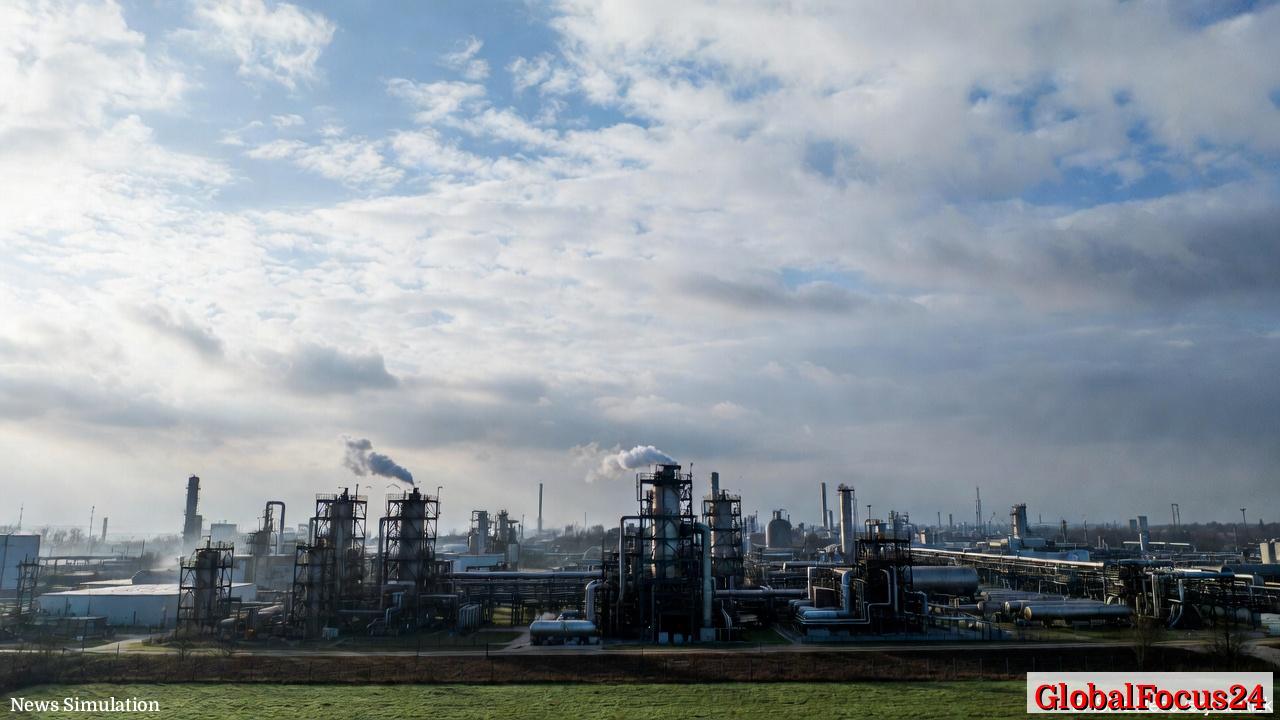
BASF Faces Renewed Uncertainty as Iran Conflict Threatens Fragile Recovery
Global Chemical Industry Confronts Fresh Disruption Risks
BASF, the world’s largest chemical producer by revenue for much of the past decade, is once again confronting mounting uncertainty as escalating conflict in Iran threatens to destabilize already fragile global supply chains. The German industrial giant had only recently begun outlining a cautious recovery path following years of disruption tied to energy shocks, geopolitical tensions, and shifting global demand patterns.
The renewed instability in the Middle East introduces a new layer of volatility for the chemical sector, which is deeply intertwined with global energy markets and international trade flows. For BASF, whose operations depend heavily on stable feedstock supplies and predictable energy costs, the timing of the crisis raises concerns about whether its recovery trajectory can hold.
Leadership Signals a Transitional Year for BASF
Chief Executive Markus Kamieth, who took the helm in April 2024, has consistently framed 2026 as a “transition year” for BASF. Speaking during the company’s annual results presentation in late February, Kamieth emphasized that while significant headwinds persist, there were early signs of stabilization in key markets.
He pointed to expectations of gradual improvement in global industrial demand, particularly in automotive, construction, and consumer goods sectors, which are major end markets for BASF’s chemicals and materials. The company projected stronger momentum heading into late 2026, with more meaningful gains anticipated in 2027.
However, those projections were made just before the latest geopolitical escalation involving Iran. The outbreak of hostilities has quickly altered the outlook, introducing uncertainty around oil and gas supply routes, shipping lanes, and broader regional stability.
Energy Dependence Remains a Core Vulnerability
BASF’s exposure to energy markets is a defining feature of its business model. Chemical production is energy-intensive, requiring significant volumes of natural gas not only as a power source but also as a raw material in the production of ammonia, methanol, and other key intermediates.
Historically, BASF benefited from access to relatively inexpensive Russian natural gas, which supported its large-scale operations in Germany—particularly its flagship Ludwigshafen complex. Before the Ukraine conflict disrupted these flows, the facility alone accounted for approximately 4 percent of Germany’s total gas consumption.
The sudden loss of cheap Russian gas forced BASF to restructure operations, scale back production in Europe, and accelerate investment in regions with more favorable energy costs, such as China and North America. While these adjustments helped stabilize margins, they also marked a structural shift in the company’s global footprint.
The emerging Iran conflict threatens to repeat aspects of that disruption, particularly if it leads to sustained increases in oil and liquefied natural gas prices or restricts key transit routes such as the Strait of Hormuz.
Oil Markets and Shipping Routes Under Pressure
The Middle East remains central to global energy supply, with Iran playing a significant role both directly and through its geographic position. Any escalation that disrupts oil exports or shipping through the Persian Gulf can have immediate ripple effects across energy markets.
For BASF and its peers, higher energy prices translate directly into increased production costs. Even short-term price spikes can erode margins, especially in a competitive global market where pricing power is limited.
Shipping disruptions present an additional risk. Chemical companies rely on complex global logistics networks to move raw materials and finished products. Delays or rerouting of shipments can lead to higher freight costs, longer delivery times, and inventory imbalances.
These challenges are not unique to BASF but are particularly acute given the company’s scale and integration across multiple chemical value chains.
Historical Context: From Dominance to Competitive Pressure
For much of its history, BASF stood as a symbol of German industrial strength, benefiting from a highly efficient manufacturing base, strong engineering capabilities, and close integration with European supply chains. Its Verbund system—an interconnected network of production units—allowed it to maximize efficiency by using the by-products of one process as inputs for another.
However, the global chemical industry has undergone significant transformation over the past two decades. Lower energy costs in the United States, driven by the shale gas boom, and rapid industrial expansion in China have shifted the competitive landscape.
Chinese chemical producers, supported by large-scale investments and proximity to growing domestic demand, have steadily gained market share. BASF’s recent loss of its top global ranking by sales to a Chinese competitor underscores this shift.
The Ukraine war further accelerated these trends by exposing Europe’s energy vulnerabilities and raising questions about the long-term competitiveness of energy-intensive industries on the continent.
Strategic Shift Toward Global Diversification
In response to these pressures, BASF has pursued a strategy of geographic diversification. The company has expanded its presence in China, including a major integrated chemical complex in Zhanjiang, designed to replicate the efficiency of its Ludwigshafen operations.
North America has also become increasingly important, offering access to relatively low-cost energy and a stable regulatory environment. These investments are intended to balance BASF’s exposure and reduce reliance on any single region.
However, global diversification does not fully insulate the company from systemic shocks. Energy markets are interconnected, and geopolitical events in one region can quickly influence costs and demand worldwide.
The Iran conflict illustrates this dynamic, as even companies with limited direct exposure to the region can be affected through global price movements and supply chain disruptions.
Industry-Wide Implications for Chemicals and Manufacturing
The challenges facing BASF reflect broader trends across the chemical industry. Companies are grappling with a combination of cyclical and structural pressures, including:
- Volatile energy prices affecting production costs.
- Shifting demand patterns as economies transition toward sustainability.
- Increased competition from emerging market producers.
- Regulatory changes related to emissions and environmental standards.
These factors have made long-term planning more complex, with companies needing to balance immediate cost pressures against strategic investments in innovation and sustainability.
The potential for renewed geopolitical instability adds another layer of uncertainty, complicating decisions around capital allocation, production capacity, and supply chain design.
Economic Impact Across Europe
BASF’s performance carries broader implications for the European economy. As one of the continent’s largest industrial companies, it plays a critical role in supplying materials to sectors ranging from automotive manufacturing to agriculture.
A prolonged period of high energy costs or reduced production could have ripple effects across these industries, potentially affecting output, employment, and competitiveness.
Germany, in particular, has been grappling with questions about the future of its industrial base in the wake of energy disruptions. BASF’s adjustments—including capacity reductions and increased investment abroad—have been closely watched as indicators of broader trends.
While some analysts see these changes as part of a necessary transformation, others view them as signs of structural challenges that could reshape Europe’s industrial landscape.
Outlook Hinges on Duration of Conflict
The extent to which the Iran conflict impacts BASF’s recovery will depend largely on its duration and intensity. Short-lived disruptions may result in temporary cost increases and logistical challenges, while a prolonged conflict could lead to more fundamental shifts in energy markets and global trade patterns.
Kamieth’s cautious optimism about improving market conditions later in 2026 now faces a significant test. The company’s ability to navigate this environment will depend on its operational flexibility, cost management, and strategic positioning across regions.
For now, BASF remains in a transitional phase, balancing efforts to stabilize its core business with longer-term investments aimed at securing future growth.
A Recovery Path Under Strain
BASF’s recent history highlights the complex interplay between global events and industrial performance. From the loss of cheap Russian gas to intensifying global competition, the company has already weathered a series of challenges that reshaped its operations.
The emerging crisis in Iran introduces a new variable at a critical moment in its recovery journey. While the company has taken steps to adapt to a more volatile world, the latest developments underscore the persistent fragility of that recovery.
As global markets respond to unfolding events, BASF and the wider chemical industry will be closely watched for signs of resilience—or renewed strain—in an increasingly uncertain economic landscape.