Ukraine’s Peace Plan on the Line: Referendum, Ceasefire, and Global Diplomacy in a Turbulent Week
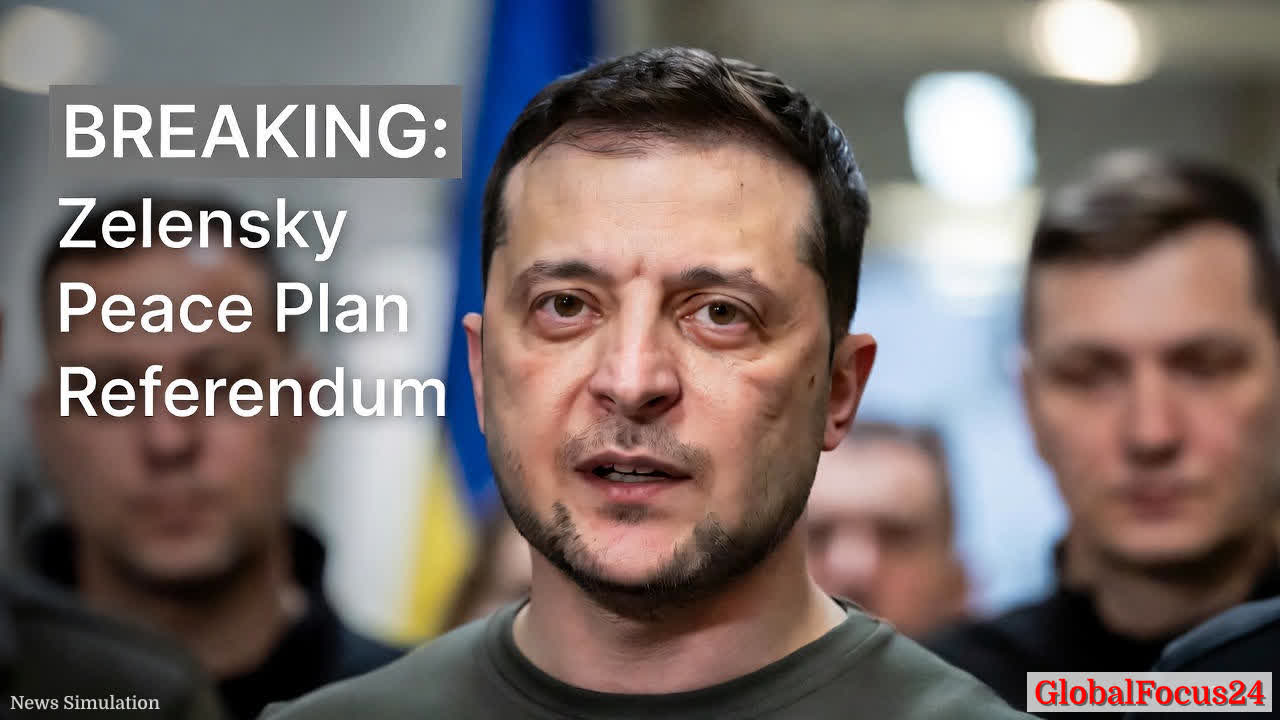
In a moment that blends high-stakes diplomacy with public accountability, Ukrainian President Volodymyr Zelenskyy has signaled a bold gambit: place the core elements of Kyiv’s peace proposal before the nation in a nationwide referendum, but with a critical condition. The plan hinges on Russia agreeing to a ceasefire of at least 60 days, a pause intended to create space for negotiations, rebuild trust, and test the feasibility of a durable settlement after years of conflict. The extraordinary move reflects both the urgency of the moment and the evolving dynamics of international mediation as governments seek tangible pathways to de-escalate a protracted crisis.
Contextualizing the referendum proposal requires a quick look at the broader historical arc. Ukraine’s pursuit of a negotiated end to the conflict has long been filtered through the lens of sovereignty, territorial integrity, and security assurances from Western allies. Since the 2014 annexation of Crimea and subsequent hostilities in the Donbas region, Kyiv has consistently paired calls for a ceasefire with demands for robust international guarantees, reconstruction support, and a sustainable framework for future security. The current proposal, if it proceeds to a nationwide vote, would test the endurance of democratic processes under extraordinary pressure and raise questions about how referendums function as instruments of strategic decision-making during ongoing wars.
Economic implications radiate far beyond battlefield lines. A 60-day ceasefire could provide a critical window for stabilizing macroeconomic conditions in Ukraine, where the war has disrupted energy supply chains, agricultural markets, and industrial production. In the immediate term, a pause in fighting could ease volatility in commodity prices and offer relief to businesses facing uncertainty about supply routes, safety risks for workers, and disruptions to industrial operations. Regions that have struggled with infrastructure damage, including power grids and transportation networks, stand to benefit from focused repair efforts and accelerated humanitarian aid delivery during a ceasefire period. Conversely, any negotiated pause must be complemented by credible funding for reconstruction and social programs, otherwise the ceasefire risks becoming a temporary lull without long-term viability.
From a regional perspective, the proposal resonates with neighboring countries that have shouldered refugee flows, trade disruptions, and security concerns stemming from the conflict. Poland, Romania, Slovakia, and the Baltic states have been integral partners in both humanitarian relief and security cooperation, reinforcing their own defense postures while supporting Ukraine’s stabilization efforts. A referendum in Ukraine, coupled with international mediation, could influence regional economic models, energy diversification strategies, and cross-border infrastructure projects designed to reduce dependence on volatile corridors. The economic spillovers extend to the European Union, where energy markets, grain shipments, and investment confidence respond to developments on the ground in Ukraine. A successful ceasefire and a credible peace process could bolster market stability, unlock stalled investment, and encourage broader regional collaboration on climate resilience, digital infrastructure, and agricultural modernization.
The timeline of events surrounding Zelenskyy’s peace initiative reflects concerted diplomacy at multiple levels. Reports indicate that an online meeting involving Zelenskyy, former President Donald Trump, and several European leaders is planned for this Saturday, signaling a fusion of transatlantic and continental diplomatic interests. The agenda for such a gathering is expected to center on the mechanics of a ceasefire, ceasefire verification, and the sequencing of negotiations toward a comprehensive peace framework. In parallel, Zelenskyy’s scheduling of travel to Mar-a-Lago for Sunday discussions with Trump underscores a preference for high-level, direct engagement between Kyiv’s leadership and key interlocutors who can influence security guarantees, sanctions policy, and potential political support structures for post-conflict reconstruction.
For observers, the prospect of direct conversations involving Zelenskyy and Trump, moderated by European partners, raises questions about process integrity, legitimacy, and the practicalities of sustaining political momentum. International diplomacy in this phase emphasizes a mix of leverage—security guarantees, sanctions regimes, and reconstruction financing—and the necessity of transparent verification mechanisms to prevent backsliding on commitments. The importance of clear benchmarks and independent monitoring cannot be overstated, as both Ukrainian and international stakeholders seek accountability in the event of any breach or violation of the ceasefire terms.
Historical context remains essential to interpreting today’s developments. The use of referendums as a tool for shaping national peace processes has appeared at various junctures in post-conflict diplomacy. In some cases, referendums have solidified national consensus and clarified public consent for difficult compromises; in others, they have exposed divisions or become bargaining chips in negotiations. The effectiveness of a referendum in wartime depends on several factors: the perceived legitimacy of the process, the inclusivity of participation, and the availability of accurate information to voters about what is being decided and the consequences of the vote. In Ukraine’s case, the referendum would likely be framed around security guarantees, border principles, reintegration timelines for contested territories, and the economic terms of reparations, reconstruction funding, and special status provisions for any affected regions.
Security dimensions are central to the dialogue. A 60-day ceasefire, if achieved, would offer a rare opportunity to reduce violence and build confidence between negotiating parties. Verification mechanisms—ranging from international observers to independent monitoring teams—are crucial to ensuring compliance. The presence of credible third-party oversight can help mitigate trust deficits and provide a measurable basis for progress. Additionally, discussions around demobilization, demining, prisoner exchanges, and humanitarian corridors often accompany ceasefire agreements, each presenting its own operational challenges and timelines. The success of such mechanisms hinges on practical on-the-ground coordination, logistical capacity, and sustained political will from all sides.
Public reaction to a referendum-based peace plan would likely be mixed and dynamic. Supporters may view the referendum as a democratically legitimate means to affirm national priorities and to validate a return to stability through a defined set of terms. Critics might argue that a wartime referendum could be exploited to delay hard decisions or to shift risk onto civilian populations during a fragile ceasefire. Civil society organizations would play a pivotal role in explaining the implications of the proposed terms, providing independent analysis, and ensuring that the voices of minority groups and displaced populations are adequately represented in the process. Media coverage, civic education campaigns, and transparent budget disclosures would be essential to maintaining public trust and avoiding misinformation that could derail negotiations.
Strategic implications for alliances and defense planning are considerable. NATO and partner countries have long-standing commitments to Ukraine’s sovereignty and security, including military aid, intelligence sharing, and strategic guidance on defense reform. A negotiated pause complemented by a referendum could influence defense planning cycles, funding allocations for modernization programs, and the tempo of joint exercises designed to deter aggression and maintain credible deterrence. Policymakers would need to balance short-term operational priorities with long-term strategic objectives, ensuring that a ceasefire does not create vulnerabilities or gaps in security coverage that adversaries could exploit.
Trade and energy security are additional vectors affected by any shift toward a formal peace process. Ukraine’s role as a critical transit country for European energy supplies and grain exports positions it at the center of regional energy security and food markets. A ceasefire could stabilize supply chains, enabling smoother transit operations and reducing price volatility for farmers and manufacturers alike. Yet energy diversification remains a pressing objective for both Ukraine and its partners, with continued emphasis on integrating renewable energy sources, modernizing grid infrastructure, and strengthening regional interconnections. The economic calculus also extends to international financial institutions, development banks, and donor governments that fund reconstruction, social protection programs, and climate resilience initiatives in war-affected regions.
Regional comparisons offer additional insight into how different geographies handle conflict-resolution processes. In some neighboring contexts, referendums have been used to resolve complex political questions with varying degrees of success. For example, in regions with entrenched territorial disputes or ethnic cleavages, referendums can either unify or polarize public opinion. The Ukrainian scenario, however, is distinct in its emphasis on territorial integrity, sovereignty, and the alignment of security guarantees with European integration goals. The interplay between a national referendum and broader international commitments—such as membership aspirations for European Union candidacy or security alliance enhancements—could shape how the peace plan is perceived domestically and abroad.
From a communications perspective, the choice to frame the peace plan as a nationwide referendum is a powerful narrative device that can mobilize public engagement and clarify policy direction. Clear, accessible messaging about what a vote would mean, how the ceasefire would operate, and what benchmarks would determine progression to broader negotiations is essential. Media outlets, civic educators, and community organizations would bear responsibility for translating complex security and economic terms into understandable, concrete implications for daily life. In turn, this clarity could enhance resilience by building a shared sense of purpose among citizens, workers, and families affected by the conflict.
Looking ahead, the potential pathways for the peace process hinge on several pivotal factors. First, Russia’s willingness to commit to a 60-day ceasefire is a central variable. Without a credible pause that reduces hostilities, a referendum risks appearing rhetorical rather than practical. Second, the international community’s capacity to provide verifiable guarantees and robust reconstruction funding will determine whether the ceasefire evolves into a lasting peace. Third, the integrity and inclusivity of the referendum process will influence legitimacy, both domestically and among Kyiv’s international partners. Finally, the ability to translate a successful ceasefire and referendum into a comprehensive framework—covering security arrangements, border issues, governance, and economic recovery—will shape Ukraine’s trajectory for years to come.
In sum, the proposition to authorize a nationwide referendum on Zelenskyy’s peace plan, contingent on a 60-day ceasefire, represents a high-stakes convergence of diplomacy, public accountability, and pragmatic statecraft. The coming days and weeks will test the viability of this approach, the resolve of international partners, and the resilience of Ukrainian society as it navigates a critically important juncture. While the path to a durable peace remains uncertain, the combination of referendum-based democratic engagement, a verifiable ceasefire, and sustained economic and humanitarian support offers a framework with potential to transform strategic calculations and, ultimately, to restore stability to a region long defined by conflict.