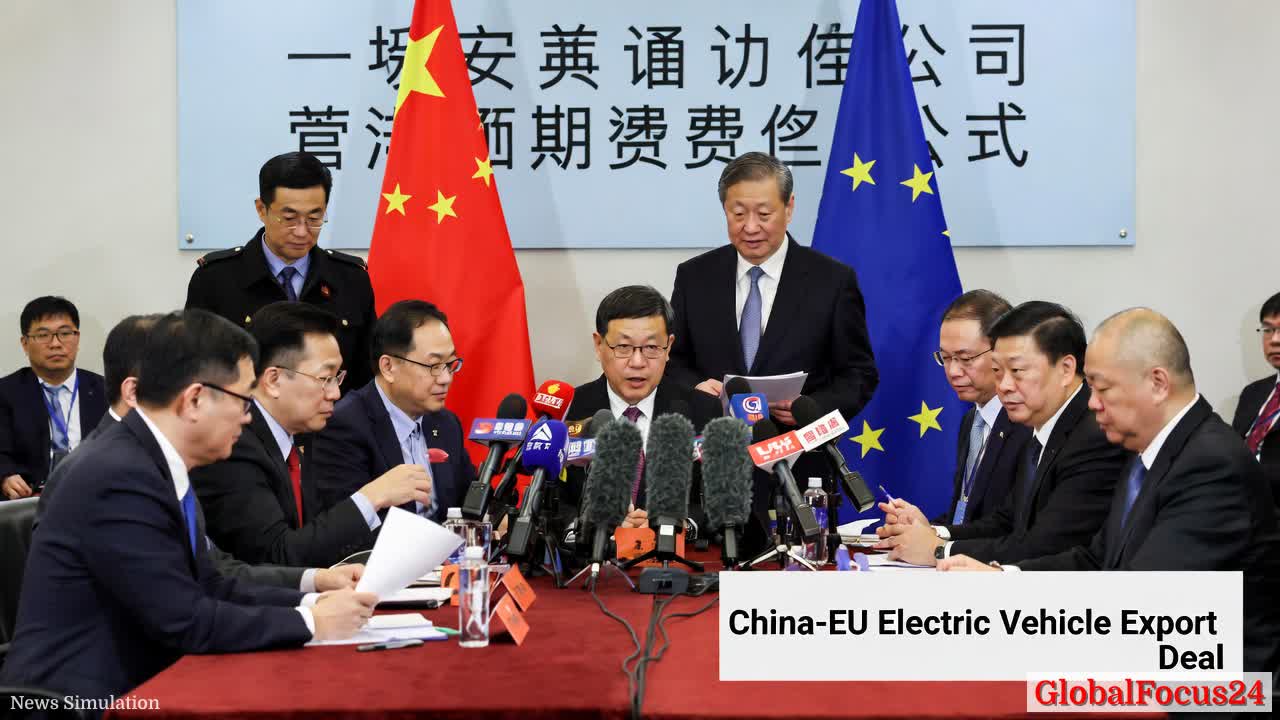
)s: China-EU Electric Vehicle Deal Sparks Global Market Reassessment Amid Shifting Trade Rules
China and the European Union have reportedly reached a deal on the export of Chinese-made electric vehicles (EVs) to the bloc, with Brussels preparing guidelines on minimum pricing for Chinese auto exporters. The Commerce Ministry in Beijing confirmed the agreement, signaling a potential shift in how the two economies manage mid-2020s EV trade dynamics. The pact arrives as both regions recalibrate supply chains, tariffs, and competition policies in a rapidly evolving sector driven by decarbonization goals and consumer demand.
Historical context: the rise of EVs and trade frictions
- The global EV market has transformed rapidly over the past decade, moving from niche to mainstream as battery tech improved, costs declined, and governments accelerated climate agendas. This surge has reshaped export patterns, with China emerging as a dominant producer of electric drivetrains, batteries, and a growing share of complete vehicles, while the EU has prioritized domestic production, charging infrastructure, and consumer incentives to accelerate adoption. The evolving landscape has intensified scrutiny of pricing, subsidies, and national security considerations around critical technologies. These broader shifts frame the current agreement, suggesting a strategic attempt to align market access with policy aims while reducing abrupt market interruptions. The long arc of this transition reflects the interplay between industrial policy, global supply chains, and consumer choice, shaping how companies invest in capacity and how regions compete for high-tech manufacturing jobs. The historical trajectory thus sets the stage for today’s discussions about export rules and minimum pricing mechanisms.
Economic impact: potential effects on manufacturing, jobs, and pricing
- A formal framework governing EV exports can influence price signals across the value chain, affecting manufacturers, suppliers, and dealers in both regions. For China, expanded access to the EU market may spur higher production volumes, economies of scale, and continued investments in battery technology, potentially lowering unit costs over time. For the EU, clear guidelines on minimum pricing could limit aggressive undercutting while preserving fair competition, thereby shaping profit margins, local assembly incentives, and employment in automotive clusters. The arrangement could also affect downstream industries such as charging networks, software services for vehicle connectivity, and maintenance ecosystems, given the broader ecosystem required for mass EV adoption. Additionally, the policy may influence currency dynamics and the flow of investments into regional manufacturing hubs as firms reassess where to locate production, R&D, and distribution networks. These interconnected effects underscore how a relatively narrow trade policy can ripple through regional economies and labor markets.
Regional comparisons: how Europe and Asia navigate EV trade differently
- Europe has pursued a combination of tariff policy, local content requirements, and regulatory standards to foster domestic EV capacity while importing high-quality components from abroad. This approach supports European automotive leadership in areas like software integration, vehicle safety, and consumer charging infrastructure. In contrast, China’s strategy has emphasized scale, vertical integration, and aggressive cost management across battery cells, motors, and drivetrains to capture a substantial share of global EV output. The current deal, if implemented, may narrow some of these regional disparities by creating a more predictable pathway for Chinese-made EVs to enter European markets, potentially intensifying competition in segments where European manufacturers have led historically. The regional comparison highlights how policy design—price floors, subsidies, and regulatory alignment—can shape where production happens and how consumer prices respond, influencing regional competitiveness over time.
Industry implications: supply chains, innovation, and investment
- A predictable export framework can reduce uncertainty for automakers and suppliers, encouraging longer investment horizons in Europe and China. This stability may accelerate R&D in battery chemistry, thermal management, and vehicle software, as manufacturers seek to differentiate through performance, range, charging speed, and total cost of ownership. It could also prompt EV-related investments in adjacent sectors such as recycling, raw material sourcing, and after-sales services, reinforcing the broader green economy transition. For regions outside Europe and China, the policy could spur competitive responses, including new trade arrangements or diversification of supply chains to preserve resilience amid global disruptions. The net effect would be a more interconnected and dynamic EV ecosystem, where policy clarity supports strategic planning and cross-border collaboration.
Public reaction: consumer sentiment and market expectations
- Public perception of price guidelines for EVs often centers on affordability, quality, and reliability. If minimum pricing is perceived as stabilizing prices and preventing a race to the bottom, consumers may benefit from steadier availability and service networks. Conversely, some buyers might fear limited price competition or slower innovation if price floors constrain discounts. Industry observers will watch mounting expectations for charging infrastructure, warranty terms, and after-sales support as central to the perceived value of imported Chinese EVs in Europe. Public officials emphasize that trade rules should balance consumer protection with competitive markets, aiming to protect both local jobs and consumer choice in a sector pivotal to climate objectives.
Policy design and future outlook: how guidelines could shape the next phase
- The EU's forthcoming guidelines on minimum pricing are likely to balance competition policy with strategic objectives, ensuring that imports meet quality and safety standards while preserving a level playing field for European manufacturers. As the automotive sector remains a bellwether for broader industrial policy, the agreement could influence norms around price transparency, subsidies, and cross-border regulatory alignment. Industries connected to EVs—including battery production, raw materials supply chains, and software platforms—may experience intensified focus as policymakers seek to synchronize incentives with infrastructure rollout and grid readiness. The evolving policy landscape suggests a period of increased collaboration among manufacturers, policymakers, and consumers to address challenges such as raw material access, recycling mandates, and charging compatibility, all of which will shape the region’s automotive future.
Conclusion: navigating a changing EV trade environment
- The reported agreement signals a notable moment in the global EV market, reflecting coordinated policy approaches that aim to harmonize trade, pricing, and standards in a sector critical to climate goals and industrial competitiveness. By aligning export rules with regional market needs, Europe and China appear to be moving toward a framework that supports predictable investment, stable pricing, and continued innovation across the EV value chain. As the global landscape evolves, other regions may monitor developments closely, weighing how similar approaches could affect global supply chains, employment in high-value manufacturing, and the pace of the transition to electric mobility.
Note on context and credibility
- This development sits at the intersection of international trade policy, automotive manufacturing, and energy transition planning, areas with long-standing implications for regional economies and consumer markets. Analysts will likely assess the policy’s effectiveness by monitoring price trends, investment announcements, and the stability of sourcing for components like batteries and semiconductors, alongside broader macroeconomic indicators. The evolving situation underscores how strategic trade arrangements can influence the tempo and direction of the global shift toward electrified transportation.
Citations:
- Please refer to the latest official statements from the Commerce Ministry in Beijing and the European Union trade authorities for precise language and implementation timelines. These sources provide the authoritative details on minimum pricing guidelines, qualification criteria for exporters, and the schedule for policy rollout.