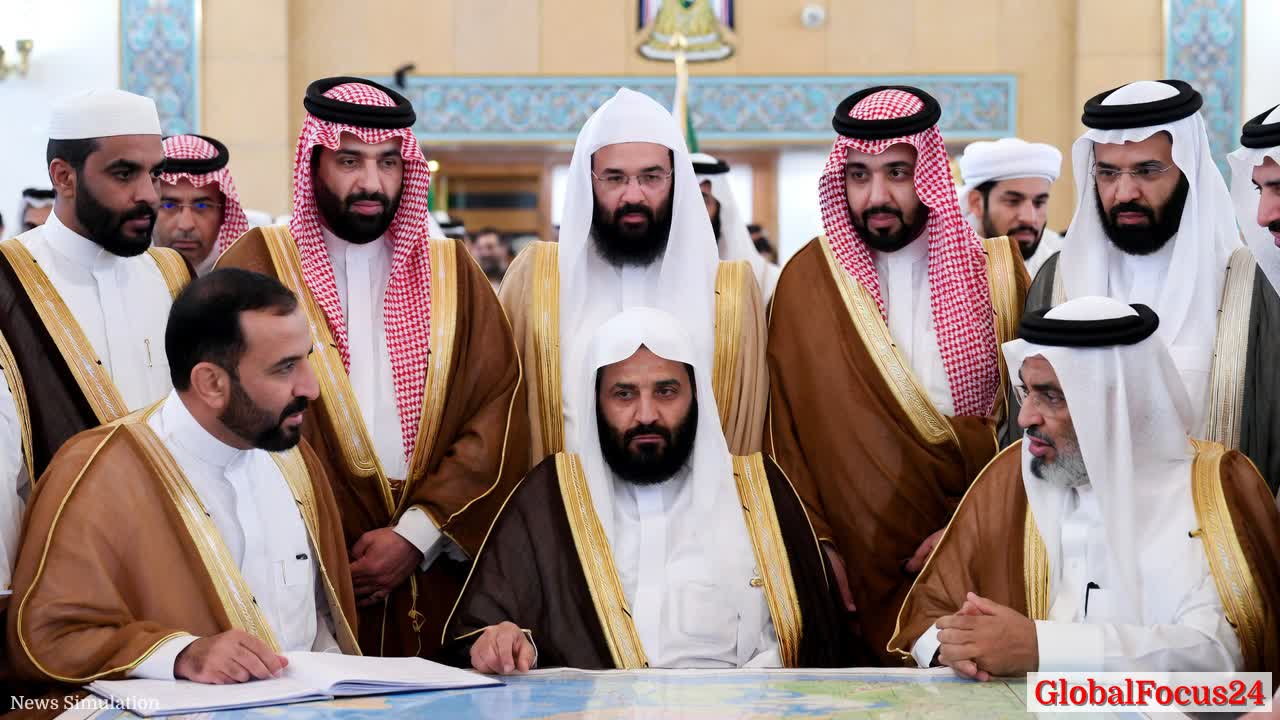
Gulf Arab States Urge Restraint Amid U.S. Tensions with Iran
Regional Diplomacy Intensifies to Prevent Wider Conflict
Arab states across the Persian Gulf, led by Saudi Arabia and its regional partners, have mounted a quiet but urgent diplomatic campaign urging the United States to avoid direct military action against Iran. These appeals, according to multiple diplomatic sources familiar with regional policy planning, reflect growing anxiety among Middle Eastern governments that an escalation could spiral into a broader conflict threatening the region’s fragile economic recovery and long-term stability.
While the Gulf monarchies have long viewed Iran as a strategic rival, their current stance emphasizes containment through deterrence rather than confrontation. Officials from Riyadh, Abu Dhabi, and other capitals have reportedly conveyed to U.S. counterparts that a military strike on Tehran or its allies would likely provoke retaliatory actions across the Gulf’s vital shipping lanes, energy facilities, and urban centers.
“The consequences of a direct clash would be unpredictable and potentially devastating,” said one regional analyst based in Dubai. “No major Gulf state wants to see an outright war on its doorstep, especially at a time when economic diversification and investment plans are being tested by global uncertainty.”
A Fragile Balance of Power
The Gulf region’s strategic geography has long made it the focal point of tension between Iran and its Arab neighbors. Across the narrow waters of the Persian Gulf — at points less than 30 miles wide — stand some of the world’s most heavily armed states, with modern air forces, advanced missile systems, and naval fleets. This proximity ensures that any confrontation could rapidly outpace political control.
Historically, the Gulf monarchies have relied on security guarantees from Washington as a counterweight to Iran’s influence. However, past conflicts, including the 2003 invasion of Iraq and the 2019 attack on Saudi Aramco facilities — which temporarily disrupted global oil supplies — have underscored how regional actors often bear the brunt of instability.
By urging U.S. restraint, current Gulf diplomacy reflects a hard-earned lesson: while deterrence remains essential, escalation rarely serves the long-term interests of the region. Instead, policymakers seek to sustain a delicate equilibrium, preventing Iran’s assertiveness without triggering a crisis that could destabilize their own regimes or economies.
Economic Stakes and Energy Security
At the center of the Gulf states’ concerns lies the global energy market. Roughly a fifth of the world’s oil passes through the Strait of Hormuz, the narrow maritime corridor separating Iran and Oman. Any military engagement involving Iran could instantly disrupt this route, sending shockwaves across global markets. Energy economists warn that even a temporary closure or perceived threat could send oil prices soaring and unsettle supply chains worldwide.
Saudi Arabia, the United Arab Emirates, and Qatar — all major energy exporters — have made significant strides over the past decade to insulate their economies from oil price volatility. Yet despite diversification drives like Saudi Arabia’s Vision 2030 and the UAE’s ambitious clean energy initiatives, hydrocarbon exports remain critical revenue sources. A regional conflict could stall infrastructure development, deter foreign investors, and force governments to divert resources toward defense spending.
Analysts note that investors have already grown more cautious in recent years, citing geopolitical risks alongside global economic slowdowns. A flare-up involving Iran would likely undermine the Gulf’s efforts to project itself as a stable gateway for international business and tourism.
The Shadow of Past Crises
The region’s leaders remember vividly the repercussions of earlier confrontations. After the U.S.-led invasion of Iraq in 2003, regional rivalries deepened as Iran expanded its influence through allied militias and political networks across Baghdad, Damascus, and Beirut. Subsequent clashes — from Yemen’s protracted civil war to maritime confrontations near the Strait of Hormuz — reinforced fears that unchecked escalation could destabilize not just one nation but the entire Gulf architecture.
In recent years, tensions have periodically spiked. The 2019 drone and missile attacks on Saudi Aramco facilities in Abqaiq and Khurais temporarily removed nearly half of the kingdom’s oil output from world markets, illustrating how vulnerable regional infrastructure remains. Although no large-scale conflict followed, the incident served as a reminder that asymmetric warfare could severely impact both economies and civilian life.
The Gulf states now tread a narrow line: defending themselves against Iranian threats while avoiding entanglement in a potential U.S.-Iran confrontation. Their rising calls for caution stem not from newfound sympathy toward Tehran but from the recognition that another war could undo years of economic progress and investment.
Regional and Global Reactions
Internationally, Washington’s Gulf allies have sought to position themselves as voices of prudence. Diplomatic messages relayed through Gulf embassies stress that strategic patience, combined with multilateral pressure, could achieve containment without open conflict. European partners, still wary of nuclear proliferation risks, have echoed similar sentiments, advocating for diplomacy over strikes.
The calculus is equally practical for global trade partners. East Asian economies, notably China, South Korea, and Japan, depend heavily on Gulf energy shipments and have vested interests in preventing regional disruptions. As one Tokyo-based energy security expert observed, “A spike in oil prices linked to a military strike would have ripple effects far beyond the Middle East — every import-reliant nation would feel the strain.”
Meanwhile, within Gulf societies, public opinion appears largely aligned with official policy. Social media discussions in Saudi Arabia, Kuwait, and the UAE have revealed a prevailing sense of caution, with commentators emphasizing national prosperity and social stability over confrontation. Unlike in previous decades, when nationalist fervor often shaped public rhetoric, today’s discourse reflects a broader concern for continuity and modernization.
A Shifting Strategic Landscape
The regional dynamics between Arab Gulf states and Iran have evolved markedly in recent years. While deep ideological and territorial disputes persist — from the Yemen conflict to maritime boundaries — several Gulf capitals have experimented with cautious diplomatic engagement. Saudi Arabia and Iran restored diplomatic relations in 2023, following a China-brokered agreement that raised hopes for de-escalation. Since then, trade delegations, joint security discussions, and direct flights have signaled a tentative thaw.
However, skepticism remains high. Many observers believe the rapprochement’s durability will depend on both sides restraining proxies and curbing hostilities in regional flashpoints like Lebanon and Yemen. A U.S. strike against Iran could swiftly unravel these diplomatic efforts, forcing Gulf states to retreat to defensive postures and abandon nascent cooperation.
For Washington, balancing deterrence and diplomacy remains a complex challenge. Gulf leaders — while dependent on American security umbrella — also seek to diversify their international partnerships. Their growing ties with Beijing and Moscow, though still secondary, represent an effort to hedge against volatility in U.S. policy and ensure greater strategic autonomy.
Lessons from Regional Comparisons
The Gulf’s cautious response contrasts sharply with past moments of high tension in other parts of the Middle East. For example, Israel’s preemptive strikes against adversaries during periods of heightened threat offer a different model — one of proactive military action tied to clear security calculations. By contrast, the Arabian Peninsula’s monarchies now favor deterrence tempered by diplomacy, recognizing the catastrophic economic cost of all-out conflict.
Historical parallels also exist in South and East Asia, where rival powers have learned to balance hostile rhetoric with mechanisms that reduce accidental escalation. Gulf analysts increasingly argue that the region could benefit from similar confidence-building measures — joint naval patrols, direct communication hotlines, and multilateral energy coordination — to mitigate the risks of miscalculation across the narrow Gulf waters.
Looking Ahead: The Case for Restraint
As Gulf officials press Washington to avoid military confrontation, their message underscores a pragmatic reality: conflict today would no longer occur in isolation. Modern economies, digital communication infrastructures, and global energy connections mean that even limited military actions could have disproportionate fallout.
Regional leaders are betting that dialogue, deterrence, and economic interdependence can maintain relative stability — however uneasy — across the Gulf. Their appeal to U.S. policymakers aims to preserve not only peace but also the economic continuity essential for their ambitious national visions.
For now, their cautious diplomacy reflects a broader shift in the Middle East’s strategic thinking: away from short-term gambits of confrontation and toward a measured calculus of survival and prosperity. Whether that restraint holds amid shifting geopolitical winds remains one of the defining strategic questions for 2026.