)Iran Tragedy in Focus: Historical Echoes, Economic Ripples, and Regional Comparisons Marking a Nation in Grief
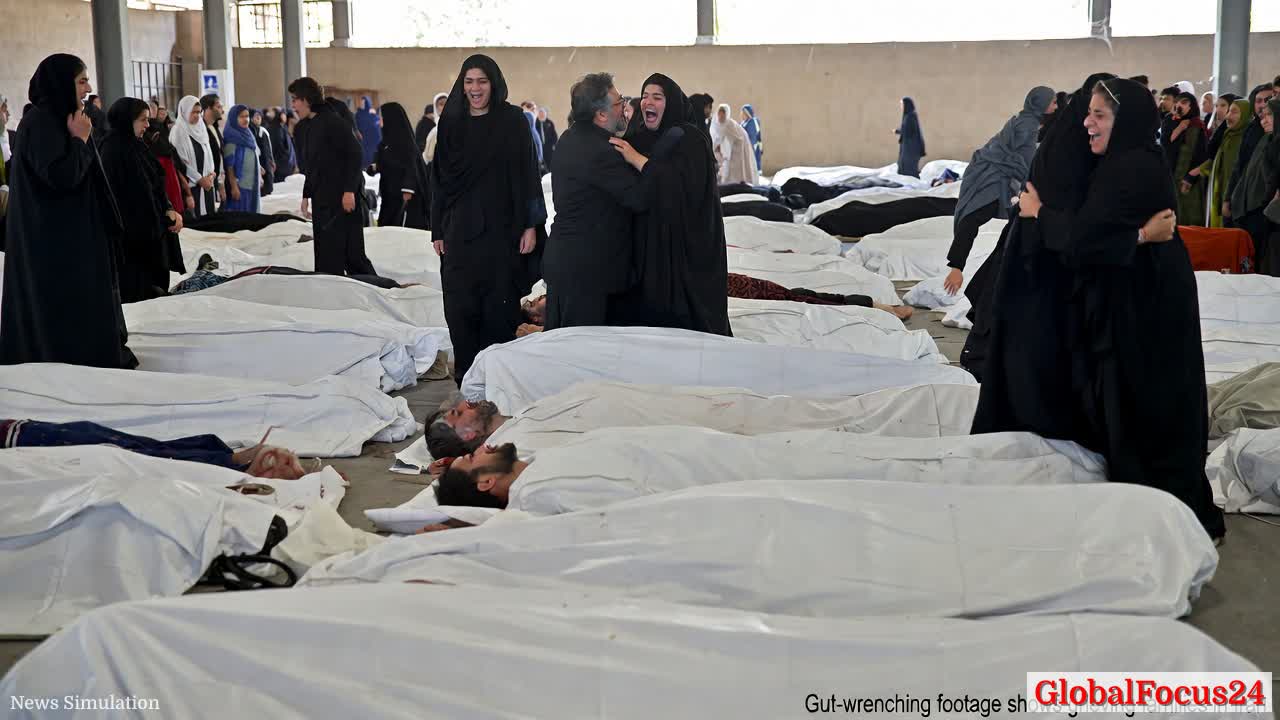
Iran is confronting a moment of profound sorrow as footage and reports reveal grieving families and cascading losses following a devastating event. This article examines the incident within a broader historical context, analyzes potential economic consequences, and offers regional comparisons to illuminate how similar shocks reverberate across neighbors and markets. The aim is to provide a clear, balanced account that informs readers without political commentary, while highlighting the human dimension and societal implications.
Historical Context: Grief, Resilience, and National Narratives
- A historical lens helps illuminate how modern Iran has repeatedly faced moments of collective trauma. Over decades, episodes of mass casualties or security shocks have prompted national dialogues about safety, governance, and social cohesion. These episodes often shape public memory and influence policy responses that span emergency management, humanitarian aid, and social welfare programs. The current crisis sits within a continuum of events that test the resilience of institutions and communities, while also catalyzing solidarity across regions and demographic groups. The pattern of public mourning and communal support has historically reinforced social cohesion in Iran, even as it tests the limits of resources and political leadership. This context provides a framework for understanding current reactions, memorial practices, and the pace of recovery efforts.
- The global era’s constant flow of information means that such incidents are rapidly narrated across multiple platforms, shaping international perceptions and domestic discourse. In many cases, initial footage fuels urgent humanitarian appeals, followed by systematic assessments of needs—hospital capacity, funeral services, and mental health support. The historical record shows that the most enduring legacies after disasters are the stories of ordinary citizens who navigate fear, loss, and uncertainty while mobilizing mutual aid networks. Such dynamics can influence cultural expressions, media coverage strategies, and the speed at which relief mechanisms are activated.
Economic Impact: Short-Term Strains, Long-Term Considerations
- In the immediate aftermath of a mass casualty event, economic activity often experiences a temporary slowdown as markets recalibrate risk perceptions and households redirect spending toward essential needs and memorial practices. Sectors most directly affected frequently include healthcare, transportation, and logistics, where demand for emergency services, supplies, and relief distribution can surge. The broader economy may see shifts in consumer sentiment, currency stability, and commodity prices as investors reassess risk. These short-term movements are typically accompanied by heightened government expenditure on relief operations, reconstruction planning, and social safety nets, which can influence fiscal dynamics in the near term. While the precise magnitude depends on the scale of the incident and the policy response, history shows that targeted relief measures and international assistance can accelerate stabilization in the weeks and months that follow.
- Energy markets, a critical component of the regional economy, are sensitive to geopolitical shocks and security developments. Iran’s role as a major energy producer means disruptions or heightened regional tensions can have ripple effects on oil prices and supply chains crossing the Middle East. The degree of impact depends on production levels, infrastructure resilience, and the broader environment of global energy demand. In many instances, regional supply constraints stimulate discussions about diversification, investment in resilience, and the prioritization of energy security in national development plans.
- Local economies experience varied outcomes depending on the incident’s location, the scale of damage, and the speed of response. Municipal budgets may face reprioritization to fund emergency services, infrastructure repairs, and social programs for coping and recovery. Businesses often reassess risk exposure, particularly small and medium-sized enterprises operating in hard-hit sectors such as retail, hospitality, and manufacturing. The recovery trajectory hinges on the efficiency of relief distribution, the reliability of supply chains, and the ability of communities to rebuild livelihoods and confidence. Regional comparisons show that places with robust disaster-response frameworks and diversified economic bases tend to rebound more quickly, while concentrations of vulnerability can slow the pace of recovery.
Regional Comparisons: Lessons from Neighboring Economies
- Across the broader Middle East and adjacent regions, communities have faced varied shocks—from natural disasters to political violence—each reshaping economic resilience. Countries with diversified energy portfolios, strong public health systems, and transparent emergency management protocols generally exhibit better near-term stabilization after distress events. Conversely, economies more dependent on single sectors or facing governance challenges may experience protracted recovery cycles. An informed comparison underscores the importance of multi-sector resilience and credible institutions as determinants of how rapidly a society recovers from a human tragedy of this scale.
- Trade and humanitarian corridors in the region can play pivotal roles in recovery. When regional infrastructure remains functional and efficient, relief materials, medical supplies, and reconstruction inputs flow more readily to affected areas, reducing bottlenecks and supporting faster stabilization. Conversely, if regional tensions disrupt logistics or limit access to essential goods, recovery timelines can extend, elevating costs for households and enterprises. The interplay between security, logistics, and economic policy thus becomes a critical focus for policymakers in the aftermath of crisis events.
Human Dimension: Public Response, Mourning, and Community Aid
- Public reaction to tragedies of this magnitude typically encompasses collective mourning, ritual commemorations, and widespread expressions of support. Families affected by such losses navigate a period of profound grief, while communities mobilize to provide practical assistance, whether through financial contributions, food distribution, or volunteering in relief efforts. The social fabric often strengthens as neighbors, religious and cultural organizations, and civil society groups organize mutual aid networks, reflecting a shared commitment to supporting those most affected. The emotional impact of these events reverberates across generations, shaping societal conversations about safety, justice, and communal responsibility.
- Media coverage and storytelling during crises have dual effects: they can mobilize resources and raise public awareness, but they also shape perceptions in ways that influence policy and humanitarian response. Responsible reporting that centers on affected individuals and communities—without sensationalism—can help sustain international attention and donor engagement, while ensuring dignity and privacy for those most affected. The balance between informing the public and preserving humanity remains a central challenge for journalists and institutions during crisis reporting.
Policy and Preparedness: Strengthening Resilience for the Future
- In the wake of such events, policy discussions increasingly focus on resilience-building across multiple domains: emergency response planning, health system capacity, social safety nets, and infrastructure hardening. Investments in early-warning systems, rapid-response medical teams, and logistics networks can reduce fatalities and speed recovery. Policies that promote transparent communication, disaster risk reduction, and community engagement tend to yield long-run benefits by enhancing public trust and civic preparedness. The future trajectory depends on how authorities translate lessons from past shocks into concrete reforms, funding commitments, and implementation timeliness.
- Regional collaboration can amplify resilience. Shared standards for emergency response, cross-border aid agreements, and coordinated procurement can improve efficiency and reduce duplication during crises. When neighboring countries align their response frameworks, the collective capacity to respond to large-scale tragedies improves, offering a stabilizing influence on markets and communities alike. This collaborative approach underscores the interconnected nature of regional health, safety, and economic systems, where progress in one country can bolster stability in others.
Contextual Notes: The Human Story as the Centerpiece
- Beyond statistics and policy, the human story remains central. Each family, each neighborhood, and each worker affected by tragedy contributes to a broader narrative about resilience and recovery. The cadence of daily life—schools reopening, small businesses resuming operations, families returning to routine—signals the healing process even as communities continue to mourn. Public health responses, psychosocial support services, and community memorials collectively shape the long arc of recovery, ensuring that the memory of loss is balanced by a commitment to rebuilding and moving forward. This human-centered focus is essential when interpreting the broader economic and regional implications of a crisis of this magnitude.
- In sum, the incident stands as a moment of collective challenge that tests governance, economic stability, and social cohesion. Historical patterns suggest that transparent leadership, rapid relief, and sustained community support can transform a period of acute grief into renewed societal endurance. The interplay between memory, policy action, and economic adaptation will shape Iran’s trajectory in the months ahead, influencing both domestic conditions and regional dynamics as stakeholders work to restore normalcy and foster long-term resilience.
Important Note on Context and Sources
- The analysis above draws on historical patterns and regional dynamics observed in crisis cycles across similar contexts, which provide a framework for understanding potential outcomes and policy responses. For readers seeking further context, it is helpful to examine historical disaster response case studies and regional resilience research that explore how societies recover from mass-casualty events. These sources illuminate the nuanced interplay between human resilience, economic stability, and institutional capacity during times of profound loss.
- While figures and forum discussions illuminate public sentiment and humanitarian needs, careful attention should be paid to verifying information from credible official channels and established institutions, particularly in the immediate aftermath of tragedies when rumors and misinformation can proliferate. Responsible reporting emphasizes accuracy, empathy, and the safeguarding of affected individuals’ dignity while informing the public about relief efforts, recovery plans, and long-term implications.
- In the larger arc of regional economics, the incident reinforces the importance of diversified economies, robust financial systems, and effective governance to weather shocks. Regions with integrated supply chains, diversified employment sectors, and transparent institutions tend to stabilize more rapidly after crises, underscoring the value of ongoing reforms and resilience-building initiatives that extend beyond the immediate crisis period. These insights help frame the longer-term economic outlook for Iran in the context of its regional environment.
- The evolving narrative around this tragedy will continue to develop as official investigations unfold, humanitarian organizations deploy aid, and communities persevere in the face of loss. Readers are encouraged to follow credible updates from authorities and established aid agencies to understand how relief efforts progress, where needs are greatest, and how economic recovery efforts unfold in the coming weeks and months. This ongoing coverage will reveal not only the scale of immediate needs but also the longer-term implications for social services, infrastructure, and regional cooperation.
This article provides a comprehensive, objective examination of the incident within its historical framework, its economic ramifications, and its regional context, while honoring the human dimension at the center of the tragedy. It avoids political commentary and bias, prioritizes factual reportage, and presents information through a structured, readable format designed for a broad audience seeking clarity, context, and credible analysis in a time of collective grief.