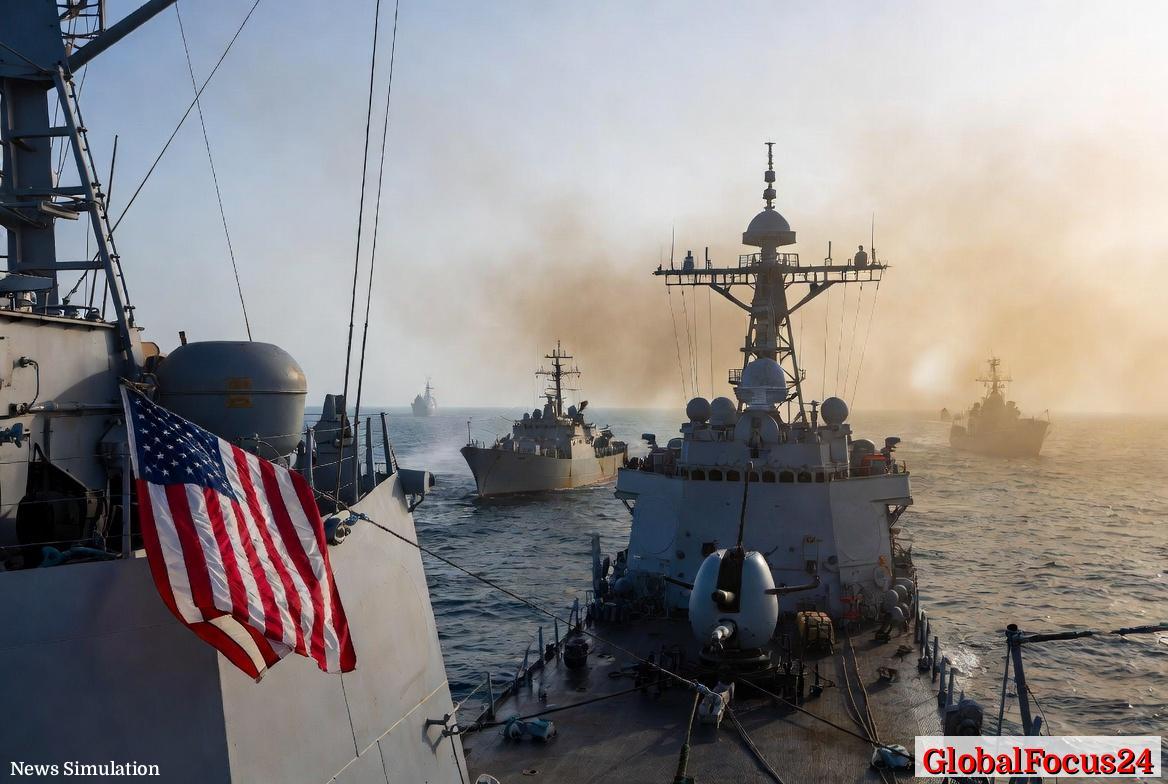
US-Iran Tensions Surge as Strait of Hormuz Closure Disrupts Global Oil Flows
Rapid Escalation in the Persian Gulf
Tensions between the United States and Iran have intensified sharply over the past 48 hours, triggering alarm across global markets and raising concerns about maritime security in one of the world’s most critical energy corridors. The situation escalated after Iran moved to close the Strait of Hormuz, a narrow but vital shipping lane through which roughly a fifth of the world’s oil supply passes.
The closure was followed by a series of conflicting diplomatic and military developments. While U.S. officials indicated that peace talks with Iran were scheduled to resume imminently, Tehran withdrew from those negotiations, citing what it described as credible threats of a surprise military strike. Shortly thereafter, U.S. forces seized an Iranian vessel operating within the contested waters of the strait, further deepening mistrust between the two nations.
The rapid sequence of events has left international observers scrambling to assess the potential consequences, both for regional stability and for the global economy.
Strategic Importance of the Strait of Hormuz
The Strait of Hormuz has long been recognized as one of the most strategically significant chokepoints in global trade. Located between Oman and Iran, the strait connects the Persian Gulf with the Arabian Sea and serves as the primary export route for major oil producers including Saudi Arabia, the United Arab Emirates, Kuwait, and Iraq.
Any disruption to shipping in the strait has immediate ripple effects across global energy markets. Even temporary closures can drive up oil prices, disrupt supply chains, and increase insurance costs for shipping companies operating in the region.
Historically, tensions in the Strait of Hormuz have periodically escalated during periods of heightened conflict between Iran and Western nations. During the Iran-Iraq War in the 1980s, the so-called “Tanker War” saw repeated attacks on oil vessels, prompting international naval escorts to ensure safe passage. More recently, sporadic incidents involving ship seizures and drone attacks have underscored the fragility of security in the area.
The current closure marks one of the most severe disruptions in recent years and signals a significant escalation beyond previous incidents.
Conflicting Narratives and Diplomatic Breakdown
At the center of the crisis is a deepening breakdown in communication and trust between Washington and Tehran. U.S. officials initially expressed cautious optimism about renewed diplomatic engagement, signaling that peace talks were set to resume. However, Iran abruptly withdrew from those discussions, accusing the United States of preparing a covert military operation.
Iranian officials have also rejected claims by U.S. leadership that Tehran is prepared to scale back or abandon its uranium enrichment activities. The denial underscores a fundamental sticking point in negotiations that has persisted for years, with both sides holding firmly to opposing positions on nuclear policy.
Meanwhile, U.S. forces carried out an operation to seize an Iranian vessel in the Strait of Hormuz, citing security concerns. The action has been interpreted by Iranian authorities as a provocative escalation, further complicating any prospects for near-term diplomacy.
Public statements from both sides reflect a widening gap. U.S. leadership has warned that failure to reach an agreement could carry significant consequences for Iran, while Iranian officials have emphasized their unwillingness to negotiate under perceived threats.
Immediate Economic Impact on Global Markets
The closure of the Strait of Hormuz has already begun to reverberate through global markets. Oil prices surged in early trading following the announcement, reflecting fears of supply shortages and logistical disruptions. Analysts note that even the perception of instability in the region can drive volatility, as traders factor in the risk of prolonged disruptions.
Shipping companies are also facing increased operational challenges. Insurance premiums for vessels transiting the region have risen sharply, and some operators are rerouting shipments to avoid the strait altogether. These adjustments add both time and cost to global supply chains, with potential knock-on effects for industries ranging from manufacturing to transportation.
Key economic implications include:
- Rising crude oil prices driven by supply uncertainty.
- Increased shipping and insurance costs in the Persian Gulf.
- Potential delays in global energy deliveries.
- Market volatility affecting equities tied to energy and logistics sectors.
Countries heavily dependent on Gulf oil exports are particularly vulnerable to sustained disruptions. Asian economies, including China, India, Japan, and South Korea, rely heavily on energy supplies passing through the strait, making them especially sensitive to prolonged instability.
Regional Security Concerns Intensify
The unfolding crisis has heightened security concerns across the Middle East. Regional powers are closely monitoring developments, with several nations increasing naval patrols and reinforcing maritime defenses.
The presence of international naval forces in the Persian Gulf has historically served as a stabilizing factor, but it also raises the risk of miscalculation. With multiple military assets operating in close proximity, the potential for accidental confrontation remains a significant concern.
Neighboring countries have urged restraint, emphasizing the importance of maintaining open shipping lanes and avoiding further escalation. However, the rapid deterioration of diplomatic channels between the United States and Iran complicates efforts to de-escalate the situation.
The closure of the Strait of Hormuz also places pressure on alternative export routes. While some Gulf countries have invested in pipelines that bypass the strait, these routes have limited capacity and cannot fully compensate for a prolonged shutdown.
Historical Context of US-Iran Relations
The current crisis is rooted in decades of complex and often adversarial relations between the United States and Iran. Since the 1979 Iranian Revolution, diplomatic ties have been marked by periods of confrontation, economic sanctions, and intermittent negotiations.
Key flashpoints over the years have included disputes over Iran’s nuclear program, regional influence, and military activities. Efforts to reach comprehensive agreements have seen varying degrees of success, with periods of relative calm often followed by renewed tensions.
The Strait of Hormuz has frequently featured in these disputes, serving as both a strategic asset and a point of leverage. Iran has previously threatened to close the strait in response to economic sanctions or military pressure, though such threats have rarely been fully realized until now.
The latest developments reflect a continuation of this pattern, albeit with a heightened level of intensity and immediacy.
Global Energy Security at Risk
The implications of the current standoff extend far beyond the immediate region. Global energy security is closely tied to the stability of the Persian Gulf, and any sustained disruption could have far-reaching consequences.
Energy-importing nations are likely to draw on strategic reserves to mitigate short-term shortages, but these measures are not sustainable over the long term. Prolonged instability could accelerate shifts toward alternative energy sources and diversification of supply routes.
Comparatively, other global chokepoints such as the Suez Canal and the Strait of Malacca also play critical roles in international trade, but the Strait of Hormuz remains uniquely significant due to the concentration of oil exports passing through it.
The current situation highlights the vulnerability of global energy infrastructure to geopolitical tensions, underscoring the importance of maintaining secure and reliable transit routes.
Uncertain Path Forward
With diplomatic efforts stalled and military activity increasing, the path forward remains uncertain. The withdrawal from planned peace talks signals a significant setback for efforts to de-escalate tensions, while ongoing actions in the Strait of Hormuz risk further entrenching positions on both sides.
Analysts warn that the combination of heightened rhetoric, economic pressure, and military engagement creates a volatile environment where rapid escalation is possible. At the same time, the mutual economic and strategic stakes provide strong incentives for eventual de-escalation.
For now, global attention remains fixed on the Persian Gulf, where each new development carries the potential to reshape the trajectory of the crisis.