Iran’s Qalibaf Claims U.S. Sought Ceasefire as Battlefield Dynamics Intensify
Escalating Tensions Frame New Claims
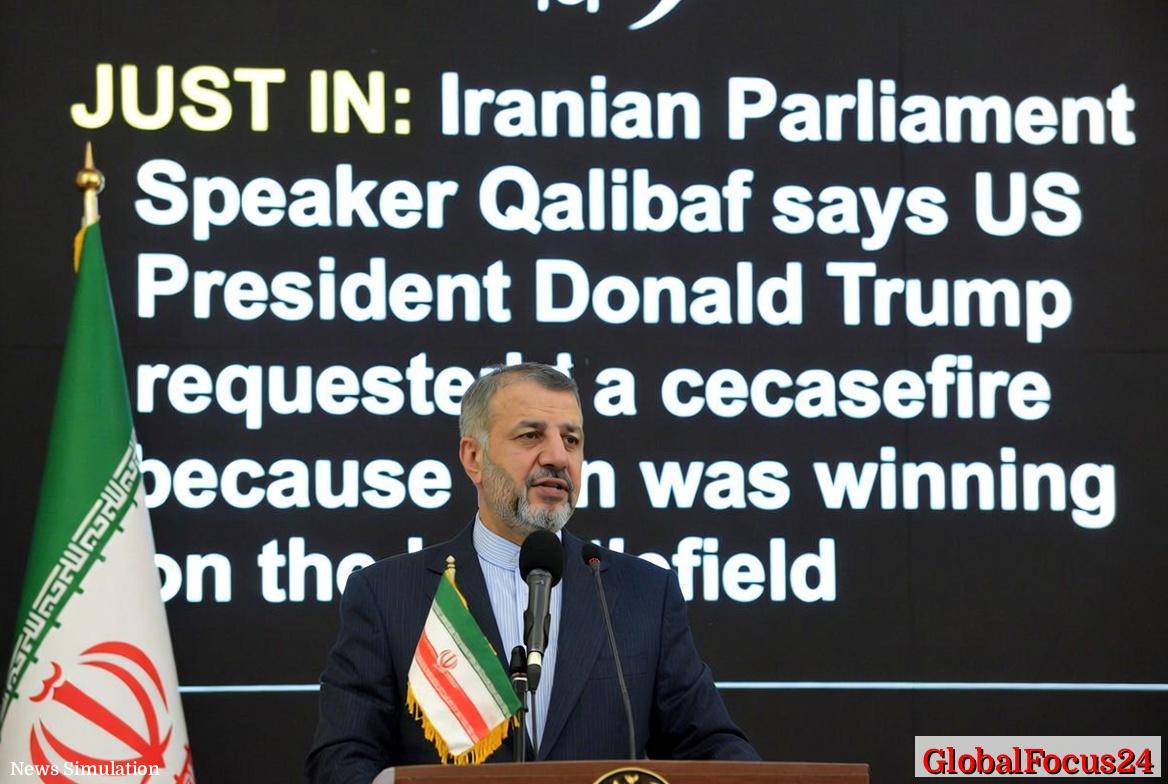
Iranian Parliament Speaker Mohammad Bagher Qalibaf has asserted that U.S. President Donald Trump requested a ceasefire amid ongoing hostilities, claiming that the appeal came as Iranian forces were gaining the upper hand on the battlefield. The statement, delivered during a parliamentary session and later echoed by state-affiliated media, has added a new layer of complexity to an already volatile regional situation.
The remarks come at a time of heightened military tension in the Middle East, where intermittent clashes, proxy engagements, and strategic positioning have intensified in recent months. While U.S. officials have not publicly confirmed the claim, the statement has sparked widespread discussion among analysts and policymakers about the current trajectory of the conflict and the underlying strategic calculations of both sides.
Battlefield Developments and Competing Narratives
According to Qalibaf, Iran’s military operations have achieved “decisive progress,” prompting what he described as a shift in Washington’s posture. He framed the alleged ceasefire request as evidence of Iran’s strengthening position, though independent verification of battlefield outcomes remains limited due to restricted access and conflicting reports from multiple parties.
U.S. defense officials have historically emphasized a policy of deterrence and de-escalation in the region, often maintaining that their actions are designed to prevent broader conflict rather than initiate direct confrontation. Analysts note that in conflicts involving asymmetric warfare and proxy actors, both sides frequently present narratives that reinforce domestic support and strategic messaging.
Military observers point out that battlefield advantage can be difficult to define in such contexts. Gains in one area may be offset by vulnerabilities elsewhere, and the fluid nature of engagements often makes definitive assessments elusive.
Historical Context of U.S.-Iran Relations
The latest claims are rooted in decades of complex and often adversarial relations between the United States and Iran. Since the 1979 Iranian Revolution, diplomatic ties have remained severed, punctuated by periods of heightened confrontation and limited indirect engagement.
Key moments in this relationship include:
- The Iran-Iraq War in the 1980s, during which the U.S. supported Iraq in various capacities.
- The 2015 Joint Comprehensive Plan of Action (JCPOA), an agreement aimed at curbing Iran’s nuclear program in exchange for sanctions relief.
- The U.S. withdrawal from the JCPOA in 2018, followed by the reimposition of economic sanctions.
- A series of regional incidents, including attacks on shipping lanes and military installations, which have kept tensions elevated.
These historical dynamics continue to shape current perceptions and policy decisions on both sides, influencing how statements like Qalibaf’s are interpreted domestically and internationally.
Economic Impact and Market Reactions
The geopolitical uncertainty surrounding U.S.-Iran tensions has had immediate and measurable effects on global markets, particularly in the energy sector. Oil prices have shown increased volatility in response to developments in the region, reflecting concerns over potential disruptions to supply routes, especially through the Strait of Hormuz.
Energy analysts highlight several economic implications:
- Increased insurance costs for shipping companies operating in high-risk zones.
- Fluctuations in crude oil prices driven by perceived supply threats.
- Pressure on global inflation rates due to rising energy costs.
- Strategic stockpiling by major economies to mitigate potential shortages.
For Iran, ongoing sanctions have already constrained economic growth, limiting access to international financial systems and reducing oil export revenues. However, periods of heightened tension can also create opportunities for informal trade networks and alternative economic arrangements.
In the United States, energy market shifts can influence domestic fuel prices and broader economic indicators, making geopolitical stability in the Middle East a key concern for policymakers and industry leaders alike.
Regional Comparisons and Strategic Implications
The situation involving Iran and the United States can be compared to other regional conflicts where asymmetric warfare and indirect engagement play significant roles. For instance:
- In Syria, multiple international actors have pursued overlapping objectives, resulting in a complex and prolonged conflict.
- In Yemen, proxy dynamics have led to a humanitarian crisis with far-reaching regional consequences.
- In Ukraine, although involving different geopolitical actors, the interplay between direct military action and strategic messaging offers parallels in how narratives are shaped.
These comparisons underscore the importance of understanding not just military developments, but also the informational and diplomatic dimensions of modern conflict.
Regional actors, including Gulf states and neighboring countries, are closely monitoring the situation. Many have expressed concern about the potential for escalation, while also emphasizing the need for diplomatic solutions to prevent broader instability.
Public Reaction and International Response
Public reaction to Qalibaf’s statement has been mixed, reflecting broader divisions in how the conflict is perceived globally. In Iran, state media coverage has largely framed the remarks as a validation of national strength and resilience. In contrast, international observers have called for caution, noting the absence of corroborating evidence from independent sources.
Diplomatic channels remain active, with several countries reportedly engaging in behind-the-scenes efforts to de-escalate tensions. Multilateral organizations have reiterated calls for restraint and dialogue, emphasizing the risks associated with prolonged conflict in a strategically vital region.
Experts note that statements from high-ranking officials can serve multiple purposes, including signaling intent, shaping public opinion, and influencing negotiations. As such, the broader context in which these remarks are made is critical to understanding their implications.
The Path Forward
While the claim that the United States sought a ceasefire remains unverified, it highlights the ongoing uncertainty and complexity of U.S.-Iran relations. The interplay between military developments, economic pressures, and diplomatic efforts will likely continue to shape the trajectory of the conflict in the coming months.
Observers emphasize the need for reliable information and measured analysis as events unfold. In an environment where narratives can shift rapidly, maintaining a clear understanding of verified facts and broader strategic trends is essential for policymakers, businesses, and the public alike.
As tensions persist, the potential for both escalation and negotiation remains present, underscoring the delicate balance that defines one of the world’s most closely watched geopolitical relationships.