Iran Launches Drone Attack on US Military Ships in Strait of Hormuz Amid Escalating Maritime Tensions
Escalation in a Critical Global Waterway
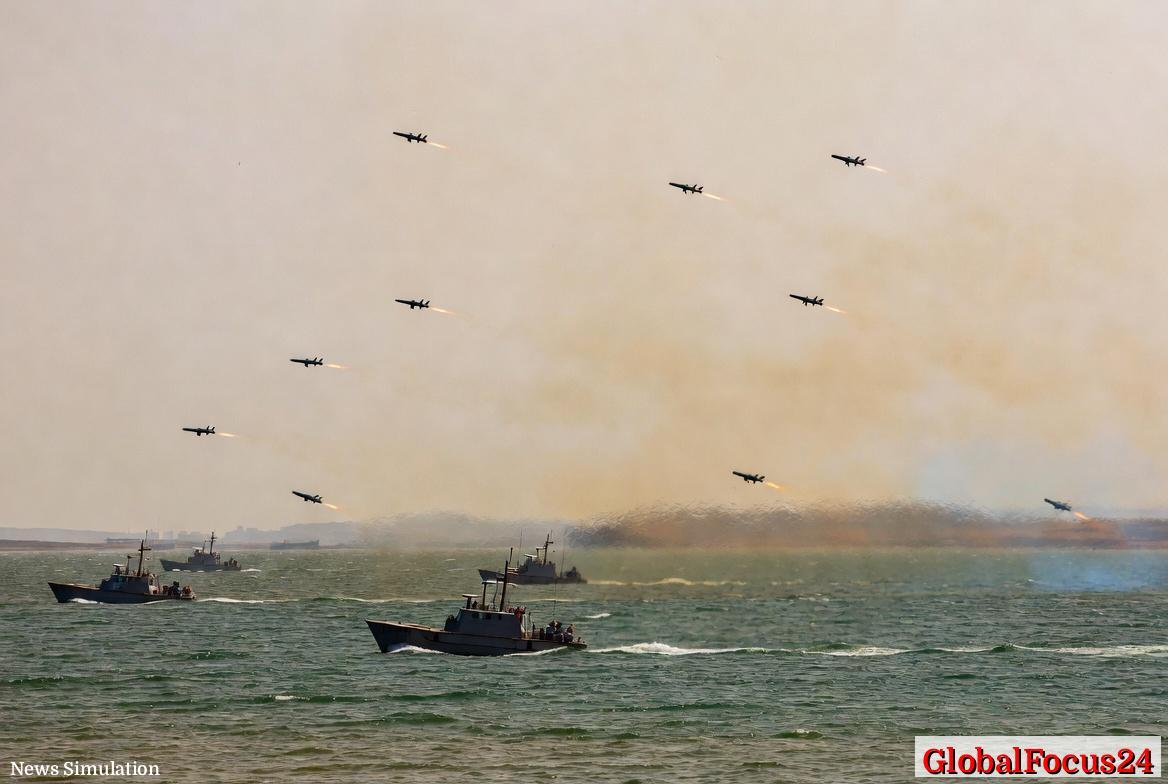
Iran has announced a drone attack targeting United States military vessels operating in the Strait of Hormuz, marking a sharp escalation in tensions across one of the world’s most strategically vital maritime corridors. The strikes were described by Iranian officials as a direct response to a recent U.S. operation involving the interception and seizure of an Iranian cargo ship in the same waterway.
The Strait of Hormuz, a narrow passage connecting the Persian Gulf to the Arabian Sea, handles a significant portion of global oil shipments. Any disruption to its security has immediate ripple effects across international energy markets, shipping logistics, and geopolitical stability. The latest incident has heightened concerns among regional stakeholders and global markets already sensitive to disruptions in energy supply chains.
Details of the Drone Strike
According to statements released by Iranian authorities, multiple unmanned aerial vehicles were deployed in the operation, targeting U.S. naval assets transiting the strait. While the extent of damage and potential casualties has not been fully confirmed, U.S. defense officials acknowledged that their vessels were engaged by hostile drones and responded with defensive measures.
Initial reports suggest that U.S. ships employed onboard air defense systems to intercept incoming drones, limiting the scale of impact. However, the confrontation underscores the increasing role of drone warfare in maritime conflicts, where relatively low-cost systems can challenge heavily armed naval forces.
Iran’s use of drones reflects a broader strategic emphasis on asymmetric capabilities, allowing it to project power in contested zones without direct conventional confrontation.
Trigger: Seizure of Iranian Cargo Vessel
The incident follows a U.S. maritime operation earlier in the week involving the interception of an Iranian cargo vessel suspected of transporting materials under sanctions restrictions. U.S. officials stated that the seizure was conducted in accordance with international maritime enforcement protocols, though specific details about the cargo have not been publicly disclosed.
Iran, in response, condemned the action as unlawful and characterized it as an act of economic aggression. The drone strike was framed domestically as a proportional retaliation, reinforcing a pattern of tit-for-tat responses that has defined recent interactions between the two countries in the region.
Such incidents are not unprecedented. Over the past decade, multiple vessels—both commercial and military—have been seized or targeted amid disputes involving sanctions, smuggling allegations, and territorial claims.
Strategic Importance of the Strait of Hormuz
The Strait of Hormuz remains one of the most critical chokepoints in global trade. Roughly one-fifth of the world’s petroleum liquids pass through the narrow channel daily, making it indispensable to both energy producers and consumers.
At its narrowest point, the strait is only about 21 miles wide, with designated shipping lanes even tighter. This geography makes vessels highly vulnerable to surveillance and attack, particularly from coastal defense systems, small boats, and drones.
Countries bordering the strait, including Iran and Oman, have long exercised significant influence over maritime activity in the region. Iran, in particular, has repeatedly demonstrated its ability to disrupt or threaten shipping traffic as leverage in broader geopolitical disputes.
Historical Context of Maritime Tensions
The latest confrontation echoes earlier periods of heightened conflict in the Persian Gulf, notably during the “Tanker War” phase of the 1980s Iran-Iraq conflict. During that time, commercial oil tankers were frequently targeted, prompting international naval patrols to ensure safe passage.
More recently, tensions surged in 2019 when several oil tankers were attacked near the Strait of Hormuz, incidents that were widely attributed to regional rivalries and disputes over sanctions enforcement. The U.S. subsequently increased its naval presence in the area, forming multinational coalitions aimed at safeguarding maritime security.
These historical precedents highlight a recurring pattern: the Strait of Hormuz serves not only as a trade artery but also as a stage for geopolitical signaling and strategic confrontation.
Economic Impact and Market Reaction
The drone attack has already begun to influence global energy markets, with oil prices showing volatility in early trading following the announcement. Traders are closely monitoring the situation for signs of prolonged disruption, which could constrain supply and increase transportation costs.
Insurance premiums for vessels transiting the region are also expected to rise, reflecting heightened risk assessments by maritime insurers. Shipping companies may consider rerouting or delaying shipments, although alternatives to the strait are limited and often significantly more expensive.
Beyond energy markets, the broader economic implications include:
- Increased costs for global shipping and logistics.
- Potential delays in supply chains affecting manufacturing and trade.
- Heightened uncertainty impacting investor confidence in regional markets.
For countries heavily dependent on imported oil, particularly in Asia, sustained instability in the Strait of Hormuz could translate into higher fuel costs and inflationary pressures.
Regional Comparisons and Broader Security Dynamics
While the Strait of Hormuz is uniquely critical, it is not the only maritime chokepoint experiencing tension. Similar vulnerabilities exist in areas such as the Bab el-Mandeb Strait near the Red Sea and the South China Sea, where territorial disputes and military activity have also raised concerns about freedom of navigation.
Compared to these regions, the Strait of Hormuz stands out for the volume of energy resources passing through it and the proximity of competing military forces. The concentration of naval assets from multiple countries increases both the likelihood of incidents and the complexity of de-escalation.
Neighboring Gulf states have expressed concern over the latest developments, emphasizing the importance of maintaining open shipping lanes. Several countries in the region host U.S. military bases or cooperate closely on maritime security initiatives, making them directly affected by any escalation.
Evolving Role of Drone Warfare
The use of drones in this incident reflects a broader shift in modern military strategy. Unmanned systems offer several advantages, including lower operational costs, reduced risk to personnel, and the ability to conduct precision strikes.
In maritime environments, drones can be launched from land, ships, or even small vessels, making them highly adaptable. Their increasing sophistication—ranging from surveillance capabilities to explosive payload delivery—has transformed them into a central component of naval engagements.
This trend is not limited to the Middle East. Globally, military forces are investing heavily in counter-drone technologies, including electronic warfare systems, laser defenses, and advanced radar detection.
International Response and Risk of Escalation
International reactions to the incident have focused on calls for restraint and the protection of maritime security. Global shipping organizations and energy stakeholders have urged all parties to avoid further escalation that could jeopardize safe passage through the strait.
Military analysts note that while both the U.S. and Iran have engaged in calibrated responses in the past, the increasing frequency of such incidents raises the risk of miscalculation. Even a limited confrontation has the potential to expand rapidly if communication channels fail or if additional actors become involved.
Efforts to maintain stability often rely on a combination of naval presence, diplomatic engagement, and multilateral cooperation. However, the effectiveness of these measures depends on the willingness of involved parties to avoid actions that could trigger broader conflict.
Outlook for Maritime Security
The drone attack on U.S. military ships underscores the fragile balance of power in the Strait of Hormuz. As tensions continue to evolve, the region remains a focal point for global attention, not only for its strategic importance but also for its potential to influence broader economic and security dynamics.
Shipping operators, energy producers, and governments alike are closely monitoring developments, assessing both immediate risks and long-term implications. The situation highlights the interconnected nature of modern geopolitics, where localized incidents can have far-reaching global consequences.
With no clear resolution in sight, the Strait of Hormuz is likely to remain a critical flashpoint, where strategic interests, economic priorities, and emerging military technologies converge in an increasingly complex security environment.