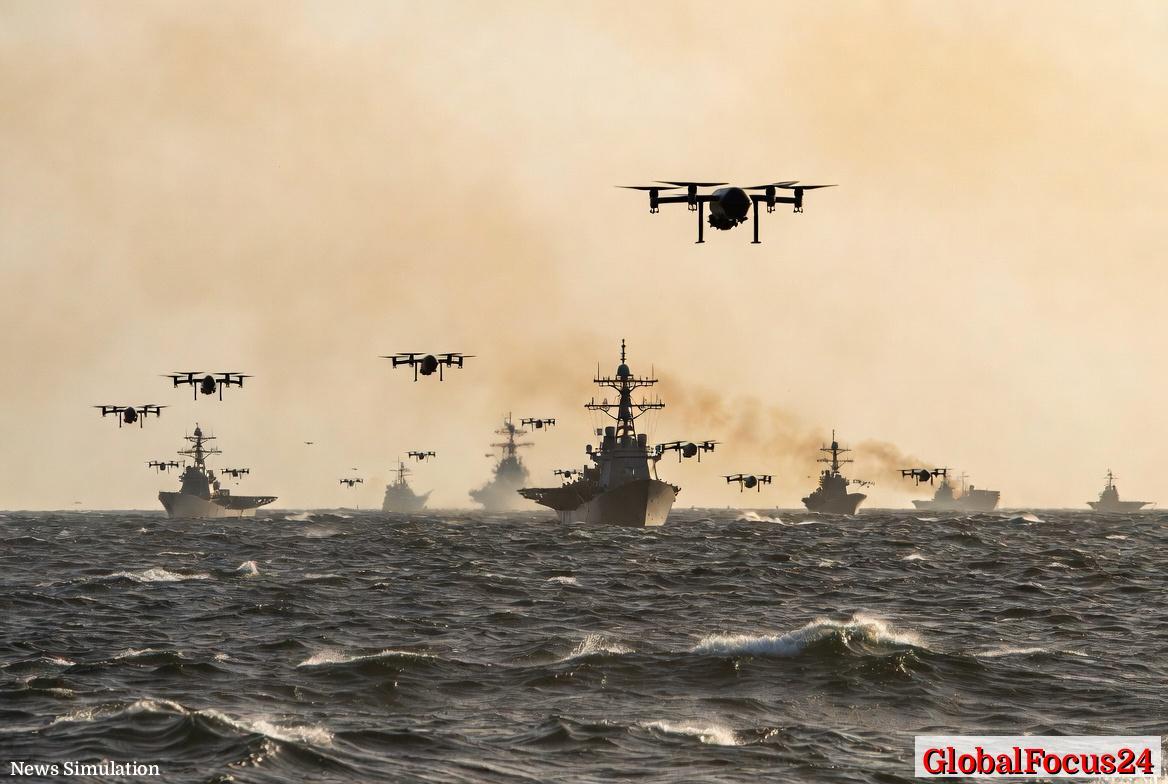
Iran Launches Drone Attack Toward U.S. Military Ships, Escalating Maritime Tensions
Rising Tensions in Strategic Waters
Iran has launched a drone attack targeting U.S. military ships operating in a key maritime corridor, marking a significant escalation in an already volatile region. The incident unfolded in waters long regarded as a strategic artery for global trade and energy transport, raising immediate concerns about shipping security, military retaliation, and the stability of international supply chains.
U.S. defense officials confirmed that multiple unmanned aerial vehicles were detected approaching naval assets before defensive systems were activated. Early assessments indicate that the drones were intercepted before reaching their targets, though investigations into the scope, origin, and intent of the attack are ongoing.
The area where the incident occurred is among the world’s most closely monitored maritime zones, serving as a conduit for a substantial share of global oil shipments. Any disruption in this region has historically triggered ripple effects across energy markets and international shipping routes.
Historical Context of Maritime Confrontations
Encounters between Iran and U.S. naval forces are not new. For decades, the narrow waterways and surrounding seas have been a focal point of strategic rivalry. Notable incidents include tanker seizures, mine attacks, and drone surveillance encounters, particularly during periods of heightened geopolitical tension.
In the late 1980s, during the so-called “Tanker War” phase of the Iran-Iraq conflict, naval skirmishes and attacks on oil shipments underscored the vulnerability of maritime infrastructure. More recently, the use of drones has emerged as a defining feature of modern engagements, reflecting broader shifts in military technology.
Unmanned systems offer several tactical advantages: they are relatively inexpensive, difficult to attribute with certainty, and capable of operating in swarms or coordinated formations. This evolution has transformed the nature of maritime security, forcing naval forces to adapt rapidly to new forms of asymmetric threats.
Details of the Drone Engagement
According to defense briefings, the drones were launched in a coordinated manner, suggesting a level of planning and operational capability beyond isolated or improvised action. Radar systems aboard U.S. vessels detected the incoming drones at a distance, enabling defensive countermeasures to neutralize the threat.
Key elements of the engagement include:
- Early detection via onboard radar and surveillance systems.
- Deployment of electronic warfare tools and kinetic defenses to intercept drones.
- No reported damage to U.S. ships or personnel injuries.
- Continued monitoring of the surrounding area for additional threats.
Military analysts note that such incidents often serve dual purposes: testing defensive readiness while signaling strategic intent. The use of drones allows for escalation without immediate large-scale confrontation, complicating response strategies.
Economic Impact and Energy Market Sensitivity
The immediate aftermath of the incident was felt in global energy markets, where oil prices showed increased volatility amid concerns about potential disruptions. The region accounts for a significant portion of the world’s crude exports, making it highly sensitive to any perceived instability.
Shipping insurers and logistics companies are also reassessing risk levels. Past incidents in the region have led to:
- Increased insurance premiums for vessels transiting affected waters.
- Temporary rerouting of shipments, adding time and cost to global supply chains.
- Heightened security measures aboard commercial vessels.
Even brief disruptions can have cascading economic consequences. For example, delays in oil shipments can affect refinery operations, fuel prices, and broader economic activity, particularly in energy-dependent economies.
Regional Comparisons and Strategic Implications
Similar maritime tensions have been observed in other parts of the world, including the South China Sea and the Black Sea, where competing territorial claims and military presence create a constant risk of escalation. However, the Middle Eastern maritime corridor remains uniquely critical due to its central role in global energy distribution.
Compared to other regions:
- The volume of oil passing through this corridor is significantly higher.
- The proximity of rival military forces increases the likelihood of rapid escalation.
- The narrow geography limits alternative shipping routes.
These factors combine to amplify the global significance of any incident, making even minor confrontations a matter of international concern.
Technological Shift in Naval Warfare
The increasing use of drones highlights a broader transformation in naval warfare. Traditional naval engagements relied on large vessels and direct confrontation, but modern conflicts increasingly involve remote systems, cyber capabilities, and electronic warfare.
Drones used in maritime environments can vary widely in size and capability, from small reconnaissance units to larger systems capable of carrying explosives. Their deployment reflects a strategic emphasis on flexibility and deniability.
Naval forces worldwide are investing heavily in counter-drone technologies, including:
- Advanced radar and sensor systems for early detection.
- Electronic jamming to disrupt drone communications.
- Directed-energy weapons and rapid-fire defense systems.
The incident underscores the importance of these investments, as unmanned threats become more frequent and sophisticated.
International Shipping and Security Measures
Commercial shipping operators are closely monitoring developments, with some companies issuing advisories to crews navigating the region. Enhanced vigilance, communication protocols, and coordination with naval forces are being emphasized to mitigate risk.
Shipping associations have reiterated the importance of:
- Maintaining updated threat assessments.
- Implementing onboard security measures.
- Coordinating with international maritime security agencies.
While no immediate disruptions to major shipping lanes have been reported, the situation remains fluid, and further incidents could prompt broader changes in maritime operations.
Public Reaction and Global Attention
News of the drone attack quickly drew global attention, with markets, governments, and industry stakeholders reacting to the potential implications. Social media platforms saw a surge in discussion, reflecting widespread concern about the stability of critical trade routes.
Energy analysts and security experts have emphasized the need for restraint and clear communication to prevent escalation. The presence of multiple military forces in a confined area increases the risk of miscalculation, particularly in fast-moving situations involving unmanned systems.
Outlook and Ongoing Developments
Investigations into the incident are ongoing, with officials working to determine the full scope and implications of the attack. Surveillance operations in the region have been intensified, and naval forces remain on high alert.
Key questions moving forward include:
- Whether additional drone activity will occur.
- How naval forces will adapt their defensive posture.
- The potential impact on global energy markets and shipping operations.
The incident serves as a stark reminder of the fragility of maritime security in strategically vital regions. As technology evolves and geopolitical tensions persist, the balance between deterrence and escalation remains a central challenge for naval forces and policymakers alike.
In the coming days, further details are expected to emerge, shedding light on the operational dynamics behind the attack and its broader implications for regional and global stability.