US Carries Out Nighttime Strikes Against Islamic State in Nigeria’s Sokoto State
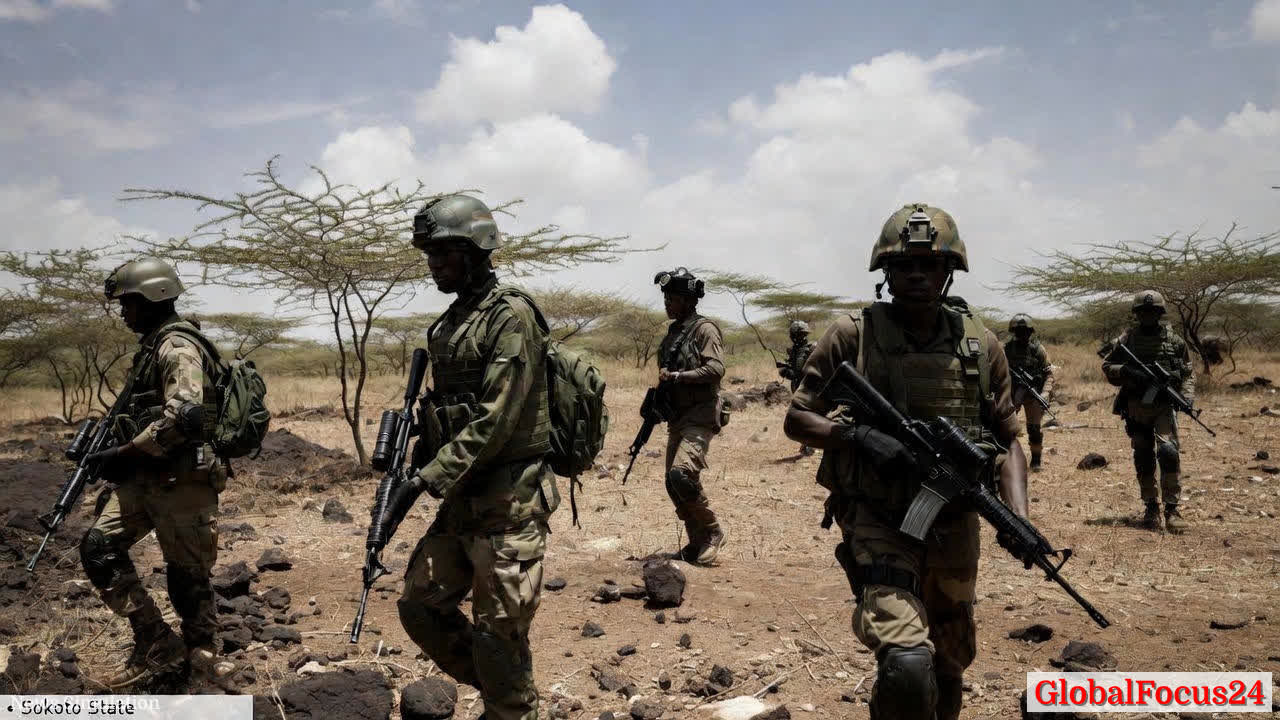
In a significant military operation conducted on Christmas night, the United States carried out targeted airstrikes against Islamic State militants in northwestern Nigeria, focusing on camps in Sokoto State. Early United States and Nigerian authorities described the strikes as precise and controversial, noting that the objective was to disrupt militant networks responsible for attacks on civilian populations, including Christian communities. The operation, described as powerful and deadly by government officials, marks a rare instance of major external military action conducted so far inland in Nigeria, raising questions about regional security dynamics, counterterrorism coordination, and the broader fight against extremist networks operating across West Africa.
Historical context and the evolving threat landscape The fight against Islamist militant groups in Nigeria has a long and complex history. Since the emergence of Boko Haram in the early 2000s, which later split and rebranded various factions, the region has faced a multifaceted security crisis characterized by asymmetric warfare, cross-border infiltrations, and local grievances linked to poverty, climate pressures, and governance gaps. Over the past decade, regional dynamics have shifted with the rise of self-styled Islamic State affiliates in the Sahel and Gulf of Guinea corridors. The operation in Sokoto State comes against a backdrop of sustained international counterterrorism efforts in the Sahel, including coordinated campaigns to degrade militant sanctuaries before they can operationalize attacks beyond local theaters.
US-Nigerian coordination and regional security implications The publicly acknowledged collaboration between United States forces and Nigerian authorities signals an ongoing, high-level security partnership aimed at disrupting militant infrastructure and reducing civilian risk. Officials emphasized that the operation rested on long-planned measures and shared intelligence, illustrating a mutual commitment to address threats that transcend national borders. Sokoto State, located in the northwest corridor of Nigeria, has seen a mix of rural communities and urban centers where security forces have struggled to establish enduring protection for vulnerable populations. The strikes reportedly targeted camps believed to serve as recruitment, training, and logistics hubs for militants attempting to solidify a foothold in the region. In practical terms, this kind of cross-border counterterrorism effort highlights both the challenges and potential advantages of international collaboration in an area where governance and security capabilities vary widely across communities.
Economic impact and regional repercussions Beyond the immediate military dimensions, the operation carries potential economic implications for local communities and broader regional markets. Nigerian security challenges have historically affected agricultural productivity, investment sentiment, and cross-border trade in the Gulf of Guinea region. In northwest Nigeria, many communities rely on seasonal farming, livestock markets, and small-scale commerce that can be disrupted by heightened violence or precursors to conflict. The strikes may influence short-term market behavior, including risk re-pricing in local supply chains, fluctuations in commodity prices, and shifts in labor patterns as communities respond to security advisories. If the operation contributes to longer-term stabilization, the longer arc could include an improved security climate that supports agricultural cycles, microenterprise development, and domestic consumption.
Regional comparisons and lessons The Northwest region of Nigeria has faced a different security calculus than the northeastern belt once afflicted by Boko Haram and later Islamic State in West Africa Province (ISWAP) activity. While the latter has featured more overt ground combat and higher-profile attacks in the Lake Chad basin, the northwest presents distinct challenges including rural insurgent recruitment, intercommunal tensions, and the vulnerability of remote communities to incursions. Comparisons with neighboring countries reveal a broader trend: cross-border terrorist networks exploit porous boundaries, illicit trafficking routes, and limited border-control capacity. The Sokoto operation underscores a growing trend of international counterterrorism actors increasingly engaging in targeted actions beyond conventional theaters, aiming to chase militants into more remote perimeter zones and paralell networks that support their operations. The outcome of this strike could influence future security policies in neighboring states, including Niger, Chad, and parts of Cameroon, where similar militant dynamics have been observed.
Civilian safety, humanitarian considerations, and public reaction Officials have stressed that there were no reported civilian casualties in the immediate aftermath of the strikes, though the humanitarian and security implications for local populations will require ongoing monitoring. In communities adjacent to the affected areas, residents expressed a mix of relief and concern. Relief stems from the potential disruption of militant networks and a perceived increase in safety, while concern centers on the potential for secondary effects, such as displacement or mistaken-identity incidents during heightened security operations. Humanitarian actors typically advocate for clear communication, verified casualty reporting, and safeguards to minimize harm to non-combatants. As investigations progress, the balance between decisive counterterrorism action and civilian protection remains a central axis of public accountability and policy evaluation.
Strategic significance and future trajectory Analysts describe the operation as a demonstration of continuing international willingness to pursue extremist elements across national borders, particularly in regions where governance and security institutions face persistent strains. Strategically, the strikes may deter future assaults against religious or minority communities while signaling a broader commitment to regional stability. However, experts caution that a single operation, even one of notable scale, does not by itself resolve the underlying drivers of militancy, including governance gaps, economic disenfranchisement, and social fracture. The path forward is likely to involve sustained intelligence-sharing, capacity-building for local security forces, and comprehensive approaches that address both immediate threats and long-term resilience. Policymakers in Abuja, Washington, and regional capitals will be watching closely for indicators of improved security, civilian protection, and economic recovery in the wake of the Christmas-night action.
Operational details and verification challenges The information released thus far indicates that the operation targeted specific militant camps with precision to minimize civilian risk. Military planners across nations emphasize the importance of accurate intelligence, real-time assessment, and post-action assessments to determine the effectiveness of such strikes. Verification of fatalities, the status of detainees, and the broader impact on militant capabilities can be challenging in remote or rural areas where access remains limited. Independent observers, local journalists, and humanitarian monitors often play a crucial role in corroborating claims and providing context about the immediate humanitarian situation. As more data becomes available, a clearer picture will emerge regarding the scale of the operation, the extent of damage to militant infrastructure, and the long-term consequences for the region’s security architecture.
Historical echoes and the human dimension History provides a lens through which to view this event. The region has endured cycles of violence and fragile truces, followed by renewed bursts of conflict as groups adapt to shifting tactical landscapes. The perseverance of communities—ranging from farmers to small business owners and faith-based associations—speaks to a broader narrative about resilience in the Sahel and West Africa. The Christmas-night operation adds another chapter to a long arc of regional security efforts, reminding observers that peace and safety are built through a combination of tactical interventions, diplomacy, economic development, and sustained community engagement. The human dimension—stories of families seeking safety, children returning to school, and local markets reopening—will continue to shape the public memory of this event.
Conclusion As security forces digest the immediate outcomes of the strikes in Sokoto State, the broader implications will unfold over weeks and months. The operation signals a continued international focus on disrupting militant networks in West Africa and reinforces the need for coordinated approaches that combine intelligence-sharing, humanitarian protection, and economic stabilization. While the public reaction across Nigeria and neighboring states includes a mix of cautious optimism and vigilance, observers will evaluate whether this moment translates into tangible reductions in violence, improved safety for civilians, and a more stable regional security environment. The Christmas-night action represents a consequential moment in the ongoing effort to confront extremism while preserving the fabric of regional communities and markets.