DRAMA, DYNAMICS, AND DETOURS: A DAY OF TENSION AS U.S. RAID IN VENEZUELA SPARKS GLOBAL DISCUSSION
A high-stakes operation unfolded in Venezuela on January 10, 2026, drawing swift international attention and prompting a wave of questions about covert action, regional stability, and the evolving tools of modern warfare. While initial reports vary in detail and attribution, early accounts indicate that American forces conducted a raid intended to capture Nicolás Maduro, the veteran Venezuelan leader who has governed the country through a period of intense political and economic upheaval. What followed was not only a dramatic sequence of events on the ground but also a broader conversation about security strategy, international law, and the human impact of forceful interventions.
Historical context: Venezuela’s long arc of political volatility To understand the unfolding events, it helps to situate them in a longer arc of Venezuelan history. The country has experienced cycles of political upheaval, economic volatility, and international attention for more than two decades. In the 2000s and 2010s, Venezuela’s oil-dependent economy faced sharp booms and busts, with social programs, disputes over governance, and regional geopolitics shaping public life. Maduro’s tenure, beginning in 2013, has been marked by entrenched polarization, contested elections, and sanctions pressures that have complicated efforts to stabilize institutions and secure basic services for millions of citizens.
From the early 2020s onward, the international community watched as competing factions within Venezuela vied for legitimacy, while neighboring countries grappled with migration, energy markets, and cross-border security concerns. Against this backdrop, a raid conducted by a foreign power—particularly one carrying the weight of longstanding strategic rivalry—becomes a focal point not only for Venezuela but for observers across the Western Hemisphere and beyond. The incident thus sits at the intersection of hemispheric diplomacy, military doctrine, and the evolving norms governing intervention.
Operational contours and the field report Details about the operation remain subject to verification, but several consistent threads have emerged from early statements and eyewitness accounts. The raid appears to have been executed with a goal of detaining Maduro, signaling a decisive attempt to alter Venezuela’s leadership trajectory. The operation reportedly involved a rapid deployment of forces across a defined objective, followed by a confrontation with security personnel on the ground. As with many high-risk raids, the element of surprise was emphasized, aiming to minimize extended combat and protect personnel across borders.
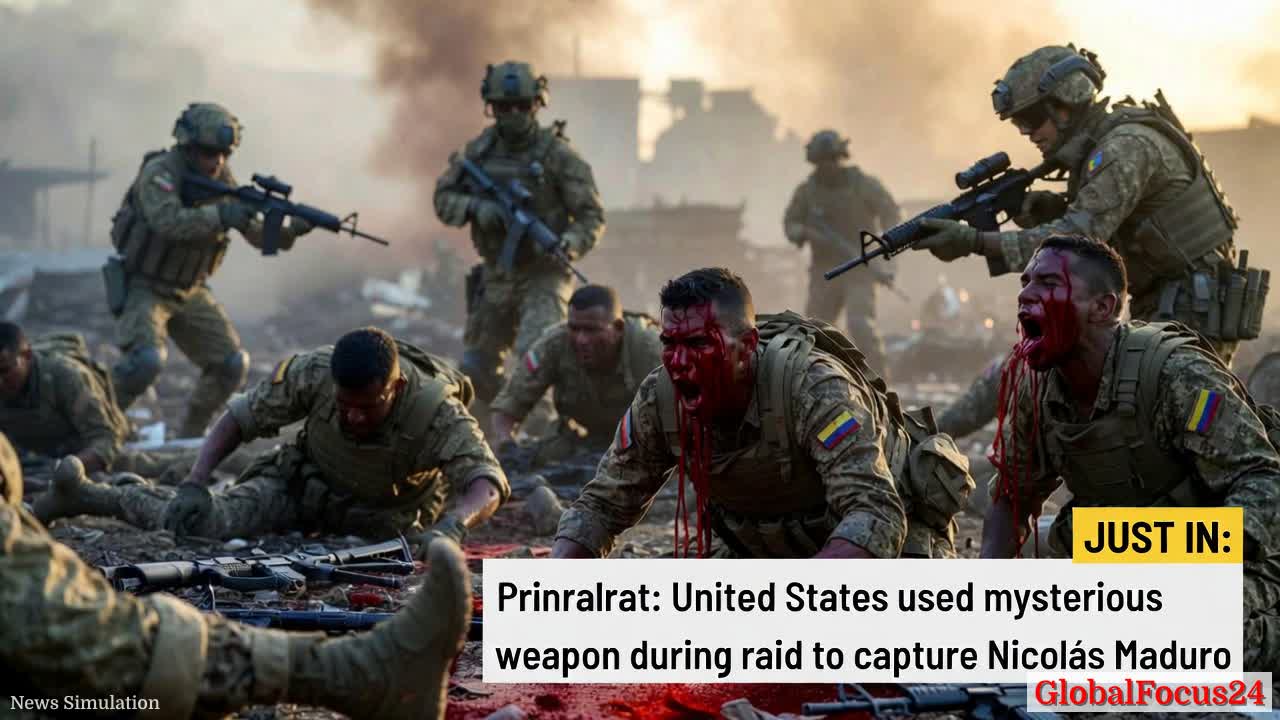
A striking element of the reports is the description of a “mysterious” device deployed during the operation. Witnesses conveyed that a sonic or similarly non-lethal weapon produced immediate physiological effects among those exposed. Accounts described symptoms such as nosebleeds, vomiting, collapse, and an inability to stand or move, raising questions about the mechanisms at work and the broader implications for non-lethal weapons in real-world operations. Importantly, these reports have triggered discussions about the safety, legality, and humanitarian considerations surrounding novel tools in modern conflict.
Regional reactions and immediate consequences In the hours and days after the raid, regional governments and security experts weighed in with cautious analyses. Neighboring states with long-standing ties to Venezuela—whether through economic ties, migration patterns, or shared security concerns—sought to assess the incident’s implications for stability in the Caribbean, Andean, and broader Latin American context. Internationally, the event prompted statements from various actors about sovereignty, the rules governing use of force, and the responsibilities of states toward humanitarian protection, especially when unconventional weapons are involved.
Economic impact and the broader market response Venezuela’s economy, already under significant stress from sanctioned environments and macroeconomic volatility, faced additional pressures in the wake of the raid. Markets and commodity watchers considered the potential implications for oil production, supply chains, and energy policy in the region. Even amidst uncertainty, the event underscored a long-standing dynamic: political risk translates quickly into economic risk. In the near term, investors and traders evaluated the possibility of renewed sanctions, changes in investment sentiment, and potential shifts in regional energy cooperation.
Beyond crude oil, the incident reverberated through a range of sectors. Energy infrastructure, transport corridors, and cross-border trade arrangements are all sensitive to shifts in governance and security environments. While it is too early to quantify precise economic losses or disruptions, analysts highlighted that confidence in the region’s political and security stability is a crucial driver of investment, finance, and development projects. The ripple effects extend to local communities relying on social services and public works programs whose funding and execution depend on broader macroeconomic conditions.
Historical comparisons: not the first use of force, but a new chapter in regional security Historically, the Americas have witnessed episodes in which external actors asserted influence in domestic Venezuelan affairs, sometimes through overt military actions and other times via sanctions, diplomacy, or support for opposition groups. What makes the January 10 operation notable is the reported use of a device described by witnesses as sonic or similar in nature, which appears to fall into a newer category of capability being explored in contemporary security environments. This raises questions about the line between conventional force, special operations, and the deployment of technologies intended to incapacitate, deter, or compel. As with other instances in the modern era, accountability, legal justification, and humanitarian safeguards will be central to how the incident is interpreted in the days and weeks ahead.
Public reaction and human-interest angles Public sentiment in Venezuela and among observers abroad is likely to be a mosaic of concern, skepticism, and calls for due process. Eyewitness accounts emphasize the seriousness of the immediate health effects reported by those on the scene, underscoring the human dimension of any military action. In democracies around the world, such episodes often stimulate vigorous debate about how far states should go in pursuing leadership figures who are deemed illegitimate by certain actors, and at what cost to civilian populations and regional stability. Public reaction tends to frame policy choices in terms of safety, sovereignty, and the prospect of de-escalation through diplomacy or multilateral engagement.
Security and humanitarian implications of non-lethal technologies The reports of a sonic or similarly categorized device open a broader discussion about non-lethal weapons and crowd-control technologies in high-pressure environments. While non-lethal tools are designed to reduce the risk of casualties relative to conventional firearms, their deployment in a cross-border raid, particularly in regions with vulnerable civilian populations, raises important questions about proportionality, collateral risk, and the long-term health effects on those exposed. The international community has long debated the ethics and legal frameworks governing non-lethal weapons, and any credible assessment of this incident will need to consider medical data, independent investigations, and adherence to international humanitarian law.
Strategic implications for future operations in the region If the operation advances a strategic objective tied to leadership transition, it may influence how states approach high-stakes interventions in the Western Hemisphere. The episode could prompt security planners to recalibrate risk, intelligence-sharing, and coordination with regional allies. It could also spur a reexamination of contingency plans for governance challenges in neighboring countries facing political transitions, economic stress, or social unrest. For policymakers, the central questions will include how to balance deterrence with restraint, how to protect civilians, and how to maintain channels for crisis de-escalation amid ongoing regional tensions.
Media coverage and information dynamics As investigations unfold, diverse media ecosystems will shape the narrative around the raid and the use of any unfamiliar technologies. In fast-moving events, initial reports can be incomplete or reflect competing narratives. Responsible coverage will rely on corroborated sources, medical assessments, and official statements from credible entities. The public should expect ongoing updates as verification processes advance, independent inquiries are initiated, and security authorities provide fuller context about the operation and its consequences.
Looking ahead: what to watch in the coming weeks
- Official investigations and medical assessments: Independent and government-affiliated evaluations will be critical in confirming the device’s nature, its effects, and the legality of the operation.
- Diplomatic engagements: Expect renewed conversations within regional blocs and international forums about sovereignty, humanitarian protections, and the rule of law.
- Economic assessments: Analysts will parse indicators across energy markets, sanctions policy, and investment climate to gauge the long-term economic impact on Venezuela and neighboring economies.
- Security posture: Regional security dialogues may intensify as countries reassess cross-border cooperation, counterterrorism, and stabilization strategies in response to evolving threats and technologies.
Conclusion: navigating uncertainty with clarity and accountability The January 10 raid in Venezuela marks a moment of heightened attention to how modern security operations are conducted and how emerging technologies shape the conduct and consequences of force abroad. The incident juxtaposes the urgency of leadership decisions with the need for careful, evidence-based analysis of weapons, health impacts, and humanitarian considerations. As investigators gather data, analysts will seek to place the event within a broader historical and strategic framework—one that weighs sovereignty, regional stability, and the protection of civilian populations against a backdrop of evolving defense capabilities and geopolitical rivalries.
In an era where information travels rapidly and the tools of power are increasingly diverse, keeping the public informed through accurate, verified reporting remains essential. The world watches as Venezuela and its neighbors navigate the immediate fallout while the international community considers the implications for security norms and regional resilience in the years ahead.