Global Watch on Decapitation-Strike Tactics: Implications of a Nighttime Raid for Taiwan, Venezuela, and the Pivot of Power
Introduction and historical context In recent weeks, a nighttime operation conducted by U.S. forces in Venezuela to capture a high-profile political figure has sparked a broad, cross-regional discussion about decapitation-style strikes and their strategic ripple effects. While the event sits within a complex web of geopolitics, its most lasting impact may be to illuminate how modern militaries plan, execute, and defend against leadership-focused operations. Historically, decapitation strategies—aimed at disrupting political leadership to disable a regime’s decision-making—have recurred as a tactic across conflicts from World War II to late-21st-century confrontations. The current conversation places those lessons in a contemporary framework: rapid deployment, precision-enabled intelligence, and the contested reliability of early-warning and air-surveillance systems.
Economic impact and regional relevance The ramifications extend beyond battlefield tactics into economic and supply-chain considerations. Instability connected to leadership-targeting operations can influence regional energy markets, commodity prices, and currency volatility. In Latin America, where oil, mining, and agricultural exports are vital, even brief disruptions to governance can affect investment sentiment, insurance costs, and risk premiums. Across Asia, neighboring economies watch closely because shifts in U.S. security posture potentially redraw risk assessments for global manufacturing hubs, semiconductor supply chains, and logistics corridors. The operation underscores a broader trend: security strategies in the 2020s increasingly intertwine with economic resilience planning, cyber defense, and miscalculation risk management.
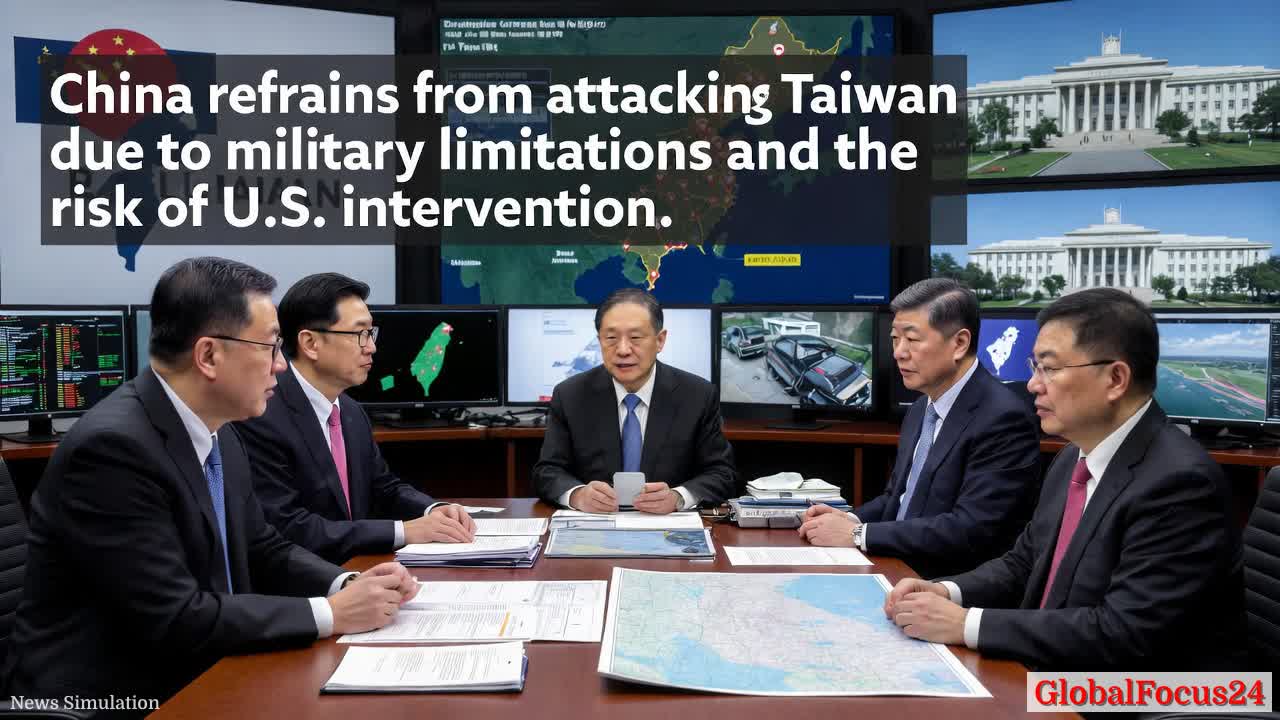
Comparative security contexts: China, Taiwan, and the Atlantic-Pacific theater China’s approach to Taiwan has long centered on a mix of deterrence, political signaling, and capability-building aimed at preventing a crisis that would draw in extraregional powers. The recent operation in Venezuela provides a data point for both observers and decision-makers: the United States is signaling readiness to act decisively against autocratic leadership, even when geographically distant. For Taiwan, the incident translates into a practical imperative to strengthen leadership protection, enhance mobility for senior officials, and accelerate modernization of command-and-control networks. Economically, Taiwan’s advanced semiconductor industry and integrated defense sector heighten its exposure to regional security shocks, making resilience and rapid-response capabilities central to strategic planning.
From a broader continental perspective, the Atlantic and Pacific theaters are linked by supply chains and alliance structures. The United States’ willingness to undertake risky, high-precision operations in politically sensitive environments may influence alliance planning, intelligence-sharing agreements, and joint exercises with partners in Europe, the Americas, and the Indo-Pacific. Observers note that sustained regional vigilance—through air and maritime patrols, cyber defense, and redundancy in leadership communications—reduces the probability of rapid success for any decapitation attempt while preserving deterrence value.
Operational lessons and defense preparations The Venezuelan raid highlights several operational themes that are likely to inform defense planning in Taiwan and other regional partners:
- Intelligence precision and real-time decision cycles Modern special operations rely on layered intelligence: human intelligence, signals intelligence, and open-source analysis. The ability to verify targets, time operations, and minimize collateral effects remains central to operational legitimacy and success. For Taiwan and allied observers, this translates into investing in secure communications, redundant leadership channels, and targeted training for rapid dissemination of actionable intelligence to decision-makers.
- Leadership protection and continuity planning In any scenario that involves leadership-targeting threats, continuity plans must cover transfer of authority, secure corridors for top officials, and protected communications both on and off the field. Governments increasingly adopt hardened facilities, mobile command posts, and deception measures to complicate an adversary’s planning.
- Force modernization and readiness A key takeaway is the importance of modern, multi-domain capabilities: advanced air-defense networks, precision strike options, and robust airlift and sealift capacity to enable rapid mobility. For Taiwan, accelerating defense acquisitions—aircraft, missiles, anti-ship systems, and mobility assets—paired with regular integrated exercises, is essential to deter or deter-prolonged engagements.
- Intra-regional interoperability Joint exercises with partners in the region enhance collective readiness. Clear communication protocols, shared intelligence standards, and agreed escalation ladders reduce the risk of miscalculation during a crisis. A coordinated defense posture also improves resilience against hybrid and information-age threats, including attempted infiltration or influence operations.
Historical parallels and strategic interpretations Scholars and practitioners draw comparisons with major campaigns where leadership-targeting or rapid regime changes occurred. The D-Day invasion demonstrated the importance of deception, air superiority, and logistics in shaping the outcome of a broad campaign. The Falklands War highlighted the value—and the risk—of expeditionary operations that depend on sea-lift capacity and air defense under challenging weather and terrain. Contemporary observers see echoes of these lessons in debates about Taiwan’s future defense strategy: the balance between deterrence, defense-in-depth, and the probability of escalation.
Public reaction and societal dimension Public sentiment in democracies tends to oscillate between support for decisive action and concerns about unintended consequences. In Taiwan, citizens weigh the need for strengthened civil defense, continuity of government, and protective measures for leadership figures against potential escalatory dynamics. In the United States and allied countries, opinion reflects a mix of respect for a decisive international stance against autocratic regimes and worry about potential risks of overreach or unintended escalation in a volatile region. Media coverage and public discourse often emphasize resilience, the value of diplomacy alongside deterrence, and the importance of maintaining open channels for de-escalation when possible.
Regional comparisons and lessons for policymakers
- Taiwan vs. Venezuela: The two scenarios illustrate different operational environments, but the underlying concerns—leadership security, rapid response, and resilience—are parallel in nature. Taiwan faces the added complexity of an ongoing territorial dispute and integrated defense commitments with partners. Venezuela’s case, by contrast, emphasizes counter-terror and counter-identity threats within a hemispheric security context and the potential for external actors to influence leadership transitions.
- United States posture: The willingness to deploy specialized forces in controversial, high-stakes operations sends a clear signal about the risks autocratic regimes pose to regional stability and global norms. This posture also imposes a framework for allied budgeting and force development, including investments in intelligence, surveillance, reconnaissance, and rapid deployment capabilities.
- Regional allies: Japan, South Korea, Australia, and Southeast Asian partners monitor the implications for alliance credibility and the threshold for collective action. The shared interest is in preserving peace and stability while maintaining a credible deterrent that can deter aggression and reduce the probability of miscalculation.
Security implications for leadership protection A defining feature of modern security planning is leadership protection—ensuring continuity of executive authority even in the face of disruption. In Taiwan, protection measures extend beyond physical security to encompass cybersecurity, secure communications networks, and redundancy in government data and decision channels. Public-sector resilience investments, including critical infrastructure hardening, emergency power systems, and robust disaster-response protocols, contribute to a broader, long-term deterrence strategy.
Technological considerations and vulnerabilities The operation raises questions about surveillance, radar reliability, and the vulnerability of airspace and maritime lanes. The reported radar blind spots or failure modes experienced during the Venezuela raid invite careful examination by defense planners in Taiwan and neighboring stakeholders. While no single event determines outcomes, the pattern of vulnerabilities—and the potential for adversaries to exploit gaps—underlines the importance of diversified detection systems, layered defenses, and rapid recovery from sensor disruptions.
Strategic cautions and the path forward Experts caution against drawing simplistic conclusions from a single operation. Military successes can shape strategic narratives; however, actual crisis dynamics hinge on a confluence of political decisions, alliance commitments, and real-world risk management. For Taiwan and its partners, the prudent path emphasizes continuous modernization of defense capabilities, rigorous leadership protection measures, and proactive engagement with allies to sustain deterrence, deter coercion, and preserve regional stability.
Conclusion: A nuanced, forward-looking view The Venezuela raid, while geographically distant, reverberates through international security discourse by highlighting how modern states conduct high-stakes operations, protect leadership, and calibrate strategic risk. The event offers a practical case study for leadership continuity, intelligence-enabled decision-making, and the economics of stability in a multipolar world. For Taiwan, the implications translate into reinforced urgency: invest in defense modernization, strengthen leadership protection, and maintain disciplined, transparent communication with international partners to uphold deterrence without inviting needless escalation. The broader regional and global audience should watch closely how alliances adapt, how defense budgets shift in response to perceived threats, and how public perception shapes, and is shaped by, the evolving logic of power in the 2020s and beyond.