U.S. Clears Nvidia H200 AI Chip Exports to China
A major shift in global technology trade policy unfolds as the United States approves the export of Nvidia’s H200 artificial intelligence chips to China. The decision, announced at the highest levels of U.S. government, marks a deliberate de-escalation in certain export controls aimed at balancing national security concerns with the accelerating demand for advanced AI infrastructure in the world’s second-largest economy. With formal licensing procedures expected to unfold in the coming days, shipments are anticipated to resume early next year under a framework that includes per-chip fees designed to monitor compliance and safeguard sensitive technologies.
Historical context: a long arc from containment to collaboration in chip diplomacy
The move sits within a broader arc of semiconductor diplomacy that stretches back to the early 2010s, when global supply chains began to tighten around technologies deemed strategically critical. In the ensuing years, the U.S. and its allies implemented layers of export controls and investment restrictions aimed at limiting the transfer of high-end semiconductor capabilities to certain adversaries or strategic competitors. Nvidia, a powerhouse in GPU-based computing and AI acceleration, became a focal point in this evolving policy landscape as its H200 processor represents a leap in performance for data center workloads and machine learning tasks.
China’s appetite for AI infrastructure has grown in tandem with its digital economy and public-sector modernization efforts. The Chinese government has pursued a multi-year strategy to develop domestic AI capabilities, while also seeking access to best-in-class hardware to accelerate research, cloud services, and enterprise deployments. The policy shift here acknowledges that Chinese demand for AI-ready chips, accelerators, and associated software ecosystems is unlikely to abate, even as security concerns remain salient for national policymakers.
Economic impact: potential ripple effects across markets and ecosystems
Nvidia’s H200, built on the Hopper architecture, is designed to deliver superior throughput for large-scale model training, inference, and data-center workloads. By re-opening a channel to Chinese customers for this class of device, the policy change could unlock substantial revenue for Nvidia and, by extension, ripple through the broader U.S. semiconductor supply chain. Analysts have highlighted the possibility of a multi-billion-dollar boost to Nvidia’s top line as Chinese data centers and AI startups scale up operations to support business intelligence, cloud services, and consumer-facing AI products.
The decision could also influence other U.S. chipmakers that rely on China as a crucial market for high-end components, components that support AI infrastructure, autonomous systems, and edge computing. Suppliers of semiconductor manufacturing equipment, substrates, and software tools may experience demand upticks as new licensing pathways create a clearer, more predictable route to the Chinese market. In turn, China’s AI vendors, cloud platforms, and industrial AI providers may accelerate investment in data-center capacity, with a particular emphasis on HPC clusters, generative AI service layers, and enterprise-grade AI solutions.
Regional comparisons provide additional context for the broader implications. In Europe, for example, demand for advanced AI hardware has remained buoyant, supported by regional data centers and a regulatory environment that places strong emphasis on data privacy and sovereignty. The Indo-Pacific region, meanwhile, has seen a rapid expansion of large-scale AI computing deployments in countries such as Singapore, Japan, and South Korea, driven by public-sector AI programs, research universities, and private-sector partnerships. The U.S. policy shift could recalibrate competitive dynamics among global AI hardware suppliers, potentially widening the gap between leading AI accelerators and alternative compute solutions in different markets.
Technology and policy details: what the H200 enables and how licensing will work
The H200 is Nvidia’s high-performance AI chip that leverages the Hopper architecture to deliver significant improvements in matrix calculations, memory bandwidth, and energy efficiency for data centers. It is positioned as a critical component for training by large language models, multimodal AI systems, and other advanced machine-learning workloads. In practice, customers using the H200 can expect shorter training cycles, higher throughput for large-scale models, and lower time-to-insight for enterprise analytics.
Licensing under the new framework will require buyers to obtain government authorization for each shipment, accompanied by a per-chip fee intended to cover the cost of compliance monitoring and control activities. Officials have indicated that the licensing process will be tight enough to ensure that technology does not bypass national security safeguards, while still allowing legitimate commercial activity and continued innovation. Commerce Department officials have signaled that formal licenses could be issued within days, with real shipments beginning in the early part of the next calendar year.
Public reaction and market dynamics: investor sentiment and business strategy
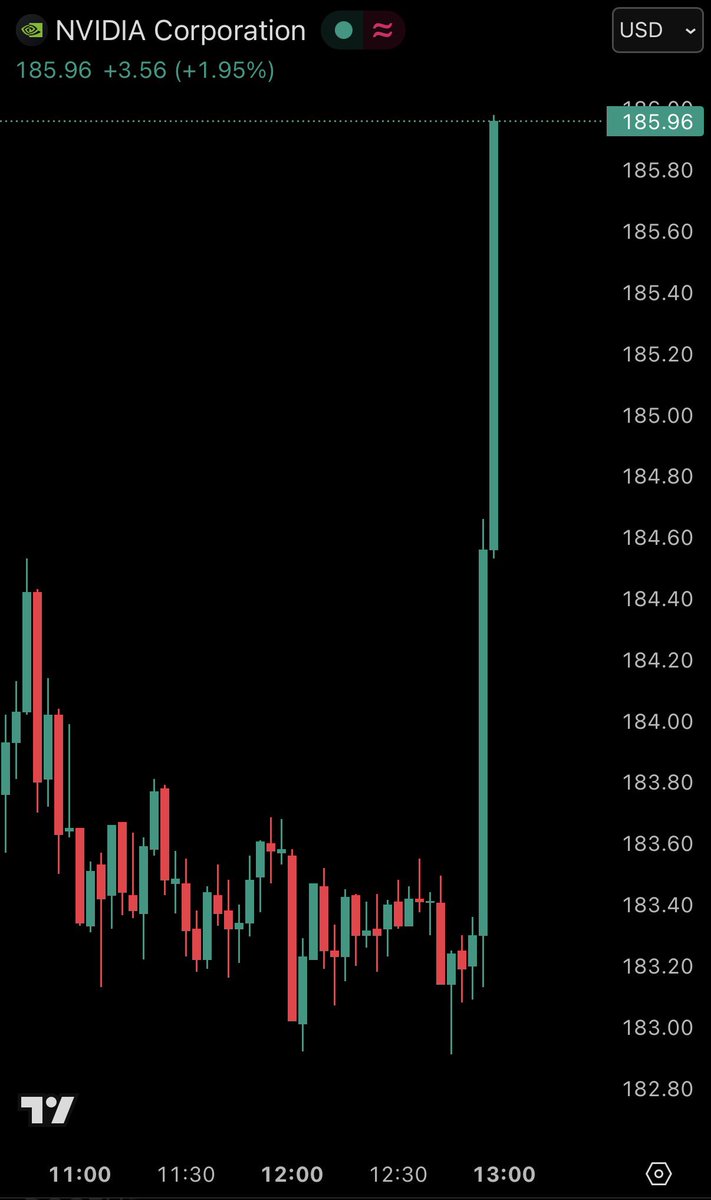
Investor reaction to the policy reversal has been cautiously optimistic. Nvidia stock traded in a narrow range before the announcement, with traders watching for signals about how quickly licenses would be granted and whether the terms would be manageable for large enterprise buyers. Some analysts noted that resuming exports to China could temper downside risk from a potential double-dip in AI hardware demand, as a sizable portion of the AI hardware market remains concentrated in the Chinese data-center environment.
In China, the policy change is likely to be welcomed by cloud providers, AI service platforms, and enterprise customers that have long sought access to globally leading accelerators. Enterprises may respond by accelerating procurement cycles for AI infrastructure, integrating H200-based compute into model development and deployment pipelines, and expanding partnerships with international hardware suppliers to avoid disruptions caused by policy volatility. However, firms in both countries will still need to navigate a complex array of regulatory and compliance requirements, ranging from export controls to data governance and cross-border data transfer considerations.
Regional economic indicators and longer-term prospects
Short-term indicators suggest a stabilization in expectations for AI hardware supply, with the licensing framework providing a clearer path for shipments and revenue recognition. In the longer term, the policy stance could influence global pricing dynamics for AI accelerators, depending on how many licenses are issued, the volume of shipments, and the degree to which competing suppliers adjust their own export strategies in response. As AI deployment accelerates in multiple sectors—manufacturing, finance, healthcare, and logistics—the ability to access cutting-edge compute at scale will remain a central driver of productivity gains and competitive differentiation.
Historical examples offer useful benchmarks for interpreting the potential impact. Past episodes of export liberalization for strategic technologies have been associated with spurts of investment, job creation in high-tech manufacturing and services, and the emergence of new ecosystem partners spanning software, firmware, and system integration. At the same time, policymakers have warned about the risk of recapitulating vulnerabilities by expanding access too quickly. The balance between advancing innovation and safeguarding national security remains a central theme in ongoing debates about technology policy and global competitiveness.
Industry perspectives: suppliers, customers, and regional partners
Hardware suppliers other than Nvidia are likely to respond to this shift with revised go-to-market strategies in China, including updated licensing workflows, territory-specific pricing, and enhanced technical support for enterprise customers. AI software developers and platform providers may accelerate collaborations with hardware vendors to optimize model training pipelines for H200-based systems, ensuring compatibility with popular machine-learning frameworks and toolchains. For cloud providers, the resumption of shipments could translate into faster deployment of AI offerings that support natural language processing, computer vision, and other AI-enabled services that rely on large-scale accelerators.
Within regional markets, Chinese tech firms have historically leveraged a mix of domestic and foreign-made hardware to assemble AI infrastructure. The new policy environment could encourage more balanced sourcing, as providers weigh performance, total cost of ownership, and reliability across different suppliers. The evolving landscape may also spur increased investment in domestic semiconductor design and manufacturing capacity, as well as software optimization efforts that maximize the value of imported accelerators in Chinese data centers.
Public safety, privacy, and societal implications
As AI hardware becomes more widely deployed, conversations around data privacy, cybersecurity, and the societal impacts of AI intensify. Policymakers and industry stakeholders alike stress the importance of responsible AI practices, ensuring robust security for deployed systems, and maintaining transparent governance over data usage. While the current decision focuses on export controls and economic considerations, it sits within a broader discourse about how AI technologies should be developed and deployed in ways that protect user privacy, minimize bias, and uphold ethical standards across sectors.
Looking ahead: monitoring, licensing, and ongoing dialogues
The licensing framework is expected to be dynamic, with ongoing dialogues between policymakers and industry players to refine eligibility criteria, monitor compliance, and address emerging use cases that may require updates to the policy. Observers will watch closely for any signs of escalation in tensions or shifts in strategic priorities that could prompt additional adjustments to export controls on advanced AI hardware. The interplay between national security imperatives and global innovation will continue to shape how technologies like the H200 are distributed and utilized across international markets.
Conclusion: a milestone in AI compute availability and policy evolution
The approval to export Nvidia’s H200 AI chips to China represents a notable milestone in technology policy and international commerce. By establishing a structured licensing regime with per-unit fees, the administration signals a measured approach that seeks to unlock economic opportunities while safeguarding security interests. For Nvidia, the decision opens a pathway to deeper engagement with China’s burgeoning AI ecosystem, while for Chinese clients, it provides access to one of the most advanced accelerators available on the market. The policy landscape remains fluid, but the current trajectory suggests a calibrated balance between innovation, growth, and security in the rapidly evolving arena of global AI infrastructure.