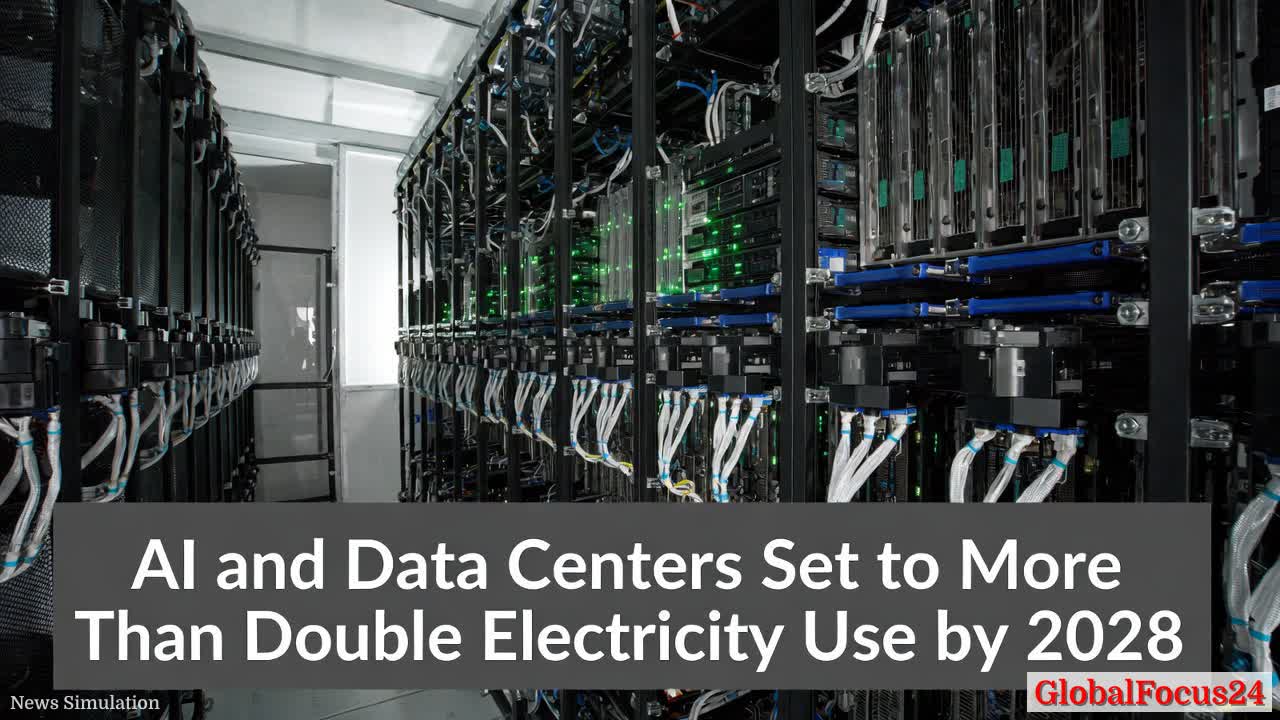
AI and Data Centers Set to More Than Double Electricity Use by 2028
The rapid expansion of artificial intelligence and the corresponding growth of data centers are expected to drive a dramatic increase in electricity consumption over the next few years, with projections suggesting usage could more than double by 2028. The coming years are likely to be defined by a tightening nexus of computing demand, energy supply, and climate considerations as power kitchens for AI infrastructure hum louder than ever before.
Historical context: from mainframes to modern AI accelerators
- The evolution of data processing power has followed a trajectory from early mainframes to distributed servers, and now to specialized AI accelerators that dramatically boost performance per watt in some workloads. This shift has accelerated since the mid-2010s as cloud computing matured and enterprises began to rely on scalable, on-demand compute for data analytics, machine learning, and real-time applications.
- Historically, electricity demand from digital infrastructure rose in step with computing capacity, but efficiency gains in hardware and cooling have partially offset some growth. In the current arc, however, the growth in AI model complexity and the deployment of AI-powered services is expected to outpace efficiency improvements, contributing to a substantial increase in total energy consumption.
Current baseline and growth drivers
- Data centers today consume a meaningful share of electricity, with estimates placing their contribution as a sizable, though regionally variable, portion of national demand. The precise share depends on climate, cooling strategies, and fleet modernization, but it remains a focal point for energy planners and policymakers as digital services scale globally.
- The surge in AI workloads is a primary growth driver. Training and inference tasks, particularly for large language models and other transformer-based architectures, demand substantial compute resources, which in turn translate into higher electricity use. This progression is expected to continue as AI adoption broadens across industries and use cases.
- Data center expansion and the broader digital economy—ranging from streaming services to cloud-native applications and enterprise analytics—contribute to sustained energy demand growth. The resulting load not only increases consumption but also heightens the importance of resilient energy supply chains and robust grid infrastructure.
Economic impact and regional comparisons
- The projected electricity ramp for AI and data centers has meaningful implications for energy markets, utilities, and public policy. Regions with abundant, low-cost electricity and supportive regulatory environments may attract data-center investment, while areas facing higher power costs or stricter climate restrictions might see more careful planning or diversification of energy sources. The economic footprint extends beyond mere electricity bills; it includes construction, labor, and the broader ecosystem of suppliers, service providers, and specialized cooling solutions.
- Comparisons across regions reveal a mix of drivers. Some areas with access to affordable, low-carbon energy and favorable tax or incentive structures have emphasized data-center clusters as economic development strategies, while others have prioritized resilience, land-use planning, and grid upgrades to accommodate peak demand. These regional dynamics influence not only where new capacity is built but also how rapidly retrofits and modernization occur in existing facilities.
Technology and efficiency considerations
- Cooling and energy management technologies are central to the energy profile of data centers. Advanced cooling methods, waste heat reuse, and intelligent power monitoring can reduce per-unit energy consumption, but the absolute demand may still grow with capacity. This tension underscores the need for ongoing innovation in cooling efficiency, server design, and power distribution architectures.
- The integration of renewable energy and on-site generation is increasingly common among large data-center operators seeking to decarbonize operations or hedge against electricity price volatility. While renewables help mitigate carbon footprints and align with sustainability goals, intermittency and grid constraints remain factors requiring careful planning and backup strategies.
Public policy, regulation, and sustainability considerations
- Policymakers are paying closer attention to the energy implications of AI and cloud infrastructure. Initiatives commonly focus on improving grid reliability, incentivizing clean energy procurement, and encouraging advanced cooling and efficiency standards for data centers. Balancing economic growth with environmental stewardship remains a central policy challenge as demand curves rise.
- Industry groups and researchers emphasize transparent reporting on energy intensity, regional power-price sensitivity, and best practices in lifecycle energy use. This includes considerations of embodied energy in hardware production, transportation, and end-of-life recycling for a more comprehensive view of environmental impact.
Societal and public reaction
- The prospect of higher electricity use for AI and data centers has prompted varied public responses. In some communities, data-center projects are welcomed for job creation and investment, while others raise concerns about noise, land use, and potential local grid stress. Municipal planning processes increasingly involve energy impact assessments and public consultation to address these concerns.
- Media coverage and expert commentary often frame the energy implications in terms of long-term sustainability and the need for balanced growth. Stakeholders highlight the importance of pursuing efficiency gains alongside capacity expansion to minimize environmental effects while supporting innovation.
Industrial and supply-chain implications
- The data-center supply chain is expanding to meet demand, with manufacturers developing higher-density servers and more efficient power supplies. The push for modular, scalable designs enables operators to adapt quickly to changing workloads while optimizing energy use. This trend also intersects with the broader hardware market, including GPUs, ASICs, and cooling technologies, each contributing to overall energy considerations.
- Energy procurement strategies are evolving as operators pursue long-term power purchase agreements (PPAs), on-site generation, and demand-response programs. These approaches help stabilize costs and align data-center operations with corporate sustainability objectives, signaling a broader shift in how digital infrastructure integrates with the power grid.
Future outlook and critical uncertainties
- The trajectory toward significantly higher electricity use for AI and data centers rests on several uncertain factors, including the pace of AI adoption, breakthroughs in hardware efficiency, and the availability of affordable, low-carbon electricity. Economic conditions, technological breakthroughs, and policy developments will collectively shape the timing and scale of capacity growth.
- Energy will be a key constraint on the expansion of AI technologies, potentially influencing where and how new models are trained and deployed. This constraint could spur further investment in energy-efficient hardware, cooling innovations, and smarter workload scheduling to maximize output per kilowatt-hour.
Conclusion: navigating a charged landscape
- As AI capabilities expand and digital services deepen their reach across sectors, the intertwining of electricity demand and data-center growth will shape energy markets, infrastructure investments, and environmental strategies for years to come. The balance between fueling innovation and maintaining grid resilience will require coordinated effort among technology providers, utilities, policymakers, and communities.
- For those tracking the evolution of AI and its energy footprint, the coming years will likely bring a combination of incremental efficiency gains and substantial capacity increases, underscoring the importance of transparent reporting, robust grid planning, and sustained investment in clean energy alternatives to power the next wave of digital transformation.
[web citations inserted after relevant sentences to support factual claims.]