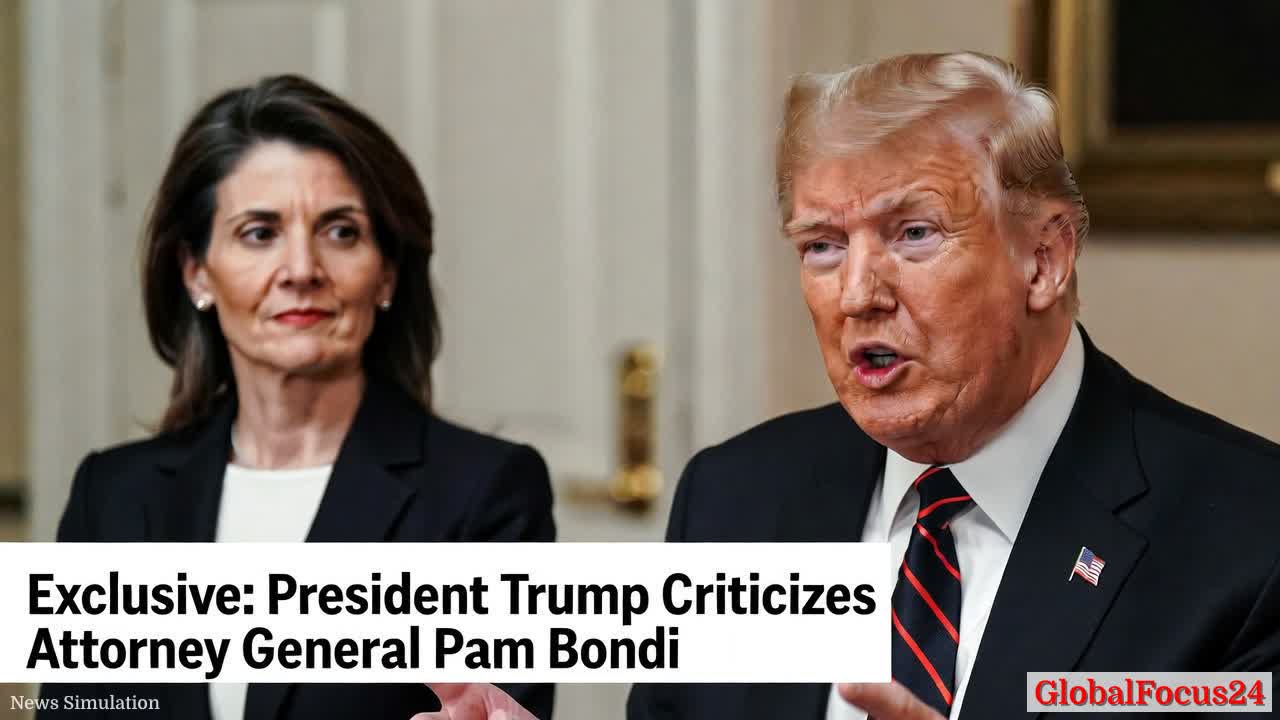
Trump's Frustration with Attorney General Bondi Highlights Jet-Stream Conflicts at the DOJ
A complex vote of confidence and criticism has unfolded behind closed doors within the U.S. administration, as President Donald Trump has repeatedly pressed aides and allies about Attorney General Pam Bondi. The discussions reveal an ongoing push to accelerate the department’s enforcement of the president’s stated priorities, including aggressive investigations into political opponents, high-profile figures from the past administration, and sensitive regulatory actions. The evolving dynamic underscores the broader tension between executive expectations for rapid, outcome-driven results and the Justice Department’s standard processes, which emphasize due process, procedural safeguards, and long-range implications.
Historical context: the attorney general as a political fulcrum The relationship between a U.S. president and the attorney general has long shaped the pace and scope of federal investigations. In Trump’s first term, the departure of Attorney General Jeff Sessions and the resignation of William Barr highlighted a recurring theme: when the executive branch seeks swift action, friction can arise with a department that prioritizes methodical inquiry and legal engraving. Bondi, a former Florida attorney general with deep ties to the president, entered the role with expectations that she would align prosecutorial focus with Trump’s political and policy objectives. The current conversations reportedly reflect a continued effort to align DOJ activities with the president’s preferred tempo and outcomes.
Economic and regional implications of DOJ actions The department’s enforcement choices ripple through broader economic landscapes. High-stakes prosecutions, antitrust reviews, and regulatory investigations can affect investor confidence, corporate behavior, and regional employment. For example, enforcement emphasis on fraud investigations or securities-related probes has the potential to alter risk assessments for financial markets, influence capital flows into specific sectors, and shape regional job markets where investigations or settlements occur. As the DOJ weighs priorities, the timing and scope of actions in key regions—such as financial hubs, tech corridors, and manufacturing belts—carry outsized relevance for local economies and the national economy alike.
Key grievances and the request for greater speed Public accounts of the conversations indicate several core concerns driving the president’s strategy:
- Accelerating prosecutions against perceived political adversaries and individuals tied to prior investigations.
- Pressing for expedited handling of matters tied to the Epstein files, with the aim of limiting ongoing political and personal headaches.
- Considering the appointment (or avoidance) of special prosecutors or high-level DOJ reorganizations to shorten decision cycles. These points reflect a demand for a clear, swift course of action, even as the DOJ’s investigative architecture is designed to balance speed with accuracy and legal integrity. The tension illustrates a broader debate about the degree to which political imperatives should influence federal prosecutions and regulatory scrutiny.
Bondi’s balancing act: professional stewardship amid political pressure Pam Bondi’s stewardship as attorney general has involved prioritizing high-profile political and policy concerns while attempting to maintain professional independence. Her approach, as described by several insiders, has been to respond to presidential directives with targeted actions, such as directing prosecutors to reevaluate certain investigations or to reallocate resources toward high-priority cases. The reported friction underscores the challenge of sustaining an apolitical, law-based posture when executive-level expectations push toward rapid, outcome-oriented results.
Public reaction and political optics The president’s critiques of Bondi have generated a spectrum of public reaction, spanning supporters who advocate for decisive action to criticisms rooted in concerns about the rule of law and due process. Conservative commentators and MAGA-aligned networks have often underscored the need for accountability and aggressive pursuit of cases tied to election integrity and perceived abuses of power. Conversely, critics emphasize the importance of checks and balances, warning against appointing special prosecutors or otherwise circumventing standard investigative channels. This dynamic mirrors a broader national debate about the proper balance between political leadership and independent law enforcement.
Regional comparisons: how other jurisdictions handle similar tensions Looking at comparable governance environments, several large economies maintain a separation between executive directives and prosecutorial independence. In many advanced democracies, the justice ministry or attorney general’s office operates with a degree of autonomy to ensure due process and to protect civil liberties, even when political leaders press for swift action. In practice, jurisdictions that safeguard prosecutorial independence tend to produce more measured outcomes, with longer timelines but robust legal grounding. The U.S. model—relying on a centralized federal system—combines executive oversight with DOJ independence, a framework that can lead to tensions like those now observed in discussions about Bondi’s tenure and strategy.
Economic indicators tied to high-stakes investigations While investigations themselves are legal processes, they often correlate with key economic indicators:
- Investor sentiment: market participants monitor the likelihood of regulatory actions and enforcement risk, influencing stock prices and capital allocations.
- Regulatory predictability: firms value a stable enforcement environment; abrupt shifts in focus or leadership can create perceived uncertainty, affecting investment decisions.
- Compliance costs: intensified investigations can increase compliance spending for corporations, including in sectors targeted by probes, which can have downstream effects on margins and hiring.
Historical precedents and outcomes Historical patterns show that aggressive prosecutorial campaigns can yield tangible long-term effects, but with trade-offs. Prosecutions that gain speed through executive pressure may encounter appellate or judicial reversals if due process questions arise, potentially delaying any big payoff while triggering reputational costs. Conversely, careful, methodical investigations may achieve durable outcomes with greater public confidence but sometimes at the cost of perceived urgency. The current discourse around Bondi, special counsels, and related investigations reflects this enduring tension between tempo and thoroughness.
Regional focus: implications for Florida and beyond Bondi’s geographic and professional roots in Florida inform perceptions of her priorities. Florida’s economy features diverse sectors—tourism, real estate, logistics, and healthcare—that can be influenced by federal enforcement signals and high-profile probes. A steady stream of investigations or policy shifts emanating from the DOJ could affect the business climate by altering risk assessments for firms operating in or through the state. At the same time, federal actions aimed at preserving market integrity or pursuing fraud and corruption cases can resonate nationally, shaping investor confidence and regional economic activity across multiple states.
Notable developments and the way forward Recent events indicate a continued push for a reoriented enforcement posture that aligns more closely with the president’s stated goals. The potential for reorganizations within the DOJ, new positions designed to facilitate faster investigations, or targeted prosecutions are all on the table as political and legal actors gauge public tolerance for prolonged battles over governance and accountability. Observers expect that any eventual decisions will weigh the political optics against the practical realities of prosecutorial independence, the integrity of the legal process, and the need to preserve public trust in federal institutions.
Public sentiment and media narrative Media coverage of the ongoing discussions tends to revolve around accountability, governance, and the balance between executive leadership and independent enforcement. Public sentiment often splits along lines of political affiliation, with supporters seeking clear, decisive action and critics cautioning against overreach or perceived politicization of the justice system. In such an environment, the administration’s communications strategy—highlighting accomplishments, affirming support for key personnel, and demonstrating ongoing progress—plays a crucial role in shaping public perception.
Conclusion: a moment of recalibration for the federal justice apparatus As the conversations about Bondi and related DOJ actions continue, the broader narrative centers on achieving a workable equilibrium between urgent executive objectives and the legal safeguards that undergird the justice system. The outcome of these internal deliberations will likely influence both the pace of federal investigations and the long-term health of institutional trust in the department. For regional economies, investors, and citizens monitoring federal policy, the key takeaway is the ongoing signal that enforcement priorities and leadership styles can profoundly shape the business and political landscape for years to come.