Silence on Iran Raises Questions About the Consistency of Global Human Rights Movements
Shifting Attention and Selective Advocacy
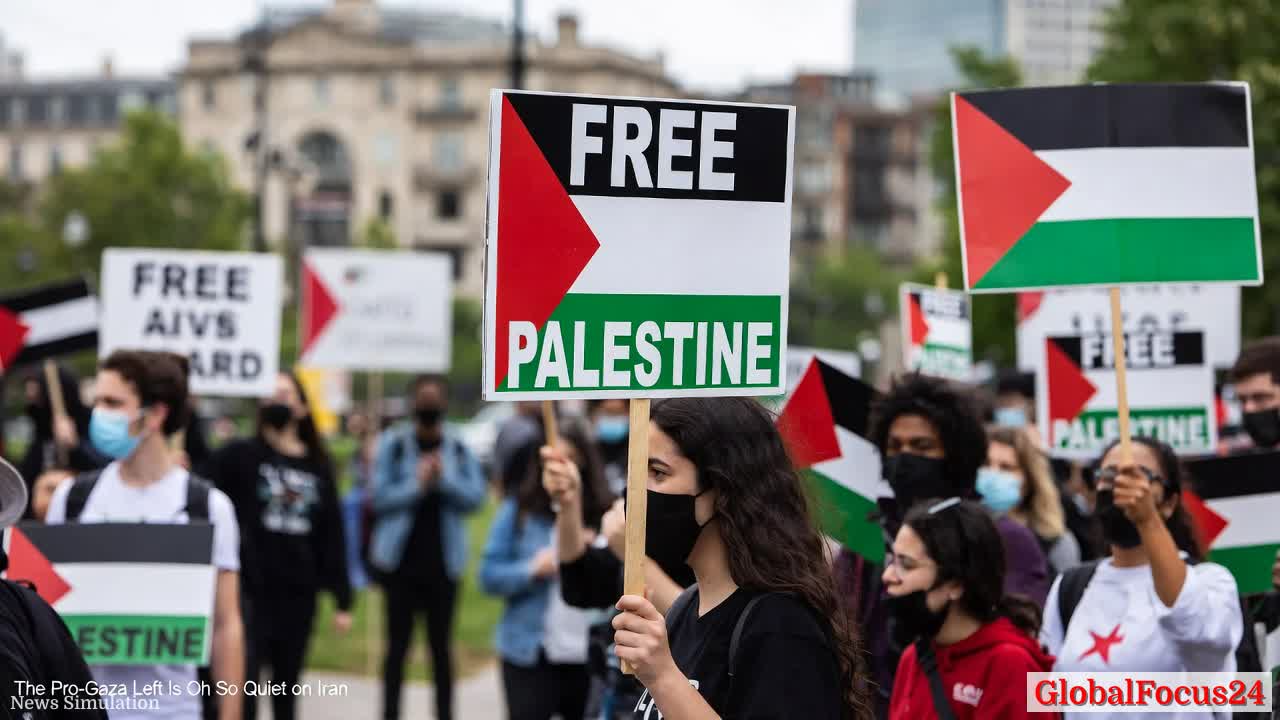
As global demonstrations calling to "Free Palestine" continue across major cities, a noticeable silence surrounds another nation under longstanding repression: Iran. Despite widespread awareness of Iran’s human rights violations — from the suppression of women’s rights to executions of political dissidents — many of the same voices condemning Israel’s actions have shown little appetite for addressing Tehran’s record.
This silence reflects more than a temporary lapse in global advocacy. It underscores a deeper inconsistency in how international activism engages with human rights depending on the political identities of those involved. When a global movement rallies against a Western-aligned democracy but remains muted on a theocratic regime with a history of violent repression, the moral clarity behind such protests comes into question.
A History of Suppression in Iran
Iran’s government has faced international condemnation for decades. Following the 1979 Islamic Revolution, the new regime consolidated power under clerical authority, enforcing strict Islamic law and crushing dissent. The Iran-Iraq war in the 1980s further entrenched the government’s authoritarian grip, as leaders justified repression under the banner of national defense.
Successive generations have attempted to resist. The 2009 Green Movement marked one of the most significant displays of opposition since the revolution, sparked by allegations of election fraud. Millions of Iranians took to the streets demanding reform, only to meet brutal crackdowns marked by arrests, torture, and extrajudicial killings.
A similar wave erupted in 2022 following the death of Mahsa Amini, a young woman detained by the morality police for allegedly violating Iran’s strict dress code. Her death ignited mass protests under the slogan “Woman, Life, Freedom,” drawing global attention. Yet even these demonstrations, which touched the conscience of millions online, have faded from the international spotlight — particularly among Western activist groups that position themselves as defenders of human rights.
Human Rights Under a Theocratic State
Iran’s record on human rights remains among the worst globally. The country’s judiciary, controlled by conservative clerics, routinely imposes the death penalty for crimes ranging from blasphemy to same-sex relationships. Reports from independent organizations document systematic discrimination against women, ethnic minorities such as Kurds and Baluchs, and the persecution of religious minorities, including Baha’is and Christians.
Censorship is pervasive. Authorities block access to social media, throttle internet speeds during protests, and monitor online communication using advanced surveillance tools. Journalists face imprisonment and torture for publishing content critical of the regime. Iran’s Revolutionary Guards — a powerful paramilitary force that answers directly to the Supreme Leader — exert influence over both domestic policy and regional military operations, making accountability virtually impossible.
The Disconnect in Global Activism
The ongoing conflict in Gaza has mobilized millions calling for an end to violence and occupation. Yet while that cause commands the world’s attention, Iran — which funds and arms militant groups including Hamas and Hezbollah — rarely receives equivalent scrutiny from those who identify with humanitarian ideals. For some observers, this imbalance indicates a moral incoherence: a readiness to condemn democratic governments while overlooking the transgressions of tyrannical ones, particularly when doing so aligns with ideological narratives.
This dynamic reflects a broader pattern seen throughout modern activism, where issues trend based on visibility rather than consistency. Social media plays a decisive role. Hashtags such as #FreePalestine dominate global feeds, amplified by celebrities, politicians, and universities. In contrast, movements like #WomanLifeFreedom or calls to “Free Iran” see spikes of interest that quickly dissipate once the news cycle shifts.
The Regional Context: Iran’s Role in the Middle East
Iran’s centrality in regional conflict cannot be overstated. It stands as a dominant power broker through its network of proxy militias stretching from Lebanon and Syria to Iraq and Yemen. Through this influence, Tehran acts not only as an adversary to Israel but also as a destabilizing force for Arab states seeking modernization and open economies.
In Iraq, Iran-backed militias have been accused of suppressing pro-reform demonstrations. In Syria, Tehran’s military support has helped sustain the Assad regime through more than a decade of civil war. In Yemen, its backing of the Houthi rebels has prolonged one of the world’s worst humanitarian crises. Yet protests focused on state violence and oppression rarely name Iran among the culprits, even when its government materially contributes to regional suffering.
Economic Pressures and the Iranian People
Iran’s economy has languished under decades of mismanagement, corruption, and international sanctions. Once a leading global oil exporter, the country now faces inflation exceeding 40 percent and widespread unemployment among its youth. The regime’s monopoly over key industries ensures that economic hardship hits ordinary citizens hardest while consolidating wealth within the elite Revolutionary Guard network.
Despite these conditions, Iranians continue to show remarkable resilience. In late 2023, waves of labor strikes rippled across major cities, led by teachers, oil workers, and pensioners demanding unpaid wages and fair treatment. Their struggle — largely absent from globals — highlights the disconnect between Western social justice movements and the real fight for dignity occurring within Iran’s borders.
Historical Parallels and Lessons
This uneven attention recalls similar patterns from the Cold War, when human rights advocacy often mirrored geopolitical alliances. Movements that challenged Western involvement in Vietnam or Latin America thrived, while dissent against Soviet-backed dictatorships received less energy. The phenomenon illustrates how activism, even when morally motivated, can fall prey to selective empathy — emphasizing oppression that fits within a preferred narrative while ignoring others.
Iran’s situation also evokes uncomfortable parallels with the apartheid-era debates in South Africa. In the 1980s, global activists eventually united across ideological lines to demand systemic change. That broad-based solidarity — rooted in a shared rejection of racial hierarchy — proved instrumental to dismantling the system. Today, activists face a choice: whether to apply similar universal principles to all states that commit injustice, or only to those that fit ideological frameworks.
The Consequence of Silence
The absence of sustained global pressure on Iran carries real consequences. When international attention ebbs, repressive regimes gain room to entrench their control. The Iranian government often interprets global silence as validation, using it to discredit domestic dissent as foreign propaganda. Activists inside the country risk their lives while watching Western counterparts focus narrowly on conflicts that suit cultural or political trends.
This silence also erodes credibility. Genuine human rights advocacy depends on moral consistency — the willingness to defend freedom and dignity regardless of who the oppressor is. When activists who champion the Palestinian cause refuse to acknowledge Iran’s brutality, they diminish their own standing in the broader struggle for global justice.
Toward a Consistent Moral Framework
A truly principled movement for peace and human rights must resist ideological convenience. Condemning Israel’s policies toward Palestinians and criticizing Iran’s repression are not mutually exclusive; both stem from a universal belief in human freedom and the rule of law. The challenge lies in transcending political identity to embrace that universality.
Grassroots organizations have the potential to set a new standard. By amplifying Iranian voices, supporting exiled journalists, and demanding accountability from authoritarian regimes, activists can restore credibility to international advocacy. Universities and cultural institutions could also lead by example — hosting discussions that explore Iranian democracy movements alongside debates on Middle Eastern conflicts, rather than treating them as competing causes.
A Call for Moral Coherence
Iran’s people continue to face imprisonment, censorship, and violence for demanding basic rights many take for granted. Those same rights — freedom of expression, bodily autonomy, fairness before the law — lie at the heart of every humanitarian cause. If the global movement to “Free Palestine” claims to stand for justice, consistency demands it also calls to “Free Iran.”
History suggests that moral clarity, not selective outrage, drives lasting change. Whether the world is willing to apply that standard equally across borders will determine the integrity of the modern human rights movement itself.