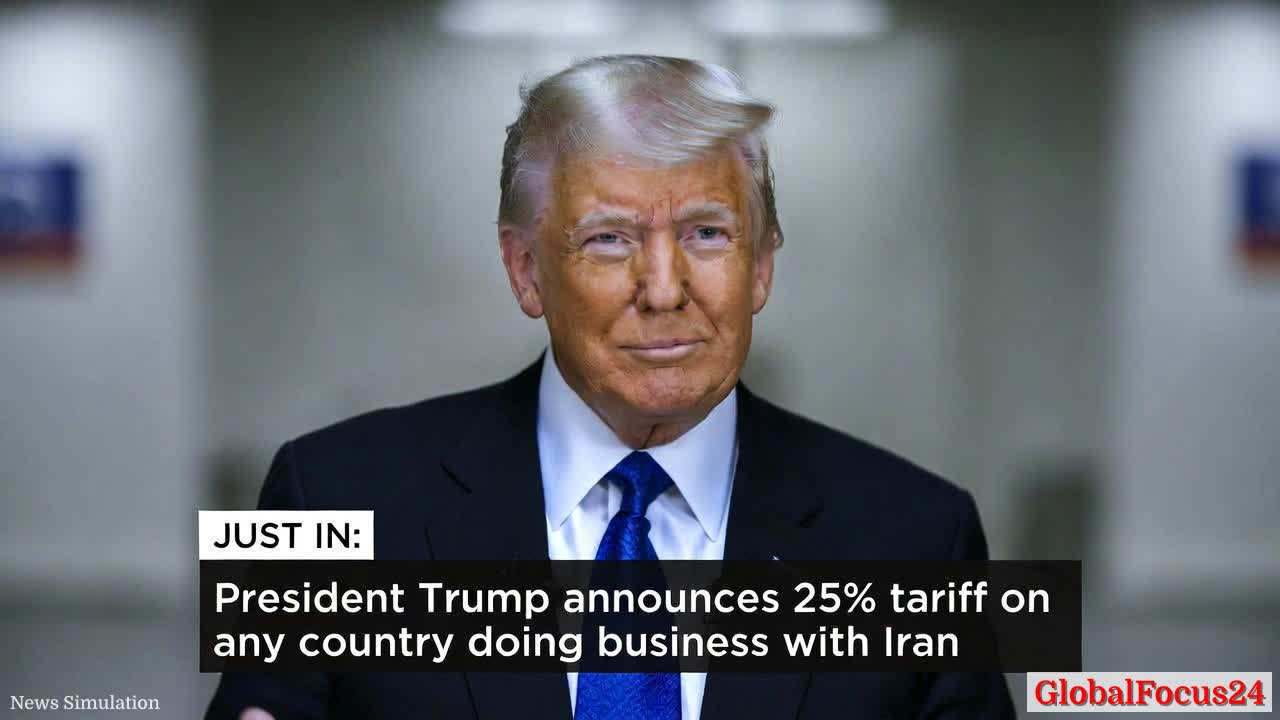
Trump Administration Announces 25% Tariff on Countries Engaging With Iran
In a sweeping move that broadens economic pressure on Iran, the White House announced a 25% tariff on any country that conducts business with the Islamic Republic. The policy, described by officials as final and conclusive, aims to intensify existing sanctions by targeting third-party economies that engage in trade or other economic activities with Iran. The proclamation signals a pivot toward leveraging tariff power beyond direct sanctions, with potential ripple effects across global supply chains and regional markets.
Context and Rationale
The announcement arrives amid a long-running campaign to curb Iran’s regional influence and to deter what the administration views as provocative behaviors in the Middle East. By extending tariffs to countries that trade with Iran, the policy seeks to maximize pressure on Tehran while signaling to allies and adversaries alike that every link in the international trade network is subject to scrutiny.
Historically, the United States has used tariffs as a tool to shape foreign policy objectives, often drawing responses from trading partners that hinge on strategic calculations. The current measure expands that playbook, moving beyond targeted sanctions and export controls to a broader, tariff-based mechanism. Critics warn of the risk of retaliation, supply disruptions, and unintended consequences for global prices, while supporters argue that the approach reinforces leverage without resorting to military options.
Economic Implications
Global supply chains are intricately woven, with many industries relying on components, materials, and intermediaries that cross multiple borders. A 25% tariff applied to countries trading with Iran could alter cost structures across sectors such as energy, manufacturing, and technology. Producers in export-dependent economies may face price pressures, margin compression, and the need to diversify sourcing arrangements. On the receiving end, sanctions-compliant markets could see shifts in demand patterns, currency movements, and import substitution dynamics.
For Iran, the tariff translates into a more fragile economic environment, potentially affecting import costs and access to certain goods. While Tehran has historically sought to mitigate the impact through barter arrangements, domestic substitution, and regional trade partnerships, sustained tariff pressure could weigh on inflation, fiscal stability, and consumer confidence. The broader region may also experience indirect effects as neighboring economies adjust their own trade and investment plans in response to shifts in risk perceptions and capital flows.
Regional Comparisons
In neighboring economies, the tariff move could mirror, contrast, or compound existing sanctions regimes that have historically shaped trade dynamics in the Middle East. Countries with diversified trade portfolios and strong energy ties may experience mixed outcomes, balancing the gains from sanction enforcement with the risks of rebounding costs for their own export sectors. The effect on regional infrastructure investments, such as energy projects and logistics corridors, could hinge on how quickly firms reconfigure supply chains and whether alternative markets emerge.
Comparative assessments with other periods of heightened sanctions in the region show that the economic impact tends to unfold in stages. In the short term, price volatility and import-related cost increases may dominates and business planning. In the medium term, firms often pursue diversification strategies, including nearshoring, reshoring, or shifting procurement to countries with more favorable risk profiles. Over the longer horizon, structural adjustments—such as changes to industrial clusters, investment priorities, and regulatory regimes—shape a new equilibrium for regional trade.
Business Response and Market Readiness
Industries with exposure to broader Middle East supply chains may monitor the policy closely for signs of how quickly second-order effects materialize. Companies that rely on Iranian suppliers for metallurgical inputs, petrochemicals, or specialized components could reassess procurement strategies, stock levels, and supplier diversification. Financial markets typically respond to such geopolitical policy shifts with increased volatility as investors reassess risk margins, currency trajectories, and credit conditions.
Small and medium-sized enterprises (SMEs) operating across borders may face particular challenges in navigating compliance requirements and tariff-related costs. For many firms, the question is whether the tariff regime creates a predictable framework that can be integrated into pricing models, or whether it introduces a layer of uncertainty that complicates longer-term planning. Trade finance, import/export licensing, and regulatory compliance will likely become more prominent considerations for corporate risk management teams.
Public Reaction and Social Impacts
Public sentiment around tariff policies often reflects a mix of national security concerns, economic anxieties, and expectations for domestic prosperity. In periods of heightened tariffs, communities dependent on global trade corridors may experience concern about job stability and price pressures, while others may perceive the measures as necessary steps to deter reckless behavior in international affairs. Authorities typically emphasize that the policy is designed to protect national security and economic interests, while businesses and workers adjust to a new environment.
Historical Context
Tariffs as a coercive tool have deep roots in economic policy. Previous eras demonstrate how tariff regimes can influence political calculations, trade relationships, and long-run economic development. The current policy’s emphasis on a blanket 25% rate for all countries trading with Iran echoes past episodes where broad-based tariffs sought rapid signaling effects. Yet the modern global economy—marked by complex supply networks and rapid information flows—means the consequences may unfold more quickly and with broader collateral impacts than in historical precedents.
Implementation Considerations
Effective deployment will require clear administrative processes to identify qualifying transactions, monitor compliance, and address potential conflicts with international trade rules. Key questions include how the tariff interacts with existing sanctions regimes, how exemptions will be handled, and what mechanisms exist for dispute resolution. Efficient record-keeping, transparent metrics for compliance, and cooperation with allies will be essential to minimize market disruption and to sustain a coherent foreign policy objective.
Geopolitical Dynamics
The move underscores a broader strategic posture aimed at shaping state behavior through economic levers. By naming a tariff threshold tied to Iran-related trade, the administration signals to partners that economic alignment with Iran could entail significant cost. This can influence diplomatic calculations, multilateral negotiations, and regional security postures. It may also provoke countermeasures from affected economies, including retaliatory tariffs, non-tariff barriers, or shifts toward alternative blocs and trade partners.
Sustainability and Long-Term Outlook
In the longer term, the tariff strategy may catalyze structural changes in regional trade patterns. As firms experiment with alternate supply chains and investment destinations, the relative attractiveness of different markets could shift. This scenario could lead to more resilient, diversified trade networks that reduce dependence on any single corridor or partner. However, achieving such diversification requires time, capital, and political alignment across diverse economies.
Policy Clarity and Future Trajectory
Clear communications about scope, exceptions, and enforcement will be critical to minimize market confusion and speculative behavior. As the policy evolves, stakeholders will look for updates on timelines, review mechanisms, and possible amendments in response to geopolitical developments. The administration may also face questions about compatibility with international trade law and agreements, including World Trade Organization rules and regional trade arrangements.
Public and Market Education
Educating business leaders, policymakers, and the public about the rationale, expected effects, and compliance requirements will help mitigate negative outcomes. Providing practical guidance on how to quantify tariff impacts, adjust pricing strategies, and manage supply chain risk can empower firms to respond proactively rather than reactively. Transparent dashboards and regular briefing notes can enhance confidence and reduce uncertainty during transition periods.
Conclusion and Outlook
The 25% tariff on countries doing business with Iran represents a bold and consequential shift in how economic tools are used to influence international behavior. While the aim is to constrain Iran’s economic capabilities and deter provocative actions, the measure carries potential costs across global markets, regional economies, and supply chains. The coming months will reveal how markets adapt, which countries implement countermeasures, and how the global trading system absorbs this new layer of economic diplomacy. As stakeholders weigh the implications, the overarching question remains: can tariff-based leverage achieve a strategic objective without triggering unintended consequences that ripple beyond the intended target? The answer will emerge through careful monitoring, adaptive policy design, and a sustained commitment to stability in an interconnected global economy.