)
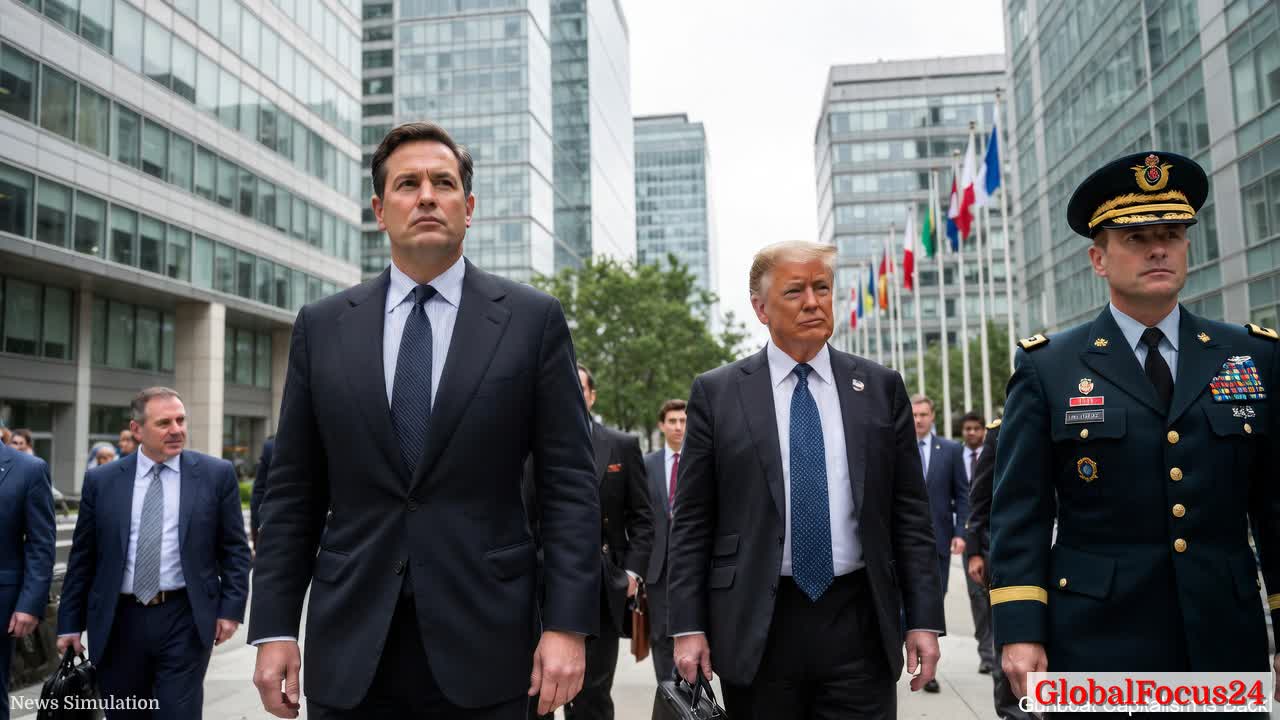
Gunboat Capitalism Returns: How Corporate Power Is Being Turned Into a Weapon of State
The strategic use of corporations as instruments of national power is surging back into view, reviving a form of “gunboat capitalism” that blurs the line between commerce and coercion. This shift is reshaping global trade patterns, undermining economic efficiency, and raising new risks for international security as governments enlist companies in geopolitical contests.
What Gunboat Capitalism Means Today
Gunboat capitalism originally described an era when powerful states used naval force and diplomatic pressure to secure commercial advantages for their firms overseas. In the nineteenth and early twentieth centuries, warships off foreign coasts often accompanied demands for market access, debt repayment, or resource concessions that favored corporations from imperial powers.
In its modern form, the concept has evolved from visible military presence to subtler instruments of pressure. Instead of warships, governments increasingly deploy sanctions, export controls, regulatory scrutiny, and market access as tools to advance national interests through corporate leverage. Large multinational companies—especially in technology, energy, finance, and logistics—have become de facto extensions of state power when instructed or compelled to act in line with foreign policy objectives.
Historical Roots: From Gunboats To Sanctions
The roots of today’s practices lie in earlier episodes when economic and military power were tightly intertwined. During the age of empire, states routinely intervened to protect the overseas assets of chartered companies, enforce trade agreements, or reopen markets closed by nationalist governments.
Over the twentieth century, overt naval coercion gradually gave way to economic sanctions and trade embargoes as preferred instruments of statecraft. The Cold War entrenched the idea that financial restrictions, export controls, and controlled access to advanced technology could weaken rivals without direct conflict. Many of the tools now shaping corporate behavior—blacklists, licensing regimes, and secondary sanctions—trace back to that period, even if their scope and scale have expanded dramatically in recent years.
Corporations As Instruments Of State Power
The contemporary twist is the centrality of private companies in the execution of these policies. Banks, logistics operators, energy majors, and technology platforms are now on the front line of enforcement when governments restrict trade with sanctioned entities or rival states.
This dynamic has several dimensions:
- Governments increasingly condition market access on alignment with national security priorities, pressuring firms to restructure supply chains or withdraw from certain countries.
- Regulatory and legal frameworks in major economies can compel corporations to halt transactions, terminate partnerships, or share data as part of geopolitical strategies.
- Firms themselves may anticipate policy shifts and adjust operations pre‑emptively, effectively internalizing foreign policy goals into commercial decision‑making.
When corporate compliance becomes a core mechanism of statecraft, the distinction between voluntary business choice and political instruction can become blurred. For trading partners and smaller economies, it often makes little difference whether a decision stems from government order or corporate risk calculation; in both cases, commercial links can be cut abruptly.
Economic Costs: A Poorer, Less Efficient World
The growing use of companies as policy tools carries measurable economic costs. Cross‑border investment, global supply chains, and trade flows developed over decades on the assumption that commercial considerations, not political rivalry, would be the primary drivers of business decisions.
When political directives override cost and efficiency, several effects follow:
- Trade diversion: Companies reconfigure supply routes to avoid jurisdictions targeted by sanctions or export controls, often replacing efficient partners with more expensive or less suitable alternatives.
- Fragmentation of markets: Parallel systems emerge in sectors such as payments, digital platforms, and critical raw materials, reducing economies of scale and raising operating costs.
- Reduced investment certainty: Heightened geopolitical risk discourages long‑term capital commitments, especially in infrastructure, energy, and advanced manufacturing that depend on stable cross‑border links.
Over time, these frictions can lower global productivity growth and reduce overall welfare, particularly for mid‑sized and smaller countries that rely heavily on open markets. Consumers ultimately pay through higher prices, less competition, and slower innovation in sectors affected by strategic decoupling.
Security Risks: From Economic Pressure To Escalation
Beyond the economic costs, instrumentalizing corporations in foreign policy can make the world less safe. When control over key supply chains, technologies, or platforms is used to exert political pressure, targeted states may interpret these actions as strategic threats rather than routine regulatory measures.
This environment creates several security risks:
- Miscalculation: Rapid corporate withdrawals or sudden supply cut‑offs may be read as hostile acts, prompting retaliatory measures in other domains, including cyber operations or military posturing.
- Escalation cycles: If states respond to economic pressure with counter‑measures against foreign firms, tit‑for‑tat restrictions can intensify geopolitical tensions and erode diplomatic channels.
- Militarization of economic chokepoints: Control over shipping lanes, critical minerals, semiconductors, or digital infrastructure can become focal points of strategic competition, increasing the likelihood of confrontation.
As companies become more tightly integrated into national strategies, their facilities, data centers, and logistical hubs may also become more attractive targets in crises, further entangling the corporate world with security planning.
The Trump Era And Corporate Power As Statecraft
The renewed emphasis on using business as an instrument of national power has been particularly visible in the policy environment shaped by President Donald Trump. His administration has placed corporate leverage at the center of several major economic and foreign policy initiatives, emphasizing transactional deals, tariffs, and direct pressure on firms operating in strategic sectors or jurisdictions.
This approach builds on, but also intensifies, trends that were already underway in previous administrations. Measures such as targeted sanctions, export controls on strategic technologies, and scrutiny of foreign investment had been expanding for years; what changed was the willingness to deploy these tools more aggressively, sometimes at short notice and with broad scope.
As a result, companies in fields such as advanced manufacturing, digital services, energy, and finance have faced heightened uncertainty about regulatory expectations and geopolitical exposure. This has encouraged some firms to reposition themselves as national champions, aligning closely with government priorities to secure favorable treatment or mitigate the risk of adverse policy moves.
Regional Patterns: Diverging Responses Across The World
The global picture is far from uniform. Different regions have responded to the resurgence of gunboat capitalism in distinct ways, reflecting variations in economic structure, strategic priorities, and institutional capacity.
In parts of Asia, governments have intensified efforts to build domestic champions in technologies such as semiconductors, batteries, and digital platforms, often with strong state direction. This reflects both a desire for resilience and a recognition that economic scale can translate into strategic influence.
In Europe, policymakers have become more cautious about foreign acquisitions in critical sectors and more willing to screen investments on security grounds, while still stressing the importance of open trade. The debate over “strategic autonomy” underscores the tension between preserving global integration and reducing vulnerability to external leverage.
In many emerging and developing economies, the renewed use of corporate power as a geopolitical lever has underscored their exposure to decisions made in distant capitals. These countries often lack the bargaining power to shape the behavior of multinational firms or to resist secondary sanctions that affect banks, energy projects, or infrastructure deals.
Historical Parallels And Key Differences
Comparisons with the classic era of gunboat diplomacy highlight both similarities and important differences. As in the past, economic instruments are being used to advance strategic aims, and smaller states can find themselves squeezed between larger powers.
However, the mechanisms are more complex and pervasive today:
- Networked interdependence: Modern supply chains and digital systems link economies in ways that can amplify the impact of relatively narrow policy decisions.
- Legal and regulatory tools: Instead of direct military threats, states rely heavily on legal frameworks, standards, and compliance obligations to shape corporate conduct.
- Role of non‑state actors: Large multinational companies now possess capabilities—data, logistics networks, and technological expertise—that can rival those of states in certain domains, complicating the hierarchy of power.
These differences mean that contemporary gunboat capitalism operates through layers of contracts, regulations, algorithms, and financial flows rather than visible displays of naval force. Yet the underlying dynamic—using economic leverage to secure strategic advantage—remains recognizably similar to earlier episodes.
Public Reaction And Business Response
Public reaction to the growing entanglement of business and geopolitics has been mixed and often polarized. Some view the use of corporate power as a necessary response to strategic competition, particularly in sectors tied to national security, critical infrastructure, or human rights concerns.
Others warn that frequent recourse to economic pressure risks normalizing a climate of uncertainty. For workers and communities whose livelihoods depend on trade‑exposed industries, sudden policy shifts can translate into factory closures, disrupted exports, or sharp swings in commodity prices. These effects can deepen social tensions and complicate domestic policy debates over openness versus protection.
Companies are adapting in several ways:
- Diversifying supply chains to reduce exposure to any single market or regulatory regime, even at higher cost.
- Increasing investment in political risk analysis and compliance systems to track evolving rules in multiple jurisdictions.
- Coordinating through industry associations or informal networks to convey concerns about regulatory unpredictability and to seek clearer guidance.
Such strategies may mitigate some immediate risks but cannot fully insulate firms from the broader structural shift toward more politically driven trade and investment patterns.
Long‑Term Outlook: Fragmentation Versus Cooperation
The long‑term trajectory of gunboat capitalism will depend on whether major economies choose to prioritize strategic rivalry or cooperative frameworks that stabilize expectations for business. If current trends continue, the world could see deeper fragmentation into partially separate economic blocs, each with its own standards, technologies, and financial channels.
This outcome would likely make the global economy less efficient and more volatile. Companies would face higher operating costs, reduced access to global markets, and greater difficulty planning long‑term investments. Smaller economies, which benefit most from open, rules‑based trade, would bear a disproportionate share of the adjustment burden.
Alternatively, renewed efforts to strengthen multilateral rules and transparency around sanctions, export controls, and investment screening could reduce the scope for sudden, opaque measures that unsettle markets. Even in a more contested geopolitical landscape, predictable frameworks for corporate conduct could limit the degree to which firms become front‑line instruments of coercion.
For now, the reemergence of gunboat capitalism underscores the extent to which economic power has returned to the center of global strategy. As corporations are drawn ever more tightly into the orbit of statecraft, the balance between security, prosperity, and openness will remain one of the defining challenges of the international system in the years ahead.