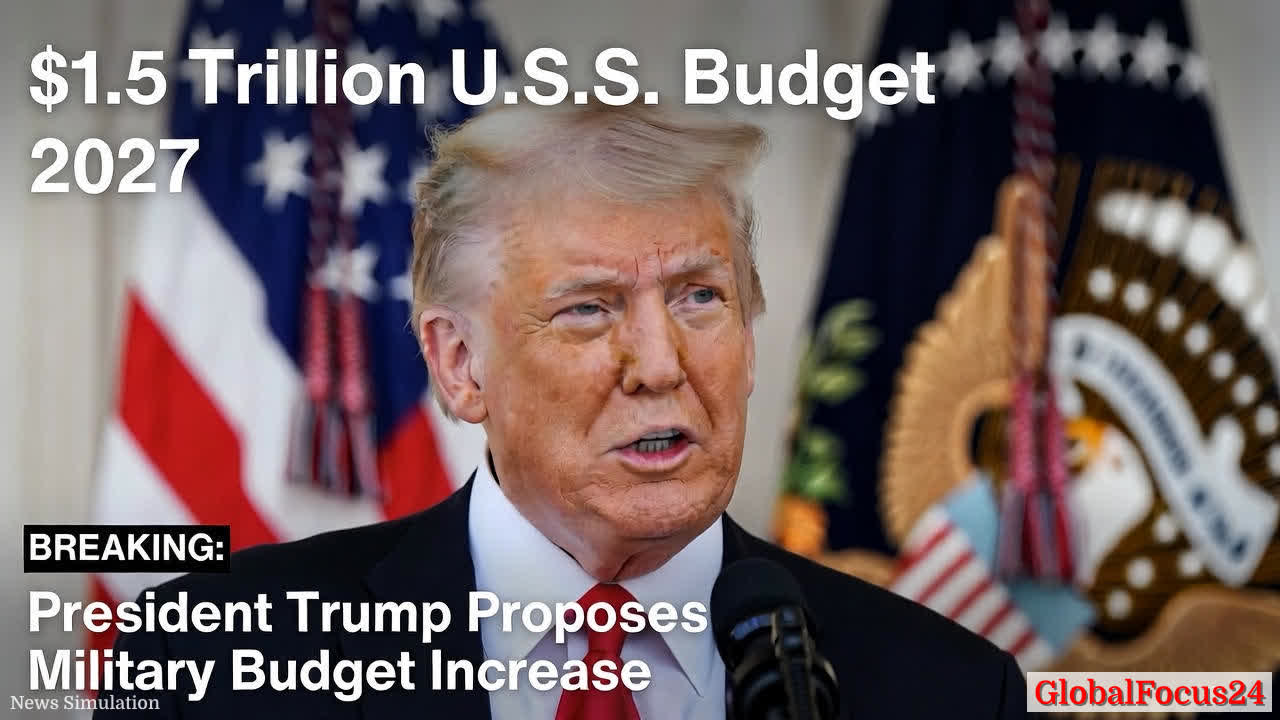
Trump's 2027 Defense Budget Proposal Triggers a Rethink on U.S. Military Spending
A high-stakes proposal to elevate the U.S. military budget for 2027 has sparked wide-ranging discussions among lawmakers, defense analysts, and regional partners about the trajectory of national security spending, the fiscal framework supporting it, and the broader economic implications. If realized, the plan would represent a dramatic shift in defense priorities at a time when global strategic dynamics are intensifying competition, alliance recalibration, and the pace of modernization across multiple services.
Strategic Context and Rationale The proposal arrives amid a complex global security environment characterized by rapid technological change, evolving threats, and a shifting balance of power. Proponents argue that a significantly larger defense envelope would accelerate modernization programs, expand deterrence capabilities, and sustain a robust presence across key theaters. The emphasis on a comprehensive “Dream Military” concept—visionary in tone and ambitious in scope—appears designed to signal resolve and readiness for a mix of potential state and non-state challenges.
Historical context helps illuminate the discussion. Over the past two decades, defense budgets have oscillated with geopolitical priorities, economic cycles, and public sentiment. Post-Cold War drawdowns gave way to incremental growth during periods of perceived strategic competition, followed by episodic surges tied to major national security events. A 2027 budget at or near the proposed scale would mark a notable inflection point, reinforcing a long-running pattern in which defense. funding serves not only sustainment needs but also signaling, industrial base health, and technological lead.
Economic implications and fiscal dynamics A central question in assessing the proposal is how the increased outlay would be financed. The plan’s architects point to tariff-driven revenue as a substantial and novel funding mechanism. They argue that tariffs could generate meaningful fiscal space for defense without disproportionately lifting domestic tax burdens or widening deficits. Supporters contend that this approach would create a revenue stream aligned with strategic objectives, positioning the United States to maintain a high-end military capable of rapid mobilization and sustained operations.
Analysts, however, caution that reliance on tariff revenue is contingent on external economic conditions, trade policies, and retaliatory actions from trading partners. Tariffs can influence consumer prices, supply chains, and the broader economy, with potential spillovers into inflation, business investment, and job markets. The macroeconomic effects depend on tariff design—covering which goods, what rates, and how revenue is recycled into the budget. A shift toward tariff-based funding would also have implications for international trade relations and partner economies.
Debt considerations likewise loom large. Even as proponents emphasize debt reduction as a benefit of enhanced revenue, the net effect on national indebtedness depends on the interplay of GDP growth, interest rates, and overall fiscal discipline. Historically, large-scale defense spending has demonstrated both stimulative effects in the short term and long-term pressure on fiscal health if not anchored to sustainable growth.
Regional comparisons and alliance impacts Regional dynamics offer additional layers of analysis. In Europe, for example, allied nations have been recalibrating defense commitments, modernization timelines, and defense investment in response to shifting Russian posture, strategic uncertainty, and evolving deterrence concepts. A multi-year, larger U.S. defense program could influence alliance burden-sharing, prompting partner nations to accelerate modernization and increase their own defense budgets to bolster collective security.
In the Indo-Pacific, where strategic competition is most overt, a pronounced U.S. defense budget expansion would be watched closely by regional partners seeking credible deterrence against peer competitors. If the plan includes accelerated development of advanced capabilities—such as long-range precision strike systems, next-generation air platforms, and cyber and space resilience—the effect could be to encourage allied investments and joint capability development, while also provoking considerations of escalation and technological parity among adversaries.
Domestic economic and public reaction Public sentiment around defense spending typically mirrors broader views on national security, economic burden, and perceived government priorities. A substantial budget increase raises questions about opportunity costs—the extent to which funds diverted to defense could otherwise support infrastructure, education, healthcare, and science. Policymakers face the challenge of balancing deterrence and readiness with domestic resilience and economic equality, a task that requires transparent accounting, measurable outcomes, and clear milestones.
Public reaction often emphasizes tangible near-term impacts. For communities linked to defense manufacturing and military bases, a larger budget can translate into job security, investment in local facilities, and supply chain opportunities. Conversely, taxpayers and advocates for domestic investment may emphasize the need for efficiency, accountability, and demonstrable returns on defense spending. These conversations shape the political environment surrounding any proposed expansion and influence legislative outcomes.
Programmatic focus areas and implementation considerations Key programmatic themes commonly accompany large-scale defense funding proposals. These may include:
- Modernization of force structure: Upgrading platforms across air, land, sea, space, and cyberspace to maintain advantage in high-end warfare and deterring adversaries.
- Industrial base stabilization: Ensuring suppliers, sub-tier manufacturers, and research institutions have capacity to deliver cutting-edge systems on schedule.
- Readiness and sustainment: Reducing maintenance backlogs, increasing training realism, and ensuring troops remain prepared for diverse mission sets.
- Innovation and technology: Accelerating development of artificial intelligence-enabled warfare systems, advanced propulsion, cyber resilience, and space-enabled capabilities.
- Supply chain resilience: Diversifying sourcing, securing critical materials, and mitigating vulnerabilities exposed by global disruptions.
- Allied interoperability: Aligning development timelines, standards, and procedures to maximize effectiveness in joint operations and multinational missions.
If implemented, these focus areas could have ripple effects beyond defense, influencing sectors such as aerospace, semiconductor manufacturing, defense contracting, and high-tech research. The degree of cross-pollination with civilian technology programs could also shape broader innovation ecosystems.
Potential risks and considerations While the prospect of a larger defense budget carries perceived benefits, it also raises potential risks that policymakers must navigate. These include:
- Inflationary pressure and crowding out of other public investments if fiscal space is constrained.
- The challenge of ensuring accountability, with rigorous oversight and measurable performance metrics to prevent inefficiency or cost overruns.
- The risk of diplomatic backlash if tariffs or defense-only approaches strain international relations and trade ties.
- The possibility of intensified arms competition, prompting adversaries to accelerate their own modernization programs in response.
Analysts emphasize the importance of a transparent, long-range planning horizon that links defense modernization with civilian economic growth and global stability objectives. Clear milestones, independent reviews, and sunset clauses can help maintain public confidence and strategic credibility.
Historical comparisons and lessons Drawing on historical patterns can provide perspective. Past periods of defense expansion have sometimes yielded substantial gains in technological innovation and industrial maturity, alongside heightened geopolitical risk and budgetary discipline challenges. Successful modernization efforts often hinged on coherent long-range strategy, bipartisan support, and a robust defense-industrial base capable of delivering complex capabilities on schedule.
Regional patterns reveal that defense investment sometimes correlates with broader regional security commitments and diplomacy. When allied nations perceive credible deterrence and supportive collaboration, defense spending can align with cooperative security architectures, training exchanges, and joint development programs that enhance overall regional stability.
Conclusion and forward look The proposed 2027 defense budget increase underscores a pivotal moment in U.S. defense policy and fiscal planning. If realized, it would reflect a deliberate choice to prioritize deterrence, readiness, and technological leadership in a rapidly evolving security landscape. The outcome will hinge on a complex mix of economic feasibility, legislative consensus, and the international response of trade partners, allied nations, and strategic competitors.
As this proposal proceeds through the legislative process, stakeholders will scrutinize the details of funding streams, programmatic priorities, and the expected impact on both national security and the broader economy. The conversation will likely intensify around questions of fiscal sustainability, transparency, and the balance between defense modernization and domestic investment priorities that sustain long-term prosperity and resilience.
Public discourse will continue to weigh the value of enhanced deterrence against potential trade-offs. In an era of rapid technological change and interconnected economies, the capacity to translate strategic intent into measurable outcomes will determine not only military effectiveness but also the confidence of the American people in how their resources are deployed to safeguard security and stability at home and abroad.