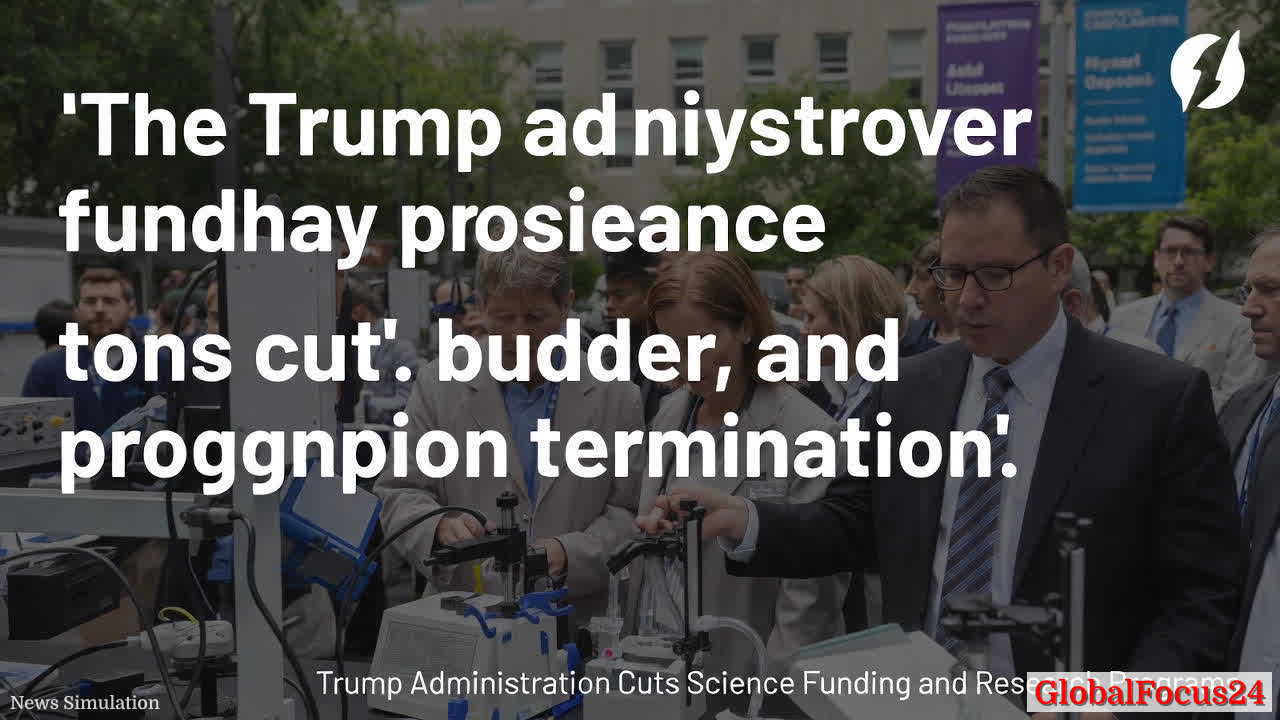
Trump Administration Cuts Science Funding and Research Programs
In a sweeping shift that reverberates through laboratories, universities, and the broader economy, the current administration has announced substantial reductions to science funding and the termination of a wide array of research programs. The move, described by officials as a realignment toward core national priorities, marks a dramatic departure from decades of steady investment in scientific inquiry, technology development, and evidence-based policy. As grant cycles end and projects wind down, researchers, industry partners, and regional economies that rely on federal funding are assessing the implications for innovation pipelines, workforce development, and long-term competitiveness.
Historical context: decades of federal science investment To understand the significance of today’s policy changes, it helps to recall the historical arc of U.S. science investment. The United States built a robust research ecosystem in the mid-20th century, accelerated by postwar funding waves and the promise of civilian and military applications. Programs spanning physics, biomedical research, environmental science, and space exploration became anchors for universities and industry alike. In the ensuing decades, the federal government established a pattern of predictable support for basic and applied research, enabling gradual but consistent advances in medicine, energy, information technology, and national security capabilities.
This long-standing model depended on multi-year appropriations, peer-reviewed grant processes, and targeted initiatives designed to tackle grand challenges—from understanding climate change to decoding the human genome and developing next-generation materials. While administrations have diverged on specific priorities, the principle of maintaining a strong scientific base remained a common thread across political cycles. The current policy shift, however, departs from that tradition in a way that will likely recalibrate the national research landscape for years to come.
Scope and rationale of the funding reductions Officials describe the cuts as necessary to reorient federal science investment toward areas deemed essential to economic resilience, public health, and strategic autonomy. The reductions are reported to affect multiple agencies, including major research channels across physics, life sciences, environmental science, and engineering. In some cases, programs that supported early-stage, high-risk, high-reward research are being terminated or scaled back, while other initiatives receive increased emphasis or redirected funding streams to align with stated national goals.
Critics argue that the scale and breadth of the cut could slow discovery, disrupt ongoing collaborations, and reduce the United States’ exhaustive portfolio of competitive, world-class research. Supporters contend that a more targeted funding approach will yield higher-impact outcomes, prevent duplication, and ensure taxpayer dollars advance the nation’s most urgent priorities. The tension between safeguarding foundational science and prioritizing near-term returns sits at the heart of the current debate, with universities, think tanks, industry groups, and regional innovation ecosystems weighing in with diverse perspectives.
Economic impact across sectors The financial health of research institutions often hinges on the reliability of federal support. Universities that rely on federal grants for laboratory operations, personnel, and equipment purchases may experience immediate budgetary strains as grants terminate or lapse. The ripple effects extend beyond academia to pharmaceutical companies, tech startups, and manufacturing sectors that participate in government-funded research consortia or precompetitive collaborations. Industry observers warn that diminished federal backing could slow the commercialization of breakthrough technologies, reduce workforce development opportunities, and affect regional innovation clusters that have grown around science-and-technology corridors.
Regional impact is likely to be uneven. Regions with a high concentration of research universities and federally funded laboratories may face sharper adjustments, including potential contractions in research cores, fewer postdoctoral appointments, and tightened research capacity. Conversely, areas with robust private-sector R&D ecosystems or diversified portfolios of funded projects may absorb shifts more smoothly through private investment, contract research, or state-supported programs. Economists anticipate reassessment of regional strategic plans, with some jurisdictions seeking to attract alternative funding through state initiatives, philanthropic partnerships, or industry collaboration to sustain momentum in key disciplines.
Historical comparisons to prior cycles Past cycles of science funding fluctuations provide a useful lens. During periods of fiscal tightening, some programs were sunsetted or consolidated, while others expanded to emphasize national security or public health emergencies. In several instances, fields such as renewable energy, biotechnology, and information technology benefited from targeted investments that catalyzed private-sector growth and job creation. The current wave of reductions, however, is broader in scope and more sweeping in its reallocation of resources, prompting a reassessment of how the United States nurtures its scientific infrastructure in a changing geopolitical and economic environment.
Global context and regional comparisons Internationally, many advanced economies rely on strong public investment in science as a cornerstone of competitiveness. In some regions, public funding remains relatively stable, with diversified portfolios of grants, investigator-initiated research, and mission-oriented programs that foster collaboration between universities, national laboratories, and industry partners. The United States has historically set the benchmark in many areas of fundamental science, while other countries have pursued aggressive, policy-backed programs to accelerate applied research and technology transfer. The current policy shift may intensify competition, prompting campuses and companies to intensify collaboration with international partners or to recalibrate strategic plans to maximize outcomes under tightened domestic funding conditions.
Research community responses and public reaction Within the research community, reactions have been mixed but broadly attentive to the long-term implications. Payers of science—universities, research hospitals, and consortia—are evaluating contingency plans, including reprioritization of projects, seeking alternative funding from private foundations, and pursuing state or regional funding initiatives to fill gaps. Early-career researchers and graduate students may face uncertainties about career trajectories, grant stability, and available training opportunities. Public sentiment often centers on the trade-off between fiscal prudence and the societal benefits of sustained scientific progress, with stakeholders highlighting the potential consequences for health, energy resilience, and technological leadership.
Implications for science policy and future priorities Policy makers and researchers alike anticipate a broader conversation about the role of federal science funding in national strategy. Some analysts expect a push for clearer performance metrics, greater accountability for program outcomes, and enhanced opportunities for cross-agency coordination to reduce redundancy. Others foresee renewed emphasis on mission-driven science—projects with explicit applications in energy, health, climate resilience, and national security—as well as strengthened mechanisms for public-private collaboration to drive innovation without compromising the foundational research base. In this climate, universities may increasingly pursue modular funding arrangements, public-private partnerships, and enhanced industry collaborations to sustain scientific activity and maintain domestic competitiveness.
Case studies: potential sectoral impacts
- Biomedical research: Reductions could affect translational science pipelines, slowing the movement of discoveries from bench to bedside. Hospitals and biotech startups that depend on federal awards for early-stage clinical studies may recalibrate timelines or seek alternative funding structures.
- Energy and environment: Programs supporting clean energy innovation, climate research, and environmental monitoring face notable downsizing. This could influence the pace of new energy technologies, grid resilience projects, and natural-resource management strategies at federal, state, and local levels.
- Information and computation: Investments in data science, cybersecurity, and advanced computing may shift toward applied initiatives with direct economic or national-security benefits, potentially narrowing opportunities for exploratory, high-risk research that yields foundational breakthroughs.
- Agricultural science: Support for crop genetics, sustainable farming practices, and food security research could affect long-term agricultural resilience, with downstream effects on supply chains and rural economies.
What this means for students and the workforce For students pursuing STEM fields, the funding landscape shapes the availability of scholarships, assistantships, and research experiences that are critical to building expertise and launching careers. Reduced grant activity can influence the number of funded positions and the trajectory of graduate programs, potentially steering talent toward sectors with more readily accessible funding or toward fields with stronger private-sector partnerships. Deployment of human capital in science, technology, engineering, and math remains a core determinant of a nation’s innovative capacity, and adjustments in funding priorities may influence career choices at a pivotal moment in workforce development.
Public governance and transparency A transparent, well-communicated rationale for funding adjustments helps stakeholders anticipate changes and adapt accordingly. Transparent reporting on program outcomes, spend efficiency, and the alignment of investments with national priorities can bolster public trust and support for evidence-based decision making. As the science funding ecosystem evolves, open channels for stakeholder feedback, performance reviews, and independent evaluations will be essential to sustaining credibility and ensuring that resources are allocated to projects with demonstrable societal benefit.
Looking ahead: balancing short-term savings with long-term gains The fundamental challenge in science funding policy is balancing immediate fiscal considerations with the promise of long-term economic and societal gains from research. History shows that investments in basic science often yield transformative technologies years later, creating new industries, improving public health, and strengthening national security. While current measures may offer short-term budgetary relief, policymakers, researchers, and industry leaders will likely monitor indicators such as grant renewal rates, collaboration intensity, and the speed of knowledge transfer to determine whether a revised funding approach delivers on its stated objectives.
Conclusion: navigating an evolving research landscape As the federal science portfolio undergoes significant realignment, the research ecosystem faces an inflection point. The coming years will reveal how universities, laboratories, and industry partners adjust to a shifted funding spectrum, how regional economies adapt to potential gaps or pivots in support, and how public confidence in science remains steadfast in the face of policy change. The enduring question is how to preserve the United States’ competitive edge by sustaining a vibrant, resilient, and diverse science enterprise capable of tackling complex challenges—from health crises to climate adaptation and beyond. Public and private sectors alike will need to collaborate to ensure that momentum in discovery and innovation continues to propel growth, improve lives, and strengthen the nation’s scientific foundation for generations to come.