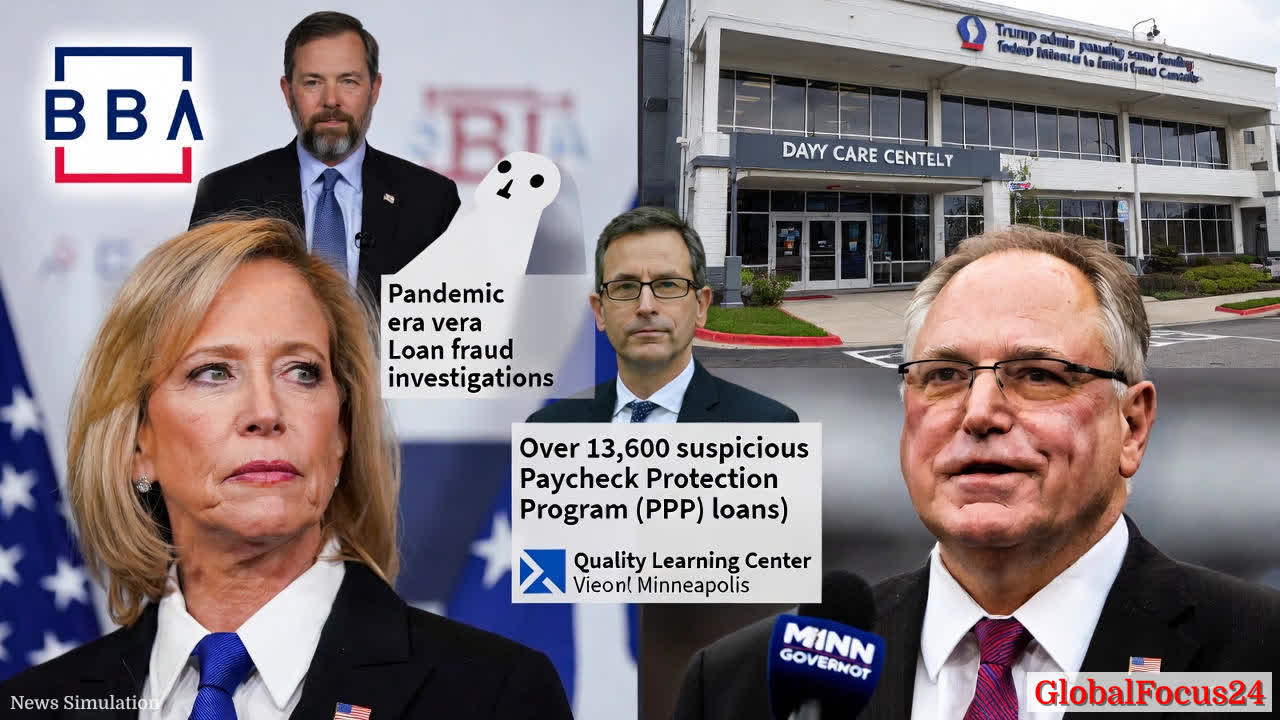
Minnesota Faces Federal Funding Freeze as PPP Fraud Investigations Expand
An abrupt pause on federal funding to Minnesota has escalated concerns about the integrity of pandemic-relief programs and the broader management of public funds. The pause, announced by the Small Business Administration (SBA), suspends annual allocations to the state while investigators probe hundreds of millions of dollars in potentially fraudulent Paycheck Protection Program (PPP) loans. The action underscores a wider national effort to root out fraud in emergency relief initiatives and to strengthen safeguards against abuse of federal resources.
Historical context: pandemic-era relief and the rise of fraud scrutiny The PPP was designed as a rapid-response measure to keep small businesses afloat during the economic shock of the COVID-19 pandemic. It provided forgivable loans to cover payroll and certain other expenses, enabling many businesses to survive periods of mandatory shutdowns and reduced demand. Public officials at the federal level built procedures to disburse funds quickly, but the speed and scale of these programs also created opportunities for exploitation. Over time, federal agencies identified sophisticated fraud schemes, including networks that manipulated loan applications and created shell businesses to siphon funds. The Minnesota cases are part of a broader pattern seen in several states where fraud rings coordinated efforts to exploit gaps in oversight, documentation, and due diligence.
Economic impact: short-term disruption, long-term implications For Minnesota, the funding freeze has immediate implications for state and local economic support programs that rely on federal dollars for vitality and resilience. Small businesses, particularly those with narrow margins, often depend on PPP-derived funds to cover wages, rent, and essential operating costs during turbulent periods. A suspension of funding can slow recovery efforts, complicate cash flow planning, and potentially affect related services that rely on federal support, including workforce development initiatives and small-business technical assistance programs.
Beyond state-level consequences, the pause signals potential ripple effects across regional economies. Minnesota competes with nearby states for limited federal resources, and the timing of disbursements can influence regional investment in entrepreneurship, manufacturing, and services. Counties and municipalities that anticipated continued support for small-business grants and recovery programs may need to adjust budgets and staffing plans in the near term. In regions with higher concentrations of payroll-focused relief loans, the immediate impact could be more pronounced, affecting job retention efforts and the continuity of local recovery projects.
Regional comparisons: how Minnesota measures up
- Midwest peers: Several neighboring states faced similar scrutiny during the pandemic-era relief programs, with varying outcomes tied to state-level oversight and coordination with federal agencies. Some states established more rigorous post-disbursement reviews, while others relied on centralized federal monitoring.
- Urban centers versus rural areas: Larger metropolitan areas often show higher volumes of PPP activity due to denser business ecosystems and payroll needs, but fraud investigations can reveal vulnerabilities across urban and rural settings alike. The Minnesota cases highlight concerns that can arise in diverse environments, from Minneapolis–Saint Paul to outstate counties.
- Public funding governance: The episode reinforces the ongoing debate about how to balance expeditious relief with robust accountability. Regions that integrated real-time data analytics, cross-agency reconciliation, and independent audits tended to identify irregularities earlier, potentially mitigating broader losses.
Key players and responses: accountability, not politics
- Federal investigators: The SBA and related federal authorities are conducting a comprehensive review of PPP loans identified as suspicious, aiming to determine legitimate disbursements and recover misappropriated funds. The emphasis is on accountability, with a focus on dismantling networks that exploit federal programs.
- Minnesota state leadership: The governor’s office has underscored that PPP funds were administered federally, with responsibility resting with federal entities rather than state agencies. The administration’s stance emphasizes the need for federal-level reforms while cooperating with investigations to safeguard taxpayer dollars.
- Public reaction: Local communities and business owners are likely to experience a mix of concern and resilience. While some stakeholders may view the pause as a necessary corrective measure, others may worry about the broader economic effects and the potential long tail of repayment or audit requirements.
Operational details: what the pause entails The SBA’s decision to suspend annual funding pending further review affects specific allocations that would have flowed to Minnesota-based programs and initiatives tied to federal relief funding. While the suspension is a precautionary measure, it does not automatically imply wrongdoing by all recipients. Instead, it signals a heightened level of scrutiny to ensure that federal resources are used as intended and to deter illicit activity.
Implications for future policy and safeguards
- Enhanced due diligence: The situation underscores the importance of robust verification processes for relief programs, including improved lender monitoring, more stringent applicant identity checks, and better cross-referencing of payroll data with actual employment records.
- Data integration: Strengthening data-sharing agreements across federal and state agencies can help detect anomalies earlier in the disbursement process, reducing the likelihood of large-scale fraud and enabling faster recovery of funds.
- Independent audits: Regular, independent audits of pandemic-era relief disbursements can provide ongoing assurance to taxpayers and stakeholders, helping to identify vulnerabilities and implement corrective measures more rapidly.
- Public transparency: Clear, accessible reporting on investigations, findings, and remediation steps can bolster public trust and demonstrate a commitment to accountability without compromising ongoing law enforcement work.
Public safety and community trust Fraud investigations of this scale can affect public confidence in both federal relief programs and local governance. To counteract skepticism, authorities often emphasize the safeguards being implemented to prevent future misuse. Community leaders may also advocate for targeted support to small businesses that demonstrate legitimate needs, ensuring that recovery remains inclusive and that resources reach those most affected by the pandemic’s economic disruption.
Conclusion: a turning point in protecting federal resources The Minnesota funding pause represents a serious but necessary moment in the ongoing effort to protect federal resources from misuse. By prioritizing rigorous investigations, strengthening oversight, and implementing durable safeguards, federal and state authorities aim to preserve the integrity of relief programs while supporting legitimate economic recovery. The outcome of this process will influence how similar programs are designed, funded, and monitored in the future, shaping the balance between rapid assistance in times of crisis and steadfast accountability to taxpayers.
As investigations progress, observers will watch how Minnesota and federal agencies navigate the complex terrain of fraud prevention, program effectiveness, and economic resilience. The overarching goal remains clear: ensure that public funds drive true relief for communities in need while maintaining a rigorous standard that deters abuse and protects the public purse.