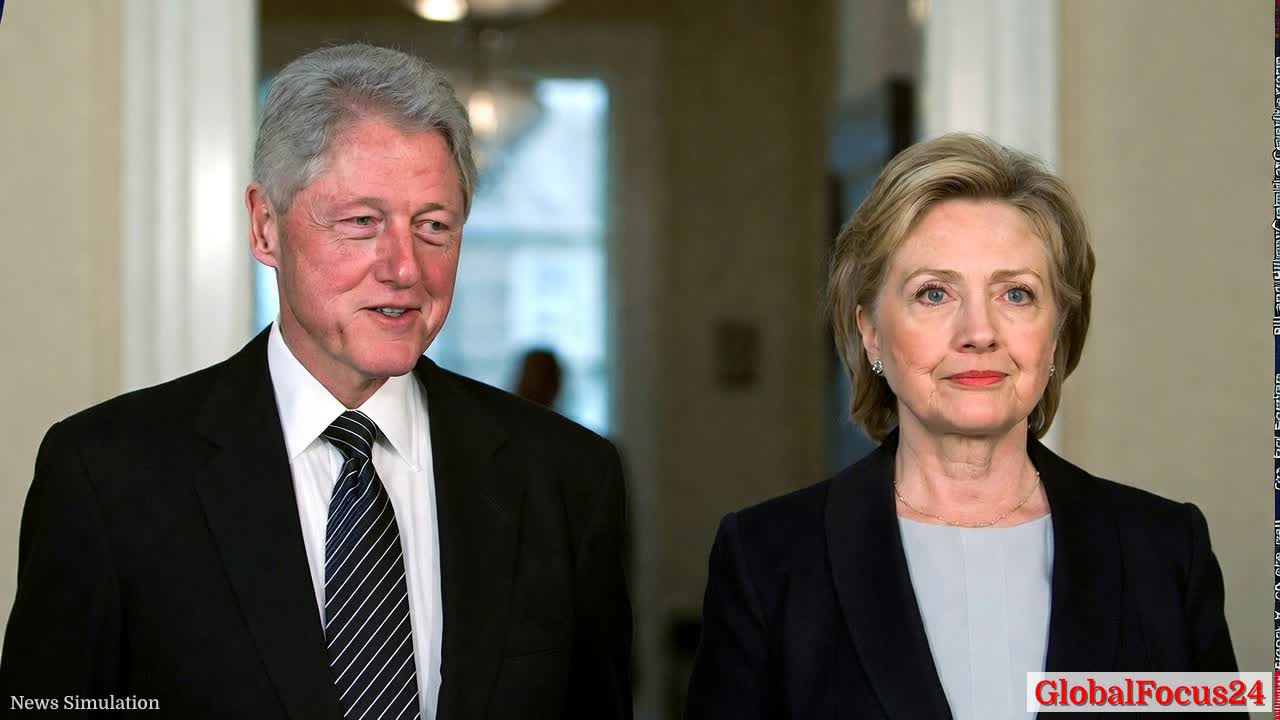
Bill and Hillary Clinton Face Possible Contempt Over Epstein Subpoenas
In a development shaping ongoing congressional inquiries, former President Bill Clinton and former Secretary of State Hillary Clinton are confronting potential contempt of Congress charges after failing to comply with subpoenas tied to their connections with financier and convicted sex offender Jeffrey Epstein. The House Oversight Committee has set new dates for depositions, scheduling Bill Clinton for January 13, 2026, and Hillary Clinton for January 14, 2026. If either declines to appear, the committee intends to move immediately toward contempt proceedings.
Historical context and the rise of investigative scrutiny
The Clinton family's public service career spans decades, marked by high-level diplomacy, policy leadership, and expansive political influence. Epstein’s arrest in 2019 and subsequent revelations reignited longstanding questions about elite networks, accountability, and the hidden channels through which powerful individuals may interact with controversial figures. Congressional inquiries into Epstein-related matters have repeatedly highlighted the tension between executive privilege, personal associations, and the public interest in transparency.
Historically, congressional committees have wielded subpoenas to compel testimony in high-profile investigations, often facing fierce legal battles over executive privilege and the limits of legislative authority. The current scenario recalls past episodes where lawmakers asserted the angle of accountability on prominent political figures, even as defenses invoked constitutional protections. The outcome of this standoff will likely reverberate beyond the specific individuals involved, signaling how Congress handles compelling testimony from former presidents and senior officials in the era of heightened scrutiny of elite networks.
What the subpoenas seek and the legal stakes
The subpoenas in question are tied to the committee’s aim to gather depositions and related evidence concerning the Clintons’ personal associations with Epstein and his associates, including Ghislaine Maxwell. The evidence cited in public summaries has included flight logs, personal photographs, and other materials suggesting interactions that warrant careful review in the context of ongoing oversight responsibilities.
The legal stakes center on whether a former president and a former secretary of state can be compelled to testify in a back-and-forth with a legislative committee. Contempt of Congress is a serious instrument used to enforce compliance with congressional subpoenas, potentially leading to fines or imprisonment for obstruction or noncompliance. The precise legal calculus often hinges on whether the information sought falls within the scope of Congress’s legislative oversight, whether privilege claims are valid, and how the judiciary interprets the balance between accountability and executive confidentiality.
Economic and reputational implications
Beyond the courtroom, the embroilment touches broader economic and reputational dimensions. For instance, ongoing inquiries can influence investor and business confidence, particularly if they intersect with discussions about campaign finance, lobbying networks, or the use of private travel for official purposes. While the immediate financial impact on the Clintons themselves is likely limited, the political cost can ripple through donor networks, fundraising dynamics, and public perception of ethical standards among leadership figures.
Regional analysis offers a lens on the varying reactions to this development. In metropolitan areas with strong media ecosystems and heightened civic engagement, the case has drawn extensive attention, fueling public discourse about accountability and transparency in government. In regions where economic leadership and policy legacies are closely tied to the Clinton era—whether through business development, international diplomacy, or educational and philanthropic initiatives—the narrative has sparked conversations about the long-term consequences of personal associations on public legacies. The economic environment in such areas may feel the indirect effects of ongoing political uncertainty, even as markets generally focus on broader macroeconomic indicators.
Regional comparisons illuminate how different audiences respond to congressional subpoenas involving former national figures. In some states, media coverage emphasizes the procedural rigor of the committee’s process, underscoring the importance of rule-of-law and institutional checks and balances. In others, the emphasis shifts toward the potential impact on advocacy groups, grassroots organizations, and local stakeholders who interpret the episode through the lens of accountability and trust in public institutions. Across regions, the substance of any forthcoming testimony is likely to shape debates about how to balance historical legacies with contemporary standards of ethics and governance.
Public reaction and the climate of accountability
Public response to high-profile investigations into powerful figures tends to be mixed, reflecting diverse political beliefs and levels of trust in institutions. Supporters of rigorous oversight argue that no individual should be exempt from questioning when serious allegations or credible evidence about connections to criminal networks exist. Critics warn against what they perceive as politically motivated or partisan uses of subpoenas, arguing that the process should remain narrowly tailored to legitimate legislative purposes without veering into personal vendetta.
In this environment, the timing of depositions can amplify or dampen public sentiment. The January 13 and January 14 hearings—if they proceed as scheduled—are likely to become focal points for national news cycles, policy discussions, and opinion pieces analyzing the boundaries of congressional authority. Public engagement may rise as communities seek to understand who bears responsibility for ethical standards in public life and how oversight functions to maintain the integrity of governmental institutions.
Comparative lens: how other nations handle similar inquiries
International comparisons offer a broader perspective on how democratic systems navigate inquiries involving former leaders. In several parliamentary and presidential systems, lawmakers utilize parliamentary inquiries and oversight mechanisms to examine potential misconduct or conflicts of interest among senior officials. Some countries place stronger emphasis on judicial involvement when privilege and confidentiality concerns arise, while others rely more heavily on political processes to determine accountability. The United States’ approach, characterized by the separation of powers and the potential for contempt consequences, reflects a balancing act between safeguarding individual rights and upholding legislative prerogatives. The outcome of the current episode could influence how future inquiries are structured, particularly regarding the scope of information sought and the methods used to compel testimony.
Operational specifics and how the process might unfold
If either Clinton declines to appear on the rescheduled dates, the committee is prepared to advance contempt proceedings swiftly. The procedural steps typically involve formal court filings, follow-up subpoenas if necessary, and a chain of delegations to enforcement mechanisms. The judiciary’s role can include evaluating the legitimacy of the subpoenas, conflicts over privilege claims, and the appropriateness of any sanctions. Throughout this process, lawmakers emphasize the importance of timely and transparent handling to preserve the integrity of oversight and to avoid unnecessary prolongation of uncertainty.
Observers note that the dynamic of noncompliance can have strategic dimensions. From a communications standpoint, adherents of the inquiry may frame noncooperation as a test of congressional resolve, while supporters of the defendants may stress the need to protect personal privacy and executive deliberations. As the dates approach, it remains to be seen how the Clintons, their legal team, and congressional counsel will negotiate the boundaries of cooperation and the scope of permissible dialogue.
Historical outcomes and potential trajectories
Past episodes where prominent figures faced contempt charges often hinged on a combination of legal arguments, political calculus, and public sentiment. In some cases, contempt resolutions have led to negotiated settlements, dismissals, or strategies that avoid direct judicial confrontation while preserving the committee’s ability to gather information. Other scenarios saw prolonged legal battles that publicize disclosures and shape long-term reputational trajectories.
The current case sits at the intersection of accountability, legacy, and procedural rigor. The historical trajectory will depend on a range of factors, including the strength and clarity of the evidence presented by the committee, the effectiveness of the defendants’ legal strategy, and the judiciary’s interpretations of privilege, relevance, and legislative intent. Whichever path unfolds, the episode will likely be cited in discussions about the limits and responsibilities of public office, as well as the mechanisms through which a democracy seeks answers from its most influential actors.
Conclusion: a moment that tests oversight and memory
As January draws near, the prospect of depositions from Bill Clinton and Hillary Clinton represents more than a procedural milestone. It is a test of how oversight functions when confronted with high-profile figures whose public service shaped foreign and domestic policy for decades. The outcome will be watched not only for its immediate legal implications but also for what it signals about the strength of institutional accountability in a complex political landscape. In the coming days, observers will be listening for clarity, consistency, and a demonstration that the checks and balances at the heart of the system remain robust, regardless of status or celebrity.
Note on context and tone
This article presents an objective overview of the situation, integrating historical context, potential economic and reputational impacts, and regional considerations without taking a political stance. It emphasizes the procedural and legal dimensions of congressional oversight while acknowledging the broader public interest in transparency and accountability.