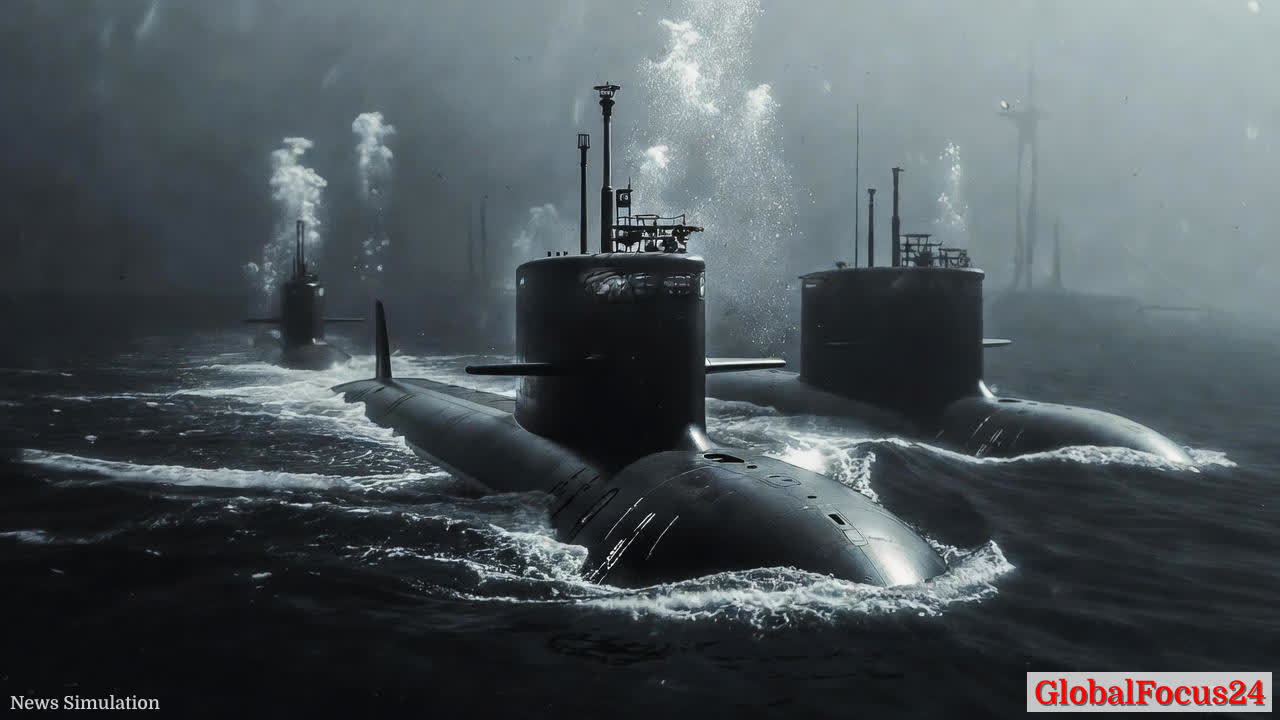
Poland’s A26 Submarine Purchase: A Baltic Security Pivot in NATO-Russia Tensions
The Baltic Sea—bounded by nine nations and serving as a critical corridor for energy, commerce, and maritime security—has reemerged as a focal point in NATO-Russia strategic dynamics. In a move that underscores the region’s evolving defense calculus, Poland announced the acquisition of three advanced A26-class submarines from Sweden. Valued at approximately $2.8 billion, the deal signals a sustained push by NATO allies to bolster underwater defenses, safeguard seabed infrastructure, and project resilience in a theater where stealth and reach matter as much as sheer firepower. As these new vessels join the Polish fleet, analysts and regional policymakers are weighing what the acquisition means for regional balance, economic impact, and the broader trajectory of Baltic Sea security.
Historical Context: From Cold War to Contemporary Subsurface Rivalry
The Baltic Sea has long been a theatre of strategic contest. During the Cold War, it functioned as a quiet front line between NATO members and Soviet-aligned states, with mining, patrols, and submarine operations forming an undersea chessboard. Today, the sea remains crowded with ships, cables, pipelines, and port facilities that are critical to European energy security and digital connectivity. The modern competition is less about large-scale naval battles and more about persistent, invisible advantages—surveillance, intelligence gathering, and the ability to disrupt or protect underwater infrastructure.
Sweden’s A26 class submarines represent a new generation of stealth-enabled, technology-forward platforms designed for littoral operations, endurance, and advanced sensor suites. Their design emphasizes quiet propulsion, flexible payloads, and modular capabilities that can be tailored to specific regional missions. For Poland, a country with a long Baltic coastline and a strategic need to monitor and defend subsea assets, the A26s offer a combination of concealment and versatility that can complement land-based defenses and air patrols.
Economic Impact: Procurement, Industry, and Regional Multiplier Effects
The $2.8 billion submarine deal is more than a single military purchase; it is a signal of regional industrial collaboration and strategic investment. The procurement supports Swedish defense electronics and shipbuilding ecosystems, with potential downstream effects including supplier contracts, maintenance infrastructure, and skilled employment in both Sweden and Poland. The immediate fiscal impact for Poland is significant, but the long-term economic rationale centers on deterrence-based savings: credible defense capabilities can influence risk assessments by potential adversaries, potentially reducing the likelihood of confrontations that would carry heavier economic costs.
For the Baltic states and Central European economies, the deal reinforces a wider pattern: defense spending in response to perceived threats can spur local innovation, sustain high-skilled manufacturing jobs, and stimulate ancillary services, from cyber defense to maritime logistics. While critics occasionally point to opportunity costs—funds diverted from social programs or climate initiatives—the consensus among policymakers who support robust deterrence argues that targeted investments in high-end maritime systems can preserve stability, trade routes, and long-run economic resilience in a volatile security environment.
Regional Comparisons: Baltic, Nordic, and Central European Dynamics
Poland’s submarine purchase sits within a broader regional tapestry of security commitments and capabilities. In Nordic and Baltic theatres, multiple actors have pursued enhanced underwater domain awareness, anti-submarine warfare (ASW) capabilities, and seabed sensing technologies. Sweden’s A26s are designed to operate in littoral zones and challenging water conditions—precisely the kind of environment that characterizes the Baltic Sea, where ice conditions, brackish water, and layered currents complicate sensor performance and sonar effectiveness.
Compared with adjacent maritime actors, Poland’s move expands its blue-water-like depth in a region where coastal defense and anti-access/area denial (A2/AD) strategies increasingly rely on integrated, multi-domain sensors and autonomous systems. The emphasis on seabed monitoring and infrastructure protection aligns with efforts by several NATO members to secure undersea cables and pipelines that underpin European energy and communications networks. This operational emphasis contrasts with traditional fleet supremacy concepts and reflects a modern maritime security paradigm: high-value chokepoints demand persistent coverage, rapid interdiction options, and the ability to project deterrence through quiet, resilient platforms.
Operational Capabilities: Why the A26 Fits the Baltic Mission
The A26 class stands out for several reasons that make it well-suited to the Baltic theatre. First, its stealth profile and quiet propulsion reduce detection risk in a region where adversaries monitor submarine activity meticulously. Second, the bow-mounted sonars and advanced surveillance systems enhance undersea situational awareness, a critical capability for tracking submarine incursions as well as monitoring shipping lanes and seabed infrastructure.
A distinctive feature of the A26 is its bow portal, designed to deploy underwater drones, sensors, or divers directly onto the seabed. In the Baltic’s murky, shallow waters, such a capability enables rapid deployment of reconnaissance payloads, mine countermeasures, or specialized sensors. This modular approach supports mission versatility—from anti-submarine warfare and intelligence collection to safeguarding fiber optic cables and energy pipelines that traverse the seabed.
The strategic logic rests on deterrence through capability. By presenting capable, flexible underwater platforms, nations signal a credible commitment to defending vital maritime assets and deterring aggression without escalating force. In the Baltic region, where risk calculus weighs heavily on the protection of critical infrastructure, such submarines can play a crucial role in maintaining secure lines of communication and energy supply across European markets.
Public Reaction and Security Implications
Public sentiment around military modernization in Poland and neighboring states tends to balance concern for security with anxiety about regional tensions. In coastal communities, residents often articulate a mix of pride in strengthening national defense and worry about the potential for an arms race in a sensitive maritime environment. For policy-makers, the question is how to sustain a credible deterrent while pursuing confidence-building measures with neighbors and regional dialogue that prevents miscalculation.
From a strategic perspective, the A26 purchase is consistent with NATO’s emphasis on resilience in contested domains. It reinforces joint interoperability, allowing Polish forces to operate alongside Swedish and other NATO allies with synchronized command-and-control links, shared intelligence processes, and common training standards. This interoperability is especially valuable for exercises and crisis simulations, where the ability to coordinate across borders and domains can reduce response times and improve outcome reliability in a tense scenario.
Geopolitical Context: Obstacles, Risks, and Diplomatic Nuances
The Baltic security architecture rests on a delicate balance of deterrence and diplomacy. While partnerships and joint exercises strengthen resilience, the region’s proximity to Russia’s strategic perimeter means policymakers must manage risks, including escalation dynamics, inadvertent incidents, and the potential for misinterpretation of signals in a high-stakes environment. The A26 submarine purchase does not exist in a vacuum; it is one strand in a broader mosaic that includes air defense integration, cyber resilience, intelligence sharing, and economic resilience to sanctions or disruptions that could reverberate through energy and transport networks.
In this context, Poland’s decision to procure Sweden’s A26s reflects a pragmatic approach to defense modernization, outsourcing production and specialized capabilities to allies with whom Poland has established deepening security ties. The arrangement also highlights the importance of regional cooperation in the Baltic and Nordic seas. By aligning with Sweden, Poland benefits from access to cutting-edge technology and hardening its deterrent posture without shouldering the lion’s share of development costs.
Supply Chain and Industrial Strategy: Sustainability and Long-Term Readiness
Sustainability and long-term readiness are key considerations in modern defense procurement. The A26 program emphasizes modularity, maintainability, and the potential for ongoing upgrades as sensor and propulsion technologies evolve. For the Baltic region, this translates into a more sustainable approach to maritime security—one that can adapt to emerging threats, such as autonomous underwater vehicles (AUVs), cyber-physical integration, and multi-domain operations.
EU defense initiatives and regional industrial policies often encourage cross-border collaboration, dual-use technologies, and supply-chain resilience. The Poland-Sweden submarine agreement can be viewed through that lens: a strategic alignment that reinforces regional resilience, supports high-skilled jobs, and fosters knowledge transfer. While defense budgets are scrutinized, the long-term economic rationale centers on contributing to a stable security environment that underpins trade routes, port operations, and energy transit across the Baltic.
Strategic Implications for the Baltic Sea
The Baltic Sea is increasingly seen as a crucible for future maritime security. The deployment of three A26 submarines to Poland signals a significant enhancement of Poland’s underwater domain awareness and response capabilities. In practical terms, these vessels can contribute to deterrence against submarines and surface-threats, monitor and protect critical seabed infrastructure, and support rapid response to incidents in busy maritime lanes.
For neighboring states, the development prompts considerations of how to balance deterrence with openness. Some analysts expect increased collaboration on intelligence-sharing, joint patrols, and coordinated exercises that test readiness across multiple maritime domains. Others warn that a pronounced buildup may provoke regional arms competition, underscoring the need for continuous dialogue, crisis communication protocols, and confidence-building measures to avoid missteps.
Long-Term Outlook: Balancing Security with Economic Stability
Looking ahead, the Baltic security landscape will likely hinge on a combination of deterrence, diplomacy, and economic resilience. Submarine investments, while costly, offer tangible benefits in terms of strategic reach and readiness. The A26 program complements other security investments—air defense, missile defense systems, cyber protections, and maritime domain awareness networks—that collectively strengthen resilience in a region essential to European prosperity.
Poland’s submarines could influence how regional players view future procurement decisions. If the A26s perform as intended, other Baltic and Nordic nations may consider similar enhancements to maintain parity or to address specific regional needs, especially in the context of contested sea lines of communication (SLOCs) and the protection of critical infrastructure. That said, the trajectory of any such expansion will depend on a complex mix of defense budgets, political will, technological breakthroughs, and evolving threat perceptions.
Conclusion: A Defensive Milestone in an Unsettled Sea
The Baltic Sea acquisition marks a notable milestone in NATO-aligned defense modernization, reflecting a pragmatic, outcome-oriented approach to preserving regional stability. By investing in advanced, versatile submarines, Poland demonstrates a commitment to safeguarding critical infrastructure, maintaining freedom of navigation, and strengthening deterrence within a volatile security environment. As regional and international players monitor developments, the broader strategic picture emphasizes resilience, interoperability, and sustained focus on protecting the maritime commons that underpin European economic vitality and regional security.
In the near term, the emphasis will be on integration, training, and the establishment of robust maintenance pipelines that keep these submarines ready for rapid deployment. In the longer term, observers will watch for how this move shapes alliance dynamics, industrial ecosystems, and the practical realities of enforcing underwater security in a sea where assets lie beneath the surface and time is a decisive variable. The Baltic, with its mix of history, commerce, and vulnerability, remains a proving ground for 21st-century deterrence—and Poland’s latest step in this ongoing security evolution is a clear signal that underwater capability remains a central pillar of national and regional defense.