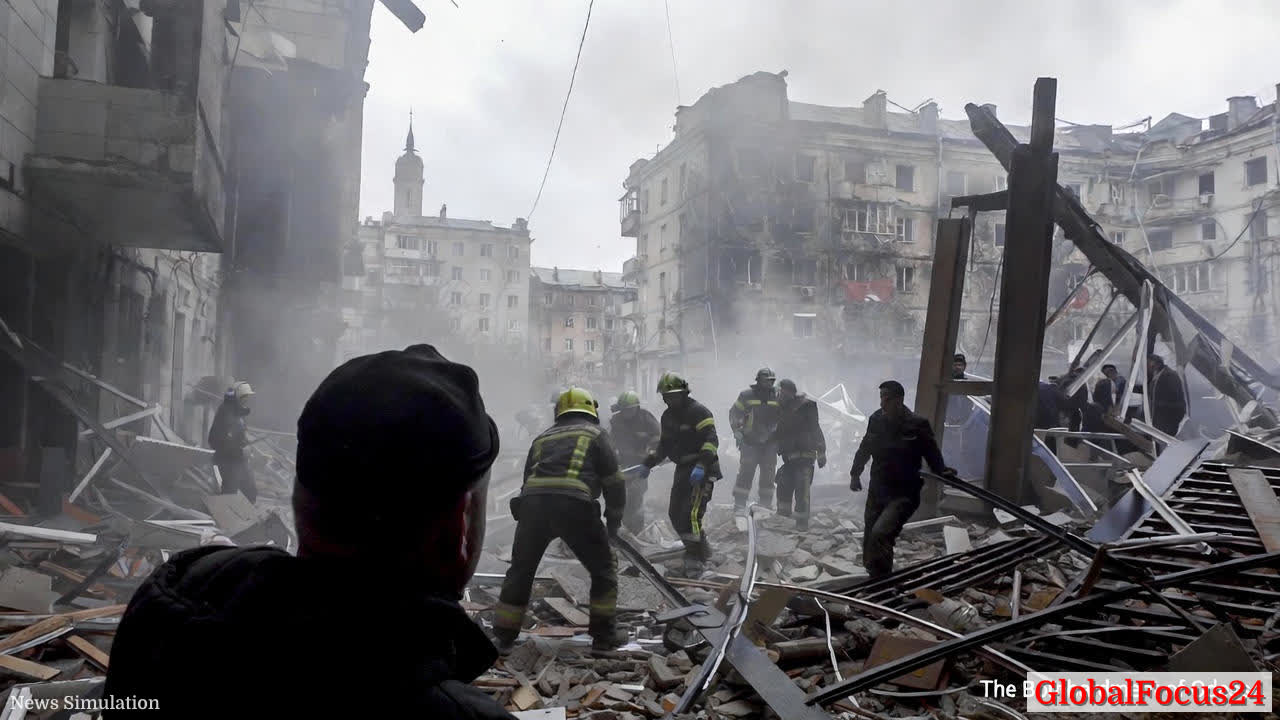
Black Sea Blitz: Why Odessa Feels the Heat of the War
Odessa, Ukraine’s port city on the Black Sea, has long stood as a gateway between Europe and Asia, a place where trade routes converge and cultures mingle. In recent weeks, its skies and streets have become a focal point of a broader conflict that stretches far beyond its shoreline. The intensified bombardment around Odessa has drawn international attention, not only for the immediacy of civilian danger but also for the broader implications for regional trade, energy security, and the resilience of Ukraine’s economy. As the city endures renewed shelling and heightened security measures, the surrounding region braces for ripple effects that could reshape economic activity across Eastern Europe.
Strategic Significance in a Corridor of Trade
Odessa’s enduring importance derives from its status as Ukraine’s principal seaport for grain and other bulk exports. The harbor’s capacity to move cereals, metals, and industrial goods to global markets has long tied Ukraine’s economic health to the efficiency of maritime corridors on the Black Sea. For neighboring economies, Odessa represents a key node in a supply chain that includes port facilities, rail connections, and trucking routes that link the interior to international markets. When the city experiences disruption, the effects are felt in shipping schedules, freight costs, and the reliability of export pipelines that European buyers rely on to maintain food and raw-material supply.
The city’s infrastructure — including terminals, grain elevators, and cargo handling facilities — is designed to support high volumes with relatively fast turnaround times. That efficiency translates into lower per-unit costs for exporters and more competitive pricing for buyers abroad. However, the ongoing violence creates a chilling effect: insurers reassess risk, shipping lines re-route to avoid danger, and customers in distant markets seek alternatives. In the near term, this can translate into delayed shipments, higher insurance premia, and a moderation of export volumes. In a longer horizon, sustained disruption could prompt diversification of supply chains toward other maritime routes or inland corridors, reshaping trade patterns across the region.
Economic Impact: Direct and Indirect Effects
The direct economic impact of intensified attacks on Odessa is most immediately felt in human and material costs: casualties, displacement, and damage to critical infrastructure such as port facilities, repair yards, and rail connections. Restoring operational capacity often requires substantial time and investment, with cascading effects on employment and local government finances. Beyond the immediate impairment, secondary effects ripple through national and regional economies. For Ukraine, Odessa’s port operations contribute to export revenues, foreign currency inflows, and the broader fiscal position that supports public services and reconstruction.
Indirect effects extend to commerce and industry in surrounding regions. Odessa’s role as a logistics hub helps keep downstream manufacturing and agriculture competitive by providing access to international markets. When port activity slows, producers face longer lead times, higher storage costs, and compressed margins. In industries that depend on imported components, even temporary disruptions can raise input prices and alter production schedules. Conversely, if security conditions allow, restored port operations can deliver a quick counterbalance by enabling resumed exports and imports, helping stabilize regional demand and employment.
Global markets also watch with keen interest. International buyers, insurers, and shipping lines weigh the risk of operating in or near contested areas. Availability of grains, metals, and construction materials from the region can affect global prices, particularly for commodities with tight supply dynamics. In the medium term, continued instability might incentivize procurement shifts toward alternative suppliers or ports, potentially redistributing global trade flows and elevating costs for certain goods.
Regional Comparisons: How Odessa Stacks Up
Odessa’s land-sea interface makes it a distinctive case study in regional logistics. Compared with other major Black Sea ports such as Constanța in Romania and Yuzhny (Pivdennyi) near Odesa in Ukraine, Odessa combines substantial grain-handling capacity with a broader set of intermodal links. Constanța, benefiting from a diversified hinterland andcloser integration with European road and rail networks, remains a critical alternative, albeit with its own exposure to regional risk. The stability and efficiency of these ports influence intra-regional competition for export markets and can shape prices for customers in the European Union, the Middle East, and North Africa.
In neighboring countries, ports on the Aegean and Mediterranean can provide alternative routes for Ukrainian exports, but longer voyages, differing tariff structures, and varying regulatory environments affect comparative costs. The decision calculus for shippers often includes security conditions, insurance availability, and the reliability of rail and road connections that feed these ports. Thus, while Odessa’s port complex is uniquely positioned to serve a broad range of export commodities, sustained disruption may shift volumes toward less exposed corridors, even if those routes carry higher logistical overheads.
Historical Context: Odessa Through the Years
Odessa’s modern significance has deep roots. Established in the 18th century as a cosmopolitan trading hub, the city has weathered wars, blockades, and shifting empires while maintaining its function as a gateway for goods and ideas. The 20th century brought industrial growth, rail expansion, and wartime upheavals that tested Odessa’s resilience. The city’s resilience is not merely a matter of brick and mortar; it reflects a long-standing social and commercial fabric built by communities that have navigated shortages, sanctions, and sanctions-related countermeasures.
The present moment sits within a longer arc of regional volatility. The Black Sea has repeatedly served as a channel for energy and agricultural trade, making its coastal cities especially sensitive to geopolitical shifts. Historically, security guarantees and international cooperation have underpinned maritime logistics in the region, enabling supply chains to adapt to changing political realities. When conflict escalates, it is the ordinary residents, workers, and small businesses who bear the brunt, even as governments and international organizations recalibrate risk and response strategies.
Resilience and Public Response
Communities in and around Odessa have shown remarkable resilience in the face of repeated disruptions. Local authorities, emergency services, and civil society organizations coordinate to safeguard civilians, reroute traffic, and prioritize crucial repair work. Public response often includes communal aid networks, temporary shelters, and initiatives to maintain basic services such as electricity, water, and healthcare in the hardest-hit districts. The resilience of the population is a driving force behind longer-term recovery, which depends on international support, reconstruction funding, and sustained confidence in the city’s ability to rebound.
From a macro perspective, investor and consumer confidence are closely tied to perceived stability in the region. Signals of sustained security and reliable logistics can attract back investment, encourage insurers to offer coverage at viable rates, and entice shipping lines to resume operations with reduced risk premiums. Conversely, persistent instability can lead to capital flight, higher borrowing costs, and slower domestic growth as businesses postpone expansion and hiring plans. The public mood in Odessa often blends urgency with pragmatic optimism—an acknowledgment of the city’s strategic importance and its stubborn ability to endure.
Policy and Security Considerations
The security environment around Odessa intersects with broader regional and international policy. National authorities face the challenge of protecting critical infrastructure while maintaining open channels for humanitarian aid, trade, and diplomatic dialogue. International partners monitor the situation for compliance with international humanitarian law, worker safety, and the protection of civilian life. In practical terms, this translates into fortified port facilities, enhanced surveillance, and contingency plans for rapid repair and redeployment of essential services.
From an economic policy viewpoint, maintaining export capacity is a priority. Ukrainian authorities, with support from international institutions, may pursue measures to accelerate port repairs, streamline customs processes, and secure dedicated logistics corridors that minimize bottlenecks. Insurance markets also play a role, as underwriters assess risk and price policies accordingly. Reducing downtime at the port system can help trigger a quicker economic recovery, supporting livelihoods and stabilizing regional demand for goods and services.
Regional Implications for Energy and Food Security
The security situation in Odessa intersects with energy and food security considerations across Europe. The region’s grain supplies have historically helped stabilize global food markets, particularly during periods of crop shortfalls elsewhere. Any disruption to export routes raises questions about supply adequacy and price volatility in grain markets, which can reverberate from local markets to global food chains. Energy security, while less directly tied to port operations, remains a critical piece of the regional puzzle. The Black Sea region is a corridor for energy transit through pipelines and, in some cases, shipping-related energy logistics. Instability can influence fuel prices and the reliability of infrastructure that supports industrial production, transport, and household energy needs.
Trade partners and neighbors watch closely for signs of stabilization or further escalation. European policymakers are particularly attuned to the balance between supporting Ukraine and maintaining stable energy and commodity markets for the broader region. The interdependencies among ports, rail networks, and inland waterways mean that even localized disruptions can have outsized effects on regional price levels and procurement strategies.
Looking Ahead: What Could Restore Normalcy?
Reestablishing normalcy in Odessa requires a coordinated mix of security assurances, rapid infrastructure repair, and targeted economic support. Short-term priorities include securing safe corridors for humanitarian aid, protecting critical port infrastructure from further damage, and ensuring that commercial traffic can move with minimal risk. In the medium term, repair and modernization of port facilities, rail links, and inland connections are essential to restore efficiency and resilience. Longer-term strategies may involve diversifying export routes, investing in regional diversification of supply chains, and strengthening regional cooperation to alleviate and manage risk.
International cooperation will likely remain a cornerstone of any recovery trajectory. Multilateral institutions and allied governments can provide technical assistance, financial support, and logistical expertise to accelerate rebuilding efforts and to help maintain trade flows during periods of tension. Transparent communication about risk, safety protocols, and contingency planning will be crucial to restoring confidence among shippers, insurers, and buyers.
Conclusion: A City at the Crossroads of War and Trade
Odessa’s experience in the current crisis underscores a broader truth about coastal economies at risk: their fortunes are tethered to both security and the smooth functioning of global supply chains. The city’s importance as a trade artery for Ukraine and its neighbors ensures that its fate will continue to matter for regional economic health and for the stability of European markets. As authorities work to protect lives and rebuild critical infrastructure, observers will pay close attention to how quickly port operations can resume, how insurance markets respond to ongoing risk, and how regional partners coordinate to sustain trade and livelihoods in a volatile environment.
Public sentiment in the region often blends concern with cautious optimism. Citizens remember the disruptions of the past while clinging to hopes for a return to normalcy that preserves the city’s role as a gateway for regional prosperity. The road ahead will require sustained effort, clear communication, and a shared commitment to keeping critical trade channels open even amid the unsettling realities of conflict. The resilience of Odessa, and the region it anchors, will be measured not only in steel and concrete but in the everyday lives of people who rely on its docks, rails, and roads to connect with the world.