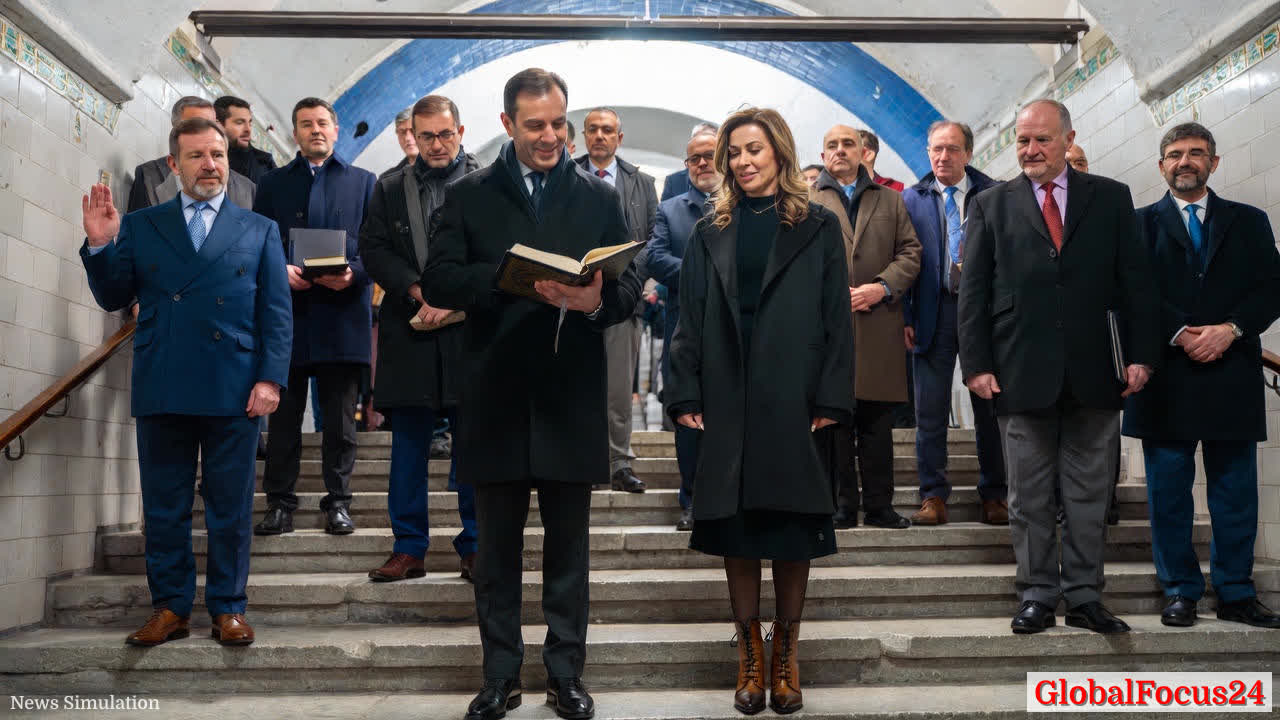
New Mayor Takes Oath at Historic Subway Station Ceremony, Signals New Era for City
In a striking midnigh t ceremony at a decommissioned subway station, the city marked a pivotal transition as the newly elected mayor took the oath of office. The event, quiet yet powerful in its symbolism, underscored a commitment to urban renewal, public safety, and economic resilience. The choice of venue—a century-old transit hub now repurposed as a civic stage—provided a poignant backdrop for policy ambitions aimed at reconnecting neighborhoods, revitalizing downtown activity, and strengthening the city’s role as a regional hub for commerce and culture.
Historical Context and Significance
The setting for the oath—a deserted staircase within a decommissioned subway station—was more than a dramatic stagecraft moment. It echoed decades of urban evolution, where transit infrastructure has repeatedly served as a barometer for growth and change. Historically, subway and rail systems have functioned as arteries of economic opportunity, linking workers with jobs, students with schools, and entrepreneurs with customers. As the city contends with shifting demographics, housing pressures, and the post-pandemic recovery, revisiting the symbolism of transit spaces is a nod to the city’s enduring reliance on efficient mobility to sustain its economic fabric.
The new mayor inherits a municipal framework shaped by prior administrations that navigated fiscal constraints, infrastructure backlogs, and evolving public expectations. The midnight oath, in particular, invoked a sense of urgency and continuity—an implicit statement that leadership must address latent challenges while positioning the city for long-term, sustainable growth. Observers note that the optics of the ceremony—minimalist attire, intimate attendance, and a focus on the oath itself—are consistent with a leadership style aimed at transparency, pragmatism, and stakeholder alignment rather than theatrical spectacle.
Economic Impact and Policy Implications
Urban economies hinge on a mix of infrastructure investment, small business vitality, and strategic zoning policies. The new administration’s early priorities will likely center on four interlocking pillars:
- Infrastructure modernization: Upgrading aging transit networks, streamlining project permitting, and leveraging federal and state funding opportunities to accelerate critical corridors. Modernized transit and pedestrian infrastructure can unlock new development near transit nodes, raise property values, and attract private capital.
- Public safety and service delivery: Investing in community policing, emergency response, and sanitation services to improve quality of life. Demonstrated reliability in municipal services can reassure residents and businesses, reducing volatility in neighborhoods that have experienced housing market fluctuations.
- Economic diversification: Encouraging flexible, low-barrier entrepreneurship in diverse districts, supporting small manufacturers, tech startups, and service sectors that complement the city’s core strengths, such as education, healthcare, and logistics.
- Fiscal discipline and resilience: Rebuilding reserve funds, improving procurement processes, and enhancing revenue predictability to weather economic shocks. A transparent budgeting approach often garners public trust and enables strategic investment planning.
Regional Comparisons and Benchmarking
While every city’s circumstances are unique, the new administration faces a common urban challenge: balancing growth with equitable outcomes. In similar metropolitan areas, cities that focused on transit-oriented development (TOD) and brownfield revitalization experienced faster employment gains near transit corridors, with modest increases in mixed-income housing to prevent displacement. By examining regional peers, the city can set measurable targets for job creation, transit ridership, and business formation in districts adjacent to major stations and corridors.
Another point of reference is regional capital flows. Cities that aligned capital expenditure with long-term plans across transportation, climate resilience, and digital infrastructure tended to attract higher private-sector investment. This is especially relevant for a city seeking to re-anchor its role as a logistics hub and a cultural destination, areas where public policy can leverage the city’s physical assets—historic stations, waterfronts, and cultural districts—to drive revitalization and competitiveness.
Public Reaction and Social Narrative
Public sentiment surrounding the ceremony reflected a city poised for transformation. Residents and business owners expressed cautious optimism, recognizing both the symbolism of the moment and the practical challenges of translating ceremony into measurable improvements. Community groups emphasized the importance of inclusive governance, urging the administration to prioritize affordable housing, climate resilience, and equitable access to opportunity.
The coverage of the event highlighted a broader public narrative about leadership style and accountability. The modest scale of the ceremony suggested a preference for substantive policy work over pageantry, a tone welcomed by residents who favor transparent, results-oriented governance. As the administration begins to outline its first 100 days, the messages anticipated include clear milestones for infrastructure projects, workforce development programs, and initiatives to bolster small businesses in downtown and surrounding neighborhoods.
Historical Context and Cultural Relevance
The choice of a historic staircase and a decommissioned transit facility taps into the city’s broader cultural memory. Transit stations, especially those with long civic histories, serve as shared spaces where generations intersect—teachers, workers, students, and families passing through daily life. By stepping into office in such a setting, the mayor’s administration aligns itself with the city’s heritage of public life as a shared enterprise, where municipal decisions ripple through everyday routines and long-term opportunities alike.
Sustainability and Climate Considerations
In urban governance, climate resilience is a central dimension of long-range planning. Investment in transit, energy-efficient buildings, and green public spaces can reduce emissions, improve air quality, and make neighborhoods more livable. The new administration’s approach to sustainability could emphasize energy-efficient retrofits, electrification of municipal fleets, and resilience planning for flood-prone areas. The integration of climate goals with economic development promises to create a cohesive strategy that benefits residents across income bands and neighborhoods.
Policy Implementation Framework
To translate the ceremony’s symbolism into living policy, the administration may implement a framework that includes:
- Clear performance metrics: Define key indicators for transportation efficiency, housing affordability, job creation, and small-business vitality, with regular reporting to the public.
- Stakeholder engagement: Establish public forums, neighborhood councils, and cross-agency task forces to ensure diverse voices inform decisions, particularly in historically underserved communities.
- Rapid-response funding: Create a mechanism to address urgent capital needs and provide seed funding for pilot projects, enabling swift experimentation and iteration.
- Transparency and accountability: Publish procurement data, project timelines, and budget updates in an accessible format to maintain public trust and foster accountability.
Long-Term Outlook and Potential Challenges
The path ahead involves navigating several potential hurdles. First, securing sustained funding for major capital projects is essential. Federal programs and state partnerships can provide critical support, but bureaucratic processes and political cycles can slow momentum. Second, housing affordability remains a pressing concern in many growing urban centers. Balancing density with livability requires thoughtful zoning, incentives for affordable units, and protections for existing residents. Third, ensuring inclusive growth calls for targeted workforce development, access to credit for small businesses, and programs that reduce barriers for entrepreneurs from historically marginalized communities.
As the city sets its course, observers will watch for the balance between ambitious infrastructure ambitions and practical, doorstep-level improvements. The new administration’s success will depend on translating high-minded ideals into concrete gains for residents: shorter commutes, safer streets, thriving storefronts, and a public realm that reflects the city’s diversity and dynamism.
Regional Economic Signals and Market Response
Investors and real estate developers will be keenly attuned to the administration’s signals. Predictable policy trajectories, combined with credible short-term wins—such as upgrades to critical transit corridors or streamlined permitting for redevelopment projects—can bolster confidence in the city’s growth prospects. A measured approach to public-private partnerships, with clear risk-sharing arrangements and performance-based milestones, is likely to attract capital while safeguarding public interests.
Workforce and Education Collaboration
Education and workforce development are integral to sustaining growth. Partnerships with local colleges, vocational schools, and industry groups can align training pipelines with labor market needs, particularly in construction, logistics, healthcare, and technology-enabled sectors. By connecting students and workers with apprenticeship programs and wage-supported training, the city can bolster upward mobility and reduce unemployment rates during transitional economic periods.
Civic Identity and Public Engagement
The ceremony’s nocturnal, intimate format contributed to a civic ambiance that emphasized service, accountability, and responsibility. As the administration rolls out its agenda, continued public engagement will be essential to building trust and securing broad-based support for transformative projects. Town halls, open data portals, and participatory budgeting initiatives can help residents see tangible results and understand how policy choices affect neighborhoods across the city.
Conclusion
The midnight oath at a historic transit site marks more than a ceremonial transition; it signals a deliberate pivot toward urban renewal grounded in infrastructure investment, inclusive growth, and fiscal resilience. By weaving historical memory with contemporary policy aims, the administration positions itself at the convergence of tradition and progress. As the city moves forward, the key test will be translating symbolic moments into practical outcomes: improved mobility, stronger local economies, safer streets, and a higher quality of life for residents across communities. The coming months will reveal how the new leadership translates resolve into results, and how the city’s storied transit heritage continues to inform a future defined by opportunity and shared prosperity.