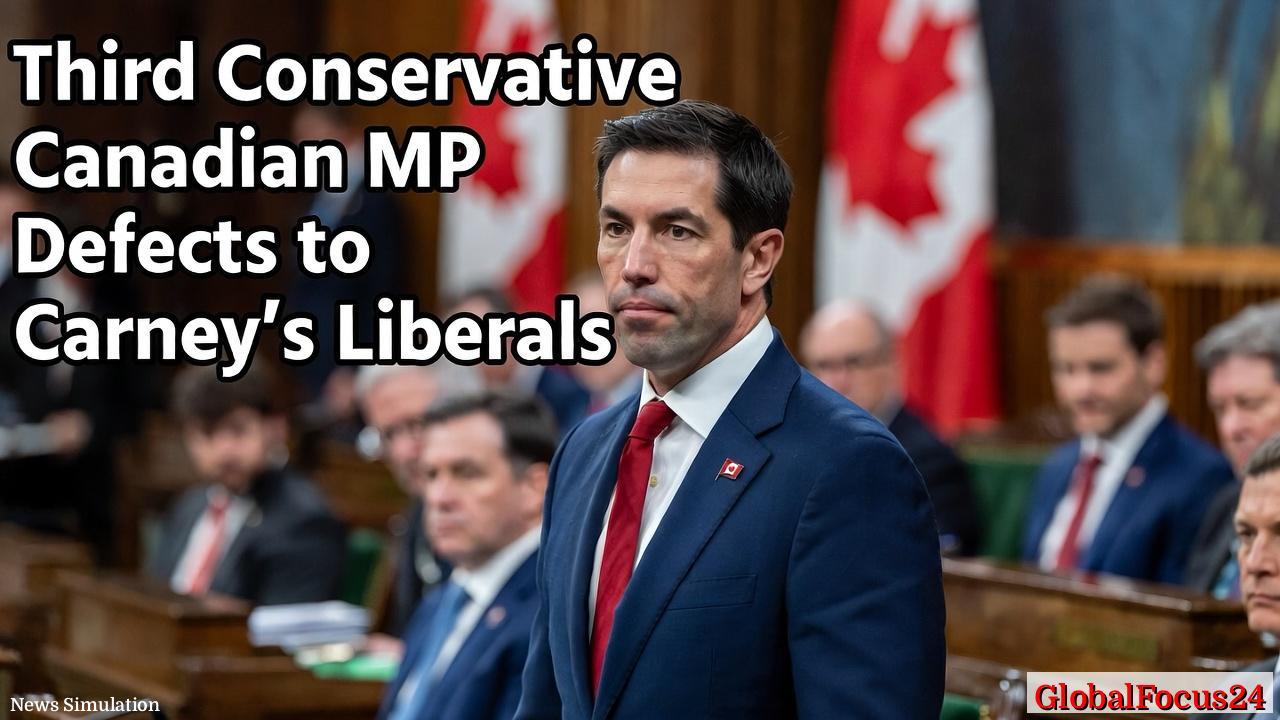
TORPEDOES OF PARTISAN SHIFT: LIBERALS GAIN A THIRD Conservative Defection in a Bid for Majority
A Conservative MP from Alberta has defected to Prime Minister Mark Carney's Liberal Party, marking the third such crossover in recent months and nudging the governing party closer to a parliamentary majority. Matt Jeneroux, who has represented Edmonton Riverbend since 2015, announced his move to the Liberal caucus, signaling a notable realignment in federal politics as the Liberals edge toward the 172-seat threshold needed for a majority government.
Context and trajectory of defections
- In the months leading up to Jeneroux’s decision, two other Conservative MPs—Chris d’Entremont of Nova Scotia and Michael Ma of Ontario—also crossed the floor to join Prime Minister Carney’s Liberal team. The pattern of defections has intensified strategic discussions within both major parties about floor tolerance, coalition dynamics, and the practicality of governing with a fragile minority.
- Jeneroux stated that the decision followed extensive discussions with his family, constituents, and colleagues, underscoring the personal and professional calculations lawmakers weigh when changing parties. He cited the resonance of Carney’s broader vision for an independent, middle-power stance in global affairs as a decisive factor in his move.
- The timing aligns with a broader political moment in which party leadership contends with fluctuating public sentiment, shifting regional priorities, and the operational realities of governing with a minority or near-minority mandate.
Implications for governance and parliamentary balance
- The Liberal vote share stands at 169 seats with Jeneroux’s addition, three short of a majority. The defections complicate the party’s ability to pass major legislation without courting cross-party support or relying on confidence-and-supply arrangements.
- Conservative leadership, led by Pierre Poilievre, has criticized the defections as strategic manipulation aimed at securing power through backroom deals. The leadership’s response reflects ongoing tensions over strategy, messaging, and the role of party cohesion in a shifting political landscape.
- The defections also catalyze questions about regional representation and policy alignment. With Alberta-based representation shifting toward a Liberal caucus, constituents may experience a recalibration of prioritization on energy policy, fiscal strategy, and regional economic development programs.
Economic and regional context
- The move arrives at a moment when energy markets, infrastructure priorities, and regional economic diversification are central to national policy debates. Alberta’s economic performance—grounded in energy production, natural resources, and technology-driven diversification—plays a pivotal role in shaping federal policy considerations, including trade, environmental standards, and investment incentives.
- Nationally, the Liberals’ ability to push through key initiatives could hinge on how MPs from different regions view balance between resource-based industries and broader climate and innovation agendas. The Jeneroux defection, in this light, is not only a political realignment but a signal about how regional voices are integrated into an executive-led agenda.
- For markets and investors, the evolving parliamentary arithmetic may influence expectations around fiscal measures, regulatory timelines, and the speed at which energy or infrastructure projects advance. Analysts typically monitor such shifts for potential policy stances that could affect funding, procurement, and project approvals across provinces.
Historical context and comparative perspective
- Floor-crossings have historically shaped minority governments and coalitions, often leading to tighter party discipline, renegotiated policy bargains, and recalibrated political narratives. In many democracies, similar defections have precipitated strategic compromises or the reevaluation of leadership mandates.
- In a comparative sense, regions with distinct economic portfolios—such as the Prairies’ energy sector versus coastal service industries—tend to influence party realignments. The Edmonton Riverbend seat, traditionally aligned with Conservative policy priorities, transitioning to Liberal representation, underscores the fluid nature of voter sentiment and the capacity for cross-party collaboration to emerge in response to national challenges.
Public reaction and media interpretation
- The defection has sparked a spectrum of reactions from constituents, pundits, and political observers. Proponents of the Liberal shift emphasize the potential for a more cohesive national strategy on trade, security partnerships, and middle-power diplomacy. They also point to Carney’s emphasis on resilience, independence, and international engagement as aligning with aspirational national goals.
- Critics, including Conservative supporters, argue that party-switching undermines the electoral mandate and erodes trust in the democratic process. They contend that defections dilute the accountability of MPs to their original constituents and shift policy directions without an explicit mandate from voters.
- Local constituents in Edmonton Riverbend may weigh the trade-offs between aligning with national liberal priorities and preserving a voice that previously championed regional needs. The dynamic highlights a broader tension: how much influence a single MP can exert when operating within a governing party that lacks a comfortable majority.
Policy areas likely to be influenced
- Economic resilience and diversification: With a focus on strengthening middle-power diplomacy and reducing susceptibility to economic coercion, policy discussions may emphasize diversified trade partnerships, investment in innovation, and resilient supply chains.
- Energy and resource policy: The Liberal approach may seek to reconcile resource development with climate objectives through balanced regulations, infrastructure investments, and potential subsidies or incentives designed to maintain competitiveness while advancing environmental goals.
- International relations and security: Jeneroux’s appointment as a special advisor on economic and security partnerships signals a continued emphasis on international engagement, strategic alliances, and the protection of national interests in a multipolar global order.
- Infrastructure and regional development: Federal priorities may include targeted funding for infrastructure, housing, and community development, particularly in urban centers like Edmonton and surrounding regions, while ensuring alignment with national growth objectives.
What this means for the upcoming political landscape
- The Liberals’ path to a solid majority remains precarious but plausible, contingent on continued floor support from independent MPs, other dissenting conservatives, or potential future defections. The current trajectory suggests a parliament characterized by careful negotiation, targeted cross-party collaboration, and a focus on achievable policy wins.
- For voters and local communities, the shifting allegiances may translate into new policy signals and funding prospects. MPs operating under a minority or near-minority government often prioritize constituency services, frontline economic initiatives, and pragmatic solutions that can attract bi-partisan backing.
- Analysts will watch closely how the party leadership manages internal cohesion, public messaging, and coalition-building efforts as they navigate legislative hurdles and public opinion ahead of by-elections and general elections.
Key figures and quotes
- Prime Minister Mark Carney praised Jeneroux as a strong voice in international engagement and parliamentary diplomacy, highlighting his appointment as a special advisor on economic and security partnerships. Carney emphasized a philosophy of ambition, collaboration, and sacrifice as essential to building a resilient nation.
- Matt Jeneroux framed his decision as one grounded in family considerations, constituent representation, and a belief in the Liberal vision for a diverse, independent foreign policy stance. He underscored the importance of sustained dialogue and practical cooperation at the national level.
- Conservative Leader Pierre Poilievre criticized the move as a strategic attempt to manufacture a majority through backroom deals, arguing that it betrays local expectations around affordability, safety, and a robust resource sector.
Parliamentary vacancy and by-elections
- The electoral landscape currently includes three vacant seats: two in the Toronto area, following the resignations of former Liberal ministers Chrystia Freeland and Bill Blair, and one in the Montreal area, which will be decided in a by-election after a razor-thin result. These vacancies add layers of complexity to parliamentary arithmetic and candidate selection in the near term.
- By-elections often serve as a barometer of public sentiment between general elections and can influence government stability, legislative momentum, and party strategies as they seek to consolidate or regain momentum in specific regions.
Broader regional comparisons
- Across Canada, regional responses to national policy shifts vary. In urban centers with high immigrant populations and diversified economies, sentiment may tilt toward pragmatic policy pragmatism and social policy balance. In resource-rich provinces like Alberta, policy alignment with energy and infrastructure priorities often carries pronounced weight in local political calculations.
- Comparisons with other parliamentary democracies reveal that party-switching events, while not routine, are a recognized feature of dynamic political systems. They can accelerate policy experimentation, redrawing of caucus alignment, and a more fluid approach to governance in environments where no single party holds an unassailable majority.
Conclusion
- The defection of a Conservative MP to the Liberal Party marks a significant moment in current Canadian federal politics. It intensifies the race toward a parliamentary majority, reshapes regional representation, and foregrounds debates about governance, policy direction, and the balance between regional priorities and national strategy.
- As the government navigates this new composition, stakeholders—from constituents in Edmonton Riverbend to regional industry leaders—will be watching closely how policy proposals evolve, how cross-party collaboration develops, and how the broader public responds to incremental shifts in political allegiance. The coming weeks and months will reveal whether these defections translate into durable policy gains or produce a more contentious, tightly contested legislative landscape.