Egypt’s New Capital Rising: A Desert Metropolis of Ambition and Risk
A Monumental Vision Taking Shape in the Sands
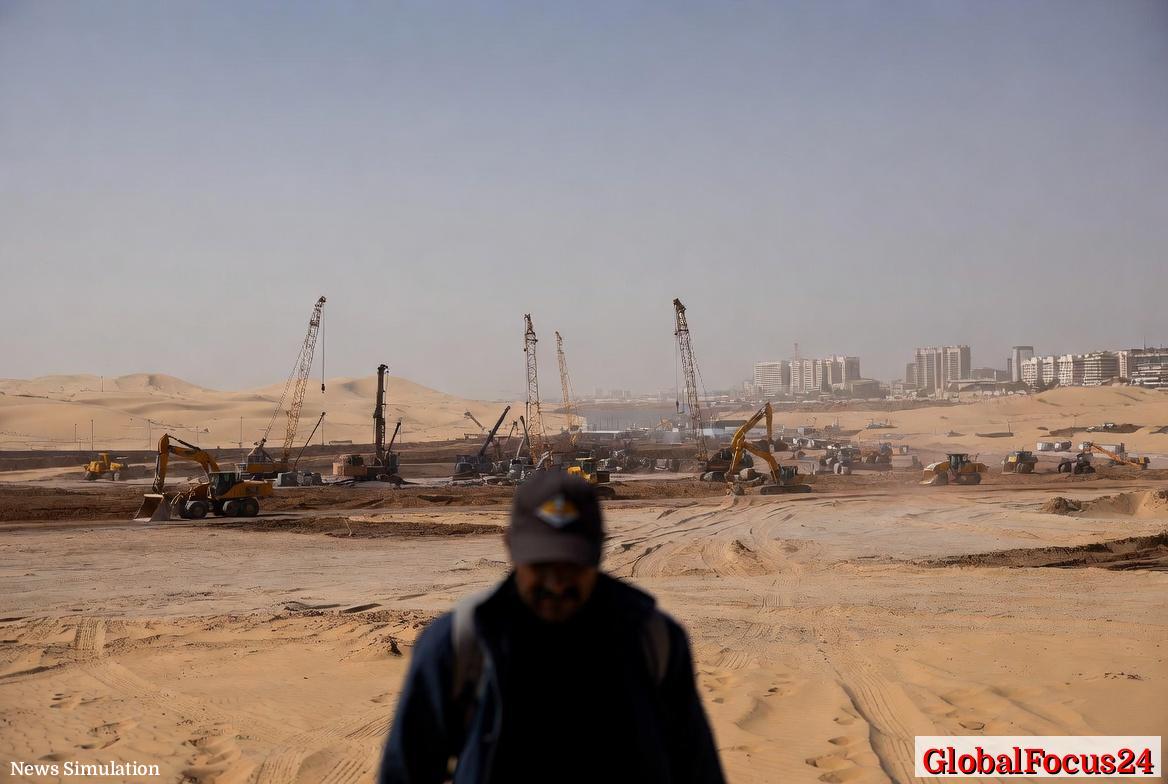
Amid the desert east of Cairo, cranes, scaffolding, and construction lights dot the horizon, signaling one of the most audacious urban projects in modern history. Egypt’s New Capital—stretching over 700 square kilometers—has entered its decisive phase under the direction of President Abdel-Fattah al-Sisi. Planned to eventually accommodate up to six million residents, this sprawling metropolis aims to redefine the geographic, administrative, and cultural heart of the nation.
The New Capital, once called the New Administrative Capital, has evolved from concept to partial reality over the past decade. Meant to ease Cairo’s chronic congestion and showcase Egypt’s resurgence, the development is a study in scale: relocated government ministries, a vast military command center, grand religious edifices, and a futuristic skyline capped by Africa’s tallest structure, the 393-meter Iconic Tower.
Historical Legacy of Egypt’s Urban Renewal
From Memphis to Thebes, Alexandria to Cairo, Egypt’s rulers have long demonstrated their authority through city-building. Each new capital reflected shifts in political power and national aspiration. The New Capital continues this tradition—positioning the country’s leadership as heirs to millennia of pharaonic city planning while embracing modern notions of sustainability and technology.
Just as Cairo was commissioned in the 10th century as a new seat of power, today’s project reflects a familiar historical rhythm: a leader seeking to create order from urban sprawl, reclaiming land for posterity. Yet while ancient capitals rose from Nile floodplains, the current endeavor transforms raw desert into livable terrain, relying on advanced engineering and imported materials to sustain life far from the river’s banks.
The Architectural and Cultural Showcase
At its center, the New Capital furnishes Egypt with a striking architectural tableau meant to symbolize national pride and global stature. The government district radiates symmetry, its axis anchored by parliament and ministerial complexes, while the presidential palace—with its white pyramid roof—stands within manicured grounds framed by obelisks and palms.
Religious landmarks dominate attention. The Cathedral of the Nativity of Christ, now hosting Christmas services, is the largest in the Middle East. Facing it across grand plazas, the Al-Fattah al-Aleem mosque accommodates up to 17,000 worshippers, blending contemporary forms with motifs referencing ancient Egyptian geometry. Together they project an image of unity and modern tolerance.
Complementing these are cultural and educational hubs: an opera house, a museum chronicling Egypt’s historic capitals, campuses of international universities, and Knowledge City—a technology and innovation zone designed to attract global partnerships. Within this, Egypt aims to position itself as a regional leader in digital transformation, offering incentives for tech investors and fellowship programs for startups.
Smart City Infrastructure for a New Era
Beyond symbolism, the New Capital functions as a testing ground for advanced urban governance. Equipped with 6,000 AI-assisted surveillance cameras, the city integrates traffic flow algorithms, facial recognition for security, and digital grid monitoring for utilities. Officials describe it as Egypt’s first “smart city,” where data systems underpin public administration, security logistics, and emergency response.
A concrete artery of greenery—the 35-kilometer park corridor known as the Green River—runs through the heart of the city. Partly planted to date, the landscaped ribbon promises shaded promenades, bike routes, and artificial lakes. It serves not only as a recreational centerpiece but as a climate mitigation effort, lowering local temperatures and creating oases within the urban heat of the desert.
Economic Promise and Financial Strain
Despite its physical grandeur, financial challenges have shadowed the project from inception. Estimates of total cost have varied widely, but most analysts concur that Egypt’s debt burden, growing inflation, and currency volatility have complicated funding flows. The government expects private investment and real estate sales to sustain development, yet investor confidence remains mixed.
Many economists regard the New Capital as both a stimulus and a strain—generating jobs across construction, transport, and services, while testing national liquidity in a fragile economic period. Over the past decade, Egypt’s real estate sector has become a primary engine of GDP growth; however, the risk of oversupply looms. Luxury apartments and corporate towers may remain unoccupied unless pricing aligns with public incomes.
The intentional decentralization—relocating ministries and bureaucracies—does create long-term cost efficiencies and could spark secondary growth in logistics, tourism, and technology industries. But in the short term, with large swathes still empty and weekend avenues nearly deserted, the question persists: will the population come quickly enough to sustain its infrastructure?
Regional Comparisons and Global Parallels
Egypt’s desert capital is part of a global pattern of monumental relocations and planned cities. Abuja in Nigeria, Brasília in Brazil, and Naypyidaw in Myanmar stand as precedents—ambitious attempts to redistribute administrative weight away from overcrowded legacy capitals. These projects, though visionary, often endured decades of slow occupancy and complex financing.
Abuja succeeded only after Nigeria’s public sector relocated en masse. Brasília became a cultural icon but struggled initially with isolation and affordability. Similarly, the New Capital must reconcile symbolic power with the practical need for vibrant, self-sustaining communities. Without organic migration and economic activity, planned cities risk becoming architectural showcases rather than functioning urban ecosystems.
Regionally, Egypt’s initiative invites comparisons with Gulf megaprojects such as Saudi Arabia’s NEOM and the United Arab Emirates’ Masdar City. Both emphasize high technology, sustainability, and futuristic living. While Cairo’s new counterpart adopts similar themes—smart systems, renewable infrastructure, green spaces—it also contends with Egypt’s more modest fiscal environment and demographic pressures.
Public Reaction and Shifting Identity
Across Egypt, sentiment toward the New Capital reflects a blend of pride, curiosity, and skepticism. Students commuting to university campuses describe the area’s vastness as awe-inspiring yet eerie, with incomplete neighborhoods surrounded by unending highways. Vendors and small contractors note opportunities in supply chains, while ordinary citizens question affordability and accessibility.
The relocation of government workers marks a tangible milestone. Thousands of bureaucrats have transferred to gleaming offices, leaving Cairo’s aging buildings behind. Yet for these employees, commuting logistics remain daunting, as mass transit options are still scaling up. New high-speed rail links and electric buses are planned to ease the connection between Cairo and the New Capital—an essential condition for integration.
Environmental Challenges and Sustainability Goals
Transforming desert terrain into a thriving city is not only an architectural endeavor but a climatic one. Water supply, waste management, and heat mitigation pose ongoing challenges. Authorities have pledged to build extensive solar arrays to power municipal facilities, aiming to offset carbon output and reduce dependency on fossil fuels. The city’s design emphasizes walkability and electric transport, but environmental critics stress the difficulty of maintaining greenery and lakes under desert conditions.
Long-term sustainability will depend on how Egypt balances growth with resource stewardship. Lessons from desert cities such as Dubai and Riyadh suggest the need for efficient recycling systems and calculated urban density to prevent overextension. The Green River’s development may play a central role in achieving this, serving both as an ecological backbone and urban organizing principle.
A National Symbol in the Making
Whatever its economic and logistical hurdles, the New Capital stands as a potent emblem of national ambition. Its construction signals Egypt’s desire to demonstrate resilience and modernization after years of political upheaval and economic uncertainty. The skyline—rising with steel and glass monuments—represents not just administrative reform but a statement of Egypt’s ability to reimagine its future.
For visitors approaching from Cairo, the journey eastward feels like moving through eras: from medieval alleys to expressways, then into vast boulevards where architecture meets desert silence. The Iconic Tower gleams against the horizon, a declaration of permanence amid shifting sands.
What Lies Ahead
The coming years will determine whether Egypt’s New Capital matures as a living city or remains a visionary blueprint. Urban planners forecast continuous development into the 2030s, with expanded housing, transportation, and commercial zones. Technological partnerships and cultural institutions are expected to attract international interest and conferences, potentially reshaping Egypt’s image as both a heritage and innovation hub.
Yet the underlying question persists—whether the city’s economic ecosystem can sustain itself beyond symbolic gestures. If successful, it could relieve Cairo’s population pressure, diversify the economy, and redefine Egypt’s role in regional leadership. If not, the sprawling desert metropolis may become a cautionary tale of ambition outpacing resources.
For now, the cranes still turn and lights still burn late into the night across miles of sand. Egypt’s most ambitious modern project continues to rise—a city that is both a testament to vision and a test of endurance.