Israeli Military Readies for Renewed Conflict After Collapse of Iran Ceasefire Talks
Rising Tensions in the Middle East as Ceasefire Ends
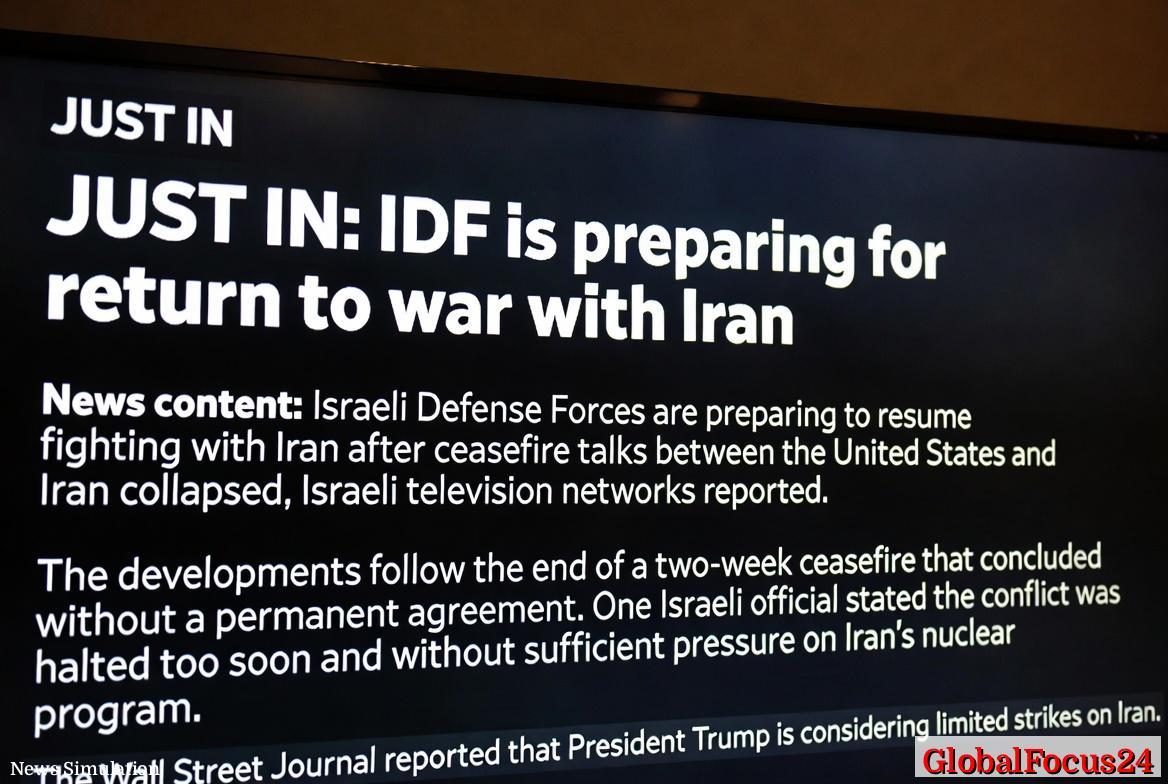
The fragile ceasefire between Israel and Iran has unraveled after two weeks of negotiations failed to achieve a lasting agreement, according to Israeli television reports. Military officials said the Israel Defense Forces (IDF) are preparing to resume operations amid concerns that Iran continues to advance its nuclear capabilities. The breakdown follows days of high-level diplomatic engagement led by the United States, aimed at curbing escalation and achieving a longer-term truce.
One senior Israeli official described the halt in fighting as “premature,” emphasizing that Tehran faced insufficient pressure to halt its nuclear program or reduce proxy activity in the region. With both sides now signaling readiness for renewed confrontation, the region faces a period of uncertainty while international partners attempt to reinstate dialogue.
Background of the Ceasefire Agreement
The temporary ceasefire, brokered in late March, was intended to allow humanitarian relief and assess opportunities for broader diplomatic cooperation. Washington intervened heavily in the effort, hoping to prevent a wider conflict that could destabilize the Gulf region and global energy markets. However, negotiators reported a sharp divide over the conditions for future talks — particularly regarding Iran’s uranium enrichment levels and Israel’s military posture on its northern border.
Diplomatic observers noted that Iran’s leadership insisted on easing economic sanctions before agreeing to further nuclear restrictions. Israel, meanwhile, maintained that any truce must include verifiable dismantling of Iranian military infrastructure across Syria and Lebanon. These irreconcilable positions ultimately ended prospects for immediate peace, leading Israeli defense planners to shift their focus back to operational readiness.
Historical Context of the Israel-Iran Rivalry
Tensions between Israel and Iran have simmered for decades, rooted in ideological, strategic, and security rivalries. Since the late 1970s, following Iran’s Islamic Revolution, Tehran has opposed Israel’s existence and supported militant groups that pose ongoing threats near Israeli borders. Over time, the struggle has evolved beyond rhetoric into a multifaceted proxy war, encompassing cyber operations, surveillance, and regional influence campaigns.
The nuclear dimension intensified after the early 2000s, when Western intelligence agencies began monitoring Iran’s clandestine enrichment activities. International efforts to restrain Iran’s nuclear ambitions led to the 2015 nuclear agreement, known formally as the Joint Comprehensive Plan of Action (JCPOA). While that deal briefly eased tensions, subsequent U.S. withdrawal in 2018 reignited hostilities and triggered a spiral of retaliatory incidents, including covert strikes across Syria and Iraq.
For Israel, the perceived existential threat posed by a nuclear-capable Iran has become a cornerstone of national defense policy. The country has invested heavily in intelligence, air strike capabilities, and regional alliances aimed at countering Iranian expansionism. The current situation — returning to military escalation after stalled diplomatic intervention — reflects decades of cyclical conflict shaped by mistrust and strategic competition.
U.S. Role and Strategic Calculations
Washington remains a central actor in the unfolding crisis. According to reports, President Trump is considering limited military strikes targeting Iranian assets, in response to Tehran’s renewed uranium activity and regional provocations. Such actions, analysts suggest, would mark a calibrated escalation designed to deter aggression without provoking a full-scale war.
Diplomatic insiders warn, however, that targeted operations could still draw retaliation across multiple fronts. Iran retains close ties with Hezbollah in Lebanon and militias in Iraq and Syria, which could be mobilized to strike Israeli or U.S. interests. The Pentagon has increased surveillance and naval patrols in the Persian Gulf, anticipating possible disruptions to oil shipping routes that supply much of the global energy market.
American financial markets and energy analysts are already reacting to the uncertainty. Oil futures have risen modestly, reflecting potential risks to supply stability. The deteriorating outlook also threatens to complicate broader U.S. foreign policy objectives in the Middle East, where balancing deterrence with diplomacy has remained an enduring challenge.
Economic and Regional Implications
Beyond security considerations, renewed military activity threatens to ripple across regional economies. Israel’s trade and tourism sectors, which benefited from a brief respite during the ceasefire, face possible disruptions as officials elevate threat alerts and recall reserve forces. Iran, still burdened by sanctions, could experience additional economic strain if new restrictions or strikes further hamper exports.
Neighboring states are monitoring developments closely. Jordan and Egypt, both of which maintain formal peace agreements with Israel, have reinforced border security and opened communication channels with Western diplomats. Gulf nations such as Saudi Arabia and the United Arab Emirates, wary of Iranian influence, have echoed calls for restraint but also signaled solidarity with Israeli defense measures. The competition for control over trade corridors, energy infrastructure, and maritime access underscores that the fallout from renewed hostilities will not remain confined to military fronts alone.
From a global perspective, the timing is especially sensitive. International recovery from recent economic shocks depends in part on stable oil prices and uninterrupted shipping through the Strait of Hormuz — a narrow passage critical to nearly 20 percent of world petroleum trade. Any escalation near that region could trigger price spikes and exacerbate inflationary pressures already felt in Western economies.
Public Sentiment and National Response
Inside Israel, the mood is tense but resolute. Many citizens view the breakdown of talks as confirmation that temporary truces offer little security without concrete disarmament measures. Local news coverage highlights the IDF’s readiness drills, while commentators debate how far Israel should go in responding to perceived threats without sparking a wider war.
In Iran, official media portrays the situation as foreign provocation, emphasizing sovereignty and national resilience. Iranian military units have reportedly increased deployments to key border regions and missile sites, signaling readiness for potential confrontation. Ordinary citizens, however, express fatigue with continued uncertainty. Inflation remains high, and renewed conflict could deepen hardship in an economy already struggling under heavy sanctions and limited foreign investment.
Regional analysts indicate that while neither side appears eager for all-out war, domestic pressures and mutual distrust narrow the available paths to de-escalation. Miscalculations — whether through airspace incursions, misidentified targets, or retaliatory cycles — could spark a larger conflagration that regional powers would struggle to contain.
Lessons from Past Conflicts
Historical precedents offer cautionary guidance. Previous confrontations between Israel and its adversaries, particularly in Lebanon and Gaza, have demonstrated that swift escalations can produce prolonged humanitarian crises. Civilian populations often bear the brunt of disrupted infrastructure, displaced communities, and damaged economies. For this reason, humanitarian organizations are already mobilizing contingency plans to provide aid should violence resume in earnest.
Experts in conflict resolution stress that long-term stability depends on sustained diplomatic engagement built on verifiable commitments. The pattern of short-term ceasefires, followed by high-intensity clashes, underscores that neither military victory nor coercive sanctions alone can produce enduring peace. Instead, a more inclusive regional framework — incorporating moderate Arab states and multilateral guarantees — could help mitigate future flare-ups.
Outlook and Strategic Forecast
Although negotiations have collapsed for now, diplomatic channels remain partially open. U.S. envoys are expected to consult with European allies and regional partners to formulate new proposals aimed at reviving dialogue. Israel continues to emphasize deterrence, yet officials privately acknowledge the necessity of international coordination to prevent escalation into a broader war that could engulf multiple borders.
Defense analysts predict that if hostilities resume, the next phase may involve limited precision strikes rather than extensive ground operations. Israel’s strategy historically relies on rapid air campaigns to degrade adversary capabilities before pursuing ceasefire renewal on more favorable terms. Iran, conversely, is expected to leverage asymmetric tactics, including cyber operations and proxy actions, to avoid direct confrontation while maintaining pressure.
As of now, the world watches with growing concern. The collapse of ceasefire efforts has injected renewed volatility into an already fragile regional balance. Whether diplomacy can reassert itself before missiles do remains uncertain — but the coming weeks will likely determine whether the Middle East heads toward reconciliation or another cycle of costly conflict.