Iran’s Toll Plan for Strait of Hormuz: Economic Prospects and Regional Implications
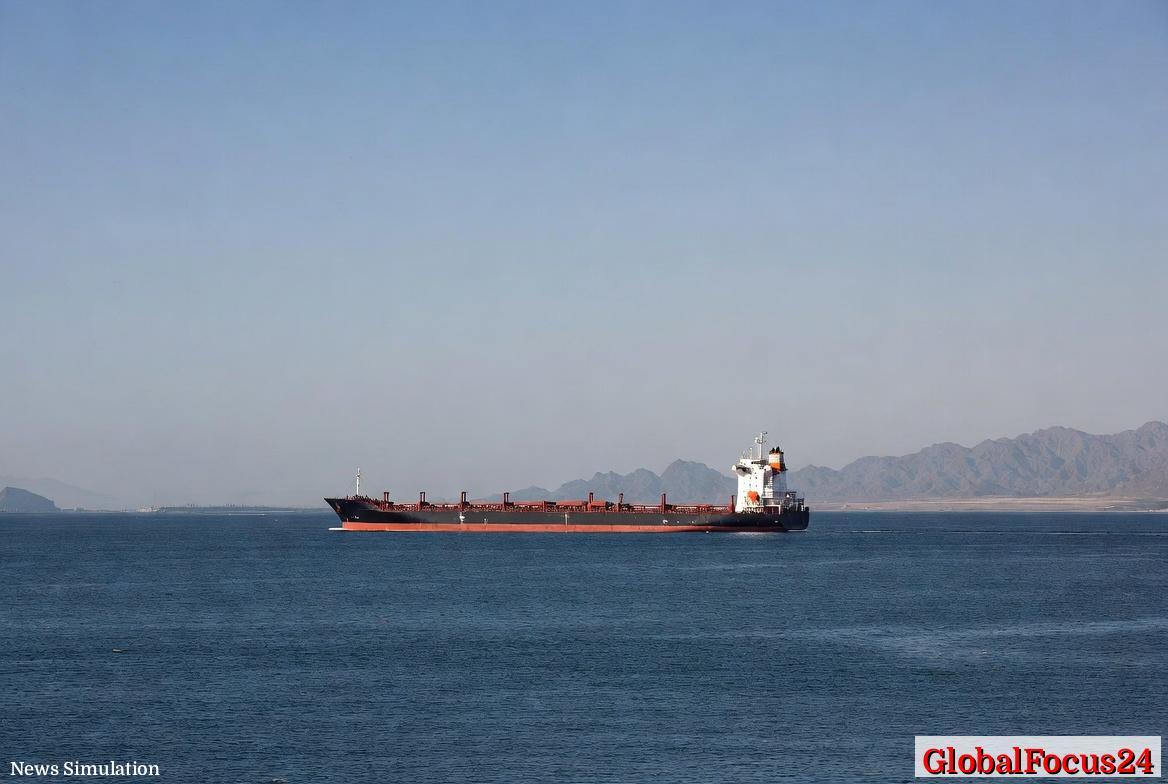
A new toll framework for ships transiting the Strait of Hormuz is reshaping how disruptions in the Persian Gulf could ripple through global energy markets. After a ceasefire ended a period of intense conflict, Iran began charging transit fees for vessels moving between the Persian Gulf and the Arabian Sea. With the Strait carrying roughly one-fifth of the world’s oil and liquefied natural gas (LNG), the toll system promises substantial revenue while raising questions about security, insurance, and regional trade flows.
Historical Context: From Free Passage to Fees For decades, the Strait of Hormuz has been a critical chokepoint in global energy logistics. While shipping lanes operated under the hood of customary international practice and military risk management, the costs and risks of transit have always been embedded in tanker routing choices. The recent ceasefire and subsequent toll framework mark a notable shift from a period when energy transit was largely treated as a low-friction logistics corridor, to a scenario where a coastal state asserts a direct economic stake in international routes passing through its waters.
The toll arrangement, initially deployed on a limited scale after the conflict’s ceasefire, leverages the strategic leverage Iran holds over one of the world’s busiest maritime arteries. By tying fees to ship type, cargo, and other conditions, the regime seeks to monetize the ongoing stability in the waterway while maintaining a degree of predictability for international shippers. The emergence of payments in multiple currencies—including traditional reserves like the yuan and, in some cases, cryptocurrency—signals an openness to diverse settlement methods, even as it underscores the evolving role of technology and finance in maritime logistics.
Economic Impact: Toll Revenue as a New Energy-Trade Variable If the toll system remains sustained, the direct revenue from oil tankers could reach roughly $20 million per day, translating to about $600 million per month. LNG shipments could push monthly totals higher, potentially surpassing $800 million when broader volumes are included. These figures position the Hormuz tolls as a meaningful new revenue stream for Iran, with implications for national budgets, public investment, and financial planning in a volatile regional environment.
The broader economic implications extend beyond the collecting state. For shipowners, freight forwarders, and oil traders, transit fees add another layer of cost to global energy pricing and supply-chain risk assessments. Importantly, tolls could influence shipping patterns: higher transit costs may incentivize diversions, slower routes, or longer voyage times when alternative routes or insurance structures are available. In this sense, the toll regime interacts with existing risk management practices, including war risk insurance, bunker costs, and port handling charges, potentially affecting the relative competitiveness of Hormuz versus alternative routes.
Regional Comparisons: Hormuz vs. Other Strategic Waterways Hormuz sits in contrast to other major chokepoints where states exert control or face security costs that ripple through global markets. For example:
- The Bab el-Mandeb and Suez Canal corridors also carry significant strategic and financial weight, but governance structures and enforcement mechanisms differ, with canal authorities and multilateral guarantees shaping costs and access.
- The Malacca Strait remains highly sensitive to regional security dynamics and insurance premiums, influencing the total landed cost of goods for many Asian markets.
- In geopolitical terms, Hormuz’s leverage combines proximity to major oil exporters with a high concentration of oil and LNG volumes, which can magnify revenue potential while also heightening vulnerability to supply disruptions or escalations.
In this context, Iran’s tolls create a new equilibrium among shipping costs, energy prices, and regional influence. If the regime’s charges remain predictable and legally anchored in a future peace framework, international traders may adapt by incorporating Hormuz transit costs into benchmark pricing and risk premiums. Conversely, if fees prove volatile or subject to abrupt policy shifts, transits might be rerouted through alternative corridors, altering global flows and shaping energy-market expectations.
Operational and Logistical Considerations Key questions arise as operators adjust to toll-based transit:
- Compliance and permitting: Iran’s proposal to require permits and licenses through a coordinated protocol with Oman could formalize transit rights, enabling smoother passage while enabling state oversight. This may reduce informal risk but adds administrative steps for carriers.
- Settlement mechanisms: The use of multiple currencies for payments highlights a pragmatic approach to cross-border finance, yet could complicate treasury and accounting for shipowners and charterers. Banks and payment providers will need to accommodate fluctuating exchange rates and settlement timelines.
- Insurance and risk management: Higher transit costs, combined with potential security risks in volatile maritime environments, may influence insurance premiums and coverage terms. Insurers could adjust rates based on perceived risk, while shippers may pursue alternative routes or load-port strategies to manage overall risk exposure.
- Operational flexibility: The need to obtain permits and navigate bureaucratic processes could introduce deployment lags. Shippers may hedge by scheduling backups, diversifying routes, or pre-negotiating terms with insurers and freight forwarders.
Public Reaction and Global Perception Public sentiment around Hormuz tolls tends to reflect the broader energy-security narrative: governments and industries value stable energy flows, while communities and consumers watch for price implications. If toll revenues translate into broader public investment or stabilization measures within Iran, domestic perceptions may turn more favorable toward maintaining the ceasefire and the terms of transit. On the international stage, market participants will monitor how the toll regime interacts with continental energy strategies, especially in regions heavily reliant on Gulf energy exports.
Implications for Energy Markets
- Price dynamics: The tolls add a recognized cost to shipping hydrocarbons through Hormuz, potentially contributing to marginal increases in energy prices if carriers pass costs through to buyers. Yet, if the regime yields predictable revenues and stable access, markets may price in the certainty of continued supply, mitigating upside volatility.
- Supply resilience: The toll framework could influence how traders assess the resilience of energy supply chains. A formal permit regime with predictable fees may encourage more systematic risk management, whereas abrupt changes or disputes could trigger short-term volatility.
- Regional energy diplomacy: The toll arrangement intersects with broader regional energy diplomacy, potentially shaping negotiations around transit rights, maritime security guarantees, and investments in regional energy infrastructure.
Timeline and Next Steps
- Short term: The toll system in its initial phase is testing the administrative machinery needed to manage transit fees, permits, and settlements. Market participants will be watching for clarity on permit issuance, fee schedules, and payment methods.
- Medium term: If the protocol with Oman and similar arrangements with other littoral states become established, the framework could stabilize, allowing more predictable transit costs and enabling fuller integration into energy pricing models.
- Long term: The toll regime could become a foundational element of an enlarged peace-and-transit accord, linking maritime commerce with security guarantees, economic agreements, and regional development initiatives.
Tecnical and Legal Considerations
- International law: The enforcement of transit fees on a major international waterway must be aligned with customary international law and any relevant bilateral or multilateral treaties. Clear legal grounding is essential to minimize disputes over jurisdiction and enforcement.
- Revenue management: Transparent accounting, auditing standards, and independent oversight could bolster legitimacy and reduce the risk of leakage or misallocation of funds. A formal governance framework would be important for long-term credibility.
- Environmental and safety standards: Any expansion of maritime traffic prompts attention to environmental stewardship and safety compliance. The toll regime should be integrated with international maritime standards to ensure safe and responsible navigation.
Historical Comparisons: Lessons from Similar Revenue Models
- Other chokepoints have experimented with user-based fees in different contexts, highlighting how revenue models interact with security costs, international law, and market expectations. The Hormuz approach stands out for its potential scale given the volume of energy shipments and the strategic importance of the route.
Conclusion: Navigating a New Maritime Economics Era The Hormuz toll system represents a consequential development in the economics of global energy transit. By monetizing passage through one of the world’s most critical maritime channels, Iran taps into a substantial revenue stream while contributing to a framework that could stabilize or reconfigure regional energy flows. The ultimate success of this model will depend on how well it integrates with international law, how smoothly permitting and payments operate, and how market participants incorporate transit costs into energy pricing and risk management strategies. As the world continues to rely on steady energy supplies, the Strait of Hormuz remains a focal point where security, diplomacy, and commerce converge in a high-stakes global supply chain.