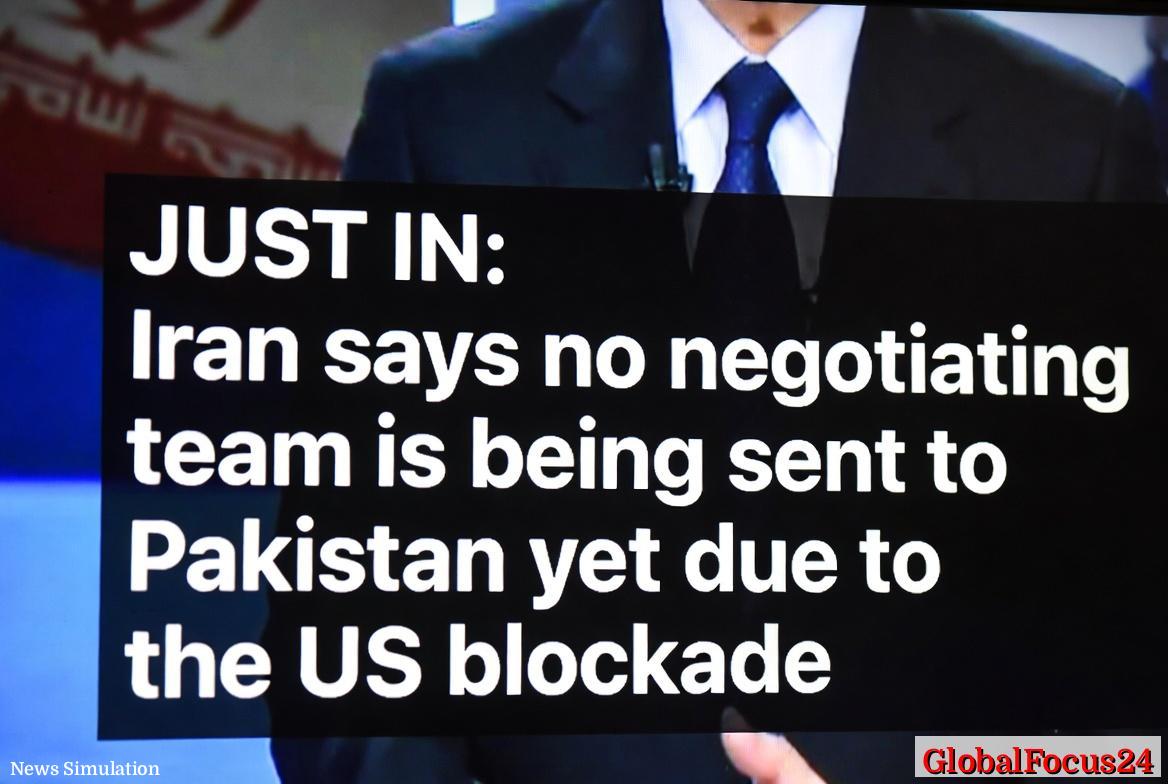
Iran Declines Pakistan Negotiation Visit Amid U.S. Blockade Tensions
Rising Strains Shape Regional Diplomacy
Iran has announced it will not send a negotiating delegation to Pakistan at this time, citing complications tied to the ongoing U.S. blockade and its broader impact on regional mobility and diplomatic coordination. The decision underscores the growing strain on diplomatic channels across South and West Asia, where economic pressures and geopolitical constraints are increasingly influencing bilateral engagement.
Officials in Tehran indicated that logistical and strategic concerns linked to restricted transit routes and financial limitations under current sanctions have made it impractical to proceed with planned talks. While no official timeline has been set for rescheduling, the move signals a pause in what had been anticipated as a significant round of discussions between the neighboring countries.
Pakistan has yet to formally respond with a revised framework, though analysts expect Islamabad to seek alternative avenues for maintaining dialogue, including remote negotiations or third-party facilitation.
Historical Context of Iran-Pakistan Relations
Iran and Pakistan share a long-standing relationship rooted in geography, trade, and mutual security interests. Since Pakistan’s independence in 1947, the two nations have maintained diplomatic ties marked by cooperation in energy, border security, and regional stability initiatives.
Economic collaboration has been a cornerstone of the relationship. One of the most notable projects is the proposed Iran-Pakistan gas pipeline, often referred to as the “Peace Pipeline.” First conceptualized in the 1990s, the pipeline was intended to deliver Iranian natural gas to Pakistan’s energy-hungry markets. However, progress has been repeatedly stalled due to international sanctions on Iran, financing challenges, and shifting political dynamics.
In recent years, both countries have sought to strengthen cross-border trade, particularly in border provinces such as Iran’s Sistan-Baluchestan and Pakistan’s Balochistan. These regions, while rich in cultural ties, face economic underdevelopment and security concerns, making bilateral cooperation critical for local stability.
Impact of U.S. Blockade Measures
The U.S. blockade, part of a broader sanctions regime targeting Iran’s financial and energy sectors, has significantly constrained Tehran’s ability to engage in international commerce and diplomacy. Restrictions on banking systems, transportation networks, and trade logistics have complicated even routine diplomatic engagements.
For Iran, organizing overseas delegations now involves navigating a complex web of limitations, including restricted access to international payment systems and limited availability of direct transportation routes. These constraints have made in-person negotiations more difficult, particularly in regions where alternative infrastructure is limited.
Pakistan, while not directly subject to the same level of sanctions, faces its own challenges in maintaining economic ties with Iran. Financial institutions in Pakistan must carefully navigate compliance requirements to avoid secondary sanctions, often leading to delays or cancellations in bilateral projects.
The current situation illustrates how sanctions regimes can have ripple effects beyond their intended targets, influencing diplomatic relations and economic cooperation across entire regions.
Economic Implications for Both Nations
The postponement of negotiations comes at a time when both Iran and Pakistan are grappling with significant economic pressures. Iran continues to face high inflation and limited access to global markets, while Pakistan is managing external debt obligations and seeking to stabilize its economy through structural reforms.
For Iran, expanding trade partnerships with neighboring countries is seen as a vital strategy to mitigate the impact of sanctions. Pakistan represents a key partner in this effort, offering access to South Asian markets and potential transit routes for goods and energy exports.
Pakistan, on the other hand, has a strong interest in securing affordable energy supplies. Chronic energy shortages have long hindered industrial growth and economic development. Access to Iranian natural gas could help alleviate these constraints, making the stalled pipeline project a focal point of economic discussions.
The delay in negotiations may slow progress on such initiatives, potentially affecting investment confidence and regional trade flows. Businesses operating near the Iran-Pakistan border, particularly in informal trade sectors, may also feel the immediate impact of reduced diplomatic engagement.
Regional Comparisons and Broader Dynamics
The situation between Iran and Pakistan reflects a broader pattern across the region, where geopolitical tensions and sanctions are reshaping traditional alliances and trade routes.
In comparison, Iran has maintained active diplomatic and economic engagement with countries less constrained by U.S. sanctions, such as China and Russia. These partnerships have included long-term energy agreements and infrastructure investments, providing Tehran with alternative avenues for economic cooperation.
Meanwhile, other South Asian countries, including India, have taken a more cautious approach to engagement with Iran, balancing strategic interests with compliance considerations related to international sanctions. India’s involvement in Iran’s Chabahar Port project, for example, has proceeded with periodic adjustments to align with evolving geopolitical conditions.
Pakistan’s position is particularly complex, as it seeks to maintain relationships with both Western allies and regional partners like Iran. This balancing act requires careful navigation of economic and diplomatic priorities, especially in an environment where sanctions can influence decision-making at multiple levels.
Public and Business Community Reactions
The announcement has generated mixed reactions among stakeholders in both countries. In Pakistan, business leaders have expressed concern about potential delays in energy cooperation and cross-border trade initiatives. Many see sustained engagement with Iran as essential for long-term economic planning.
In Iran, public discourse has focused on the broader challenges posed by sanctions, with the postponement viewed as another example of how external pressures can disrupt routine diplomatic activities. However, there is also recognition of the need to adapt to current constraints, including exploring digital diplomacy and alternative negotiation formats.
Regional analysts note that while the decision may appear as a setback, it does not necessarily indicate a breakdown in relations. Instead, it reflects the practical difficulties of conducting diplomacy under constrained conditions.
Prospects for Future Engagement
Despite the current pause, both Iran and Pakistan have signaled their intent to continue dialogue when conditions permit. Officials from both sides have emphasized the importance of maintaining open communication channels and exploring flexible approaches to cooperation.
Potential next steps could include:
- Virtual negotiations to advance discussions on trade and energy projects.
- Increased use of intermediary countries or regional organizations to facilitate dialogue.
- Gradual expansion of localized trade agreements that operate within existing constraints.
The long-term trajectory of Iran-Pakistan relations will likely depend on broader geopolitical developments, including any changes to the sanctions landscape and shifts in regional alliances.
A Region Adapting to Constraints
The decision by Iran to suspend its planned negotiation visit highlights the evolving nature of diplomacy in a region shaped by economic restrictions and geopolitical complexity. As countries adapt to these challenges, traditional forms of engagement are being supplemented by new approaches that reflect the realities of the current international environment.
For Iran and Pakistan, the path forward will require balancing immediate constraints with long-term strategic goals. While the postponement may delay specific initiatives, it also underscores the resilience of regional relationships that continue to evolve despite external pressures.
As the situation develops, the focus will remain on how both nations navigate these challenges to sustain cooperation and address shared economic and security concerns in an increasingly interconnected yet constrained global landscape.