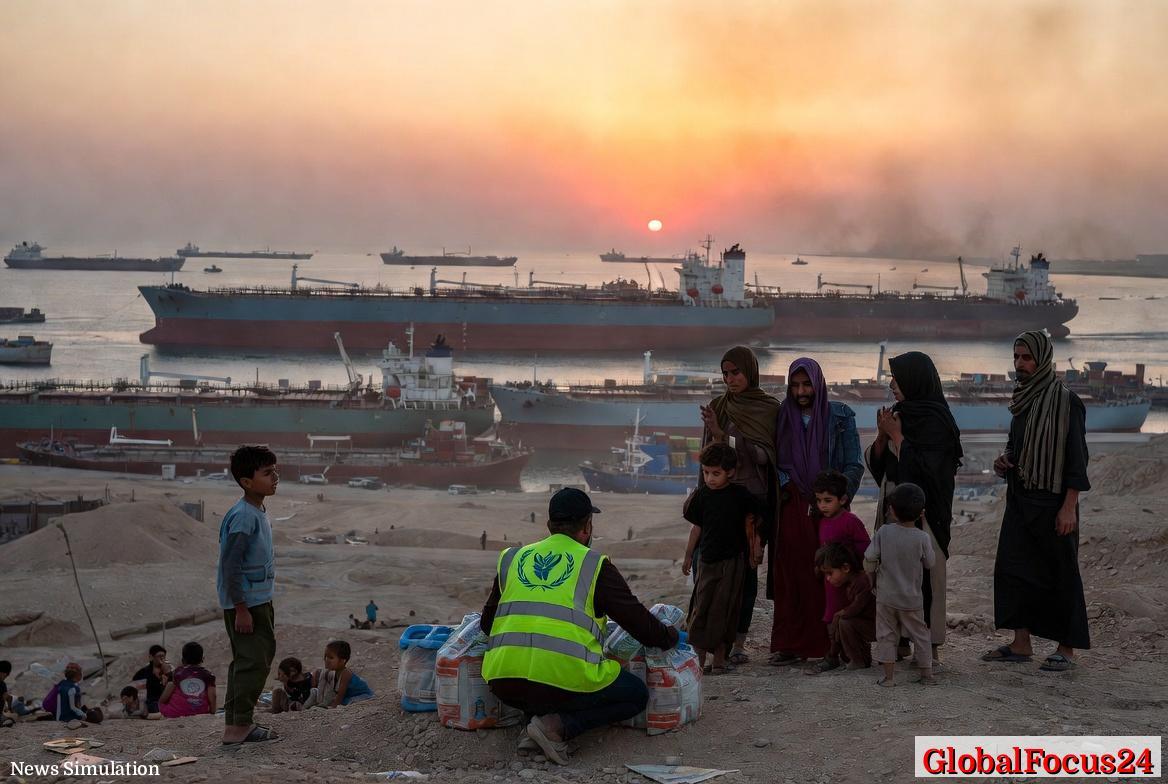
Strait of Hormuz Disruption Threatens Global Food Security, Puts 45 Million More at Risk of Hunger
Strategic Chokepoint Faces Prolonged Disruption
The Strait of Hormuz, one of the world’s most critical maritime corridors, has emerged as a focal point of concern for global food security. A prolonged disruption of shipping through the narrow waterway—responsible for transporting a significant share of the world’s oil and liquefied natural gas—could have cascading consequences far beyond energy markets. Current projections indicate that if the blockage persists until mid-year, an additional 45 million people could face heightened risk of hunger, intensifying an already severe global food crisis affecting more than 300 million individuals.
The strait, situated between Oman and Iran, connects the Persian Gulf with the Arabian Sea and is essential for energy exports from major producers such as Saudi Arabia, the United Arab Emirates, Iraq, and Kuwait. Any sustained interruption not only disrupts fuel supply chains but also triggers price shocks that reverberate across agriculture, transportation, and food distribution systems worldwide.
Energy Prices and Food Systems Interconnected
The link between energy and food security is both direct and deeply entrenched. Modern agriculture depends heavily on fuel for machinery, irrigation, processing, and transport. Fertilizer production, in particular, relies on natural gas as a primary input. When energy prices spike, fertilizer costs rise, leading to reduced usage by farmers and, ultimately, lower crop yields.
A disruption in the Strait of Hormuz would likely push oil prices significantly higher. Historical precedents offer insight into the scale of potential impact. During past geopolitical tensions in the region, even temporary threats to shipping lanes have driven oil prices up by 10 to 20 percent within weeks. A sustained blockage could result in far steeper increases, amplifying inflation across global food markets.
For import-dependent nations, especially those in Africa, the Middle East, and parts of Asia, higher fuel costs translate directly into more expensive food imports. Countries already grappling with currency depreciation and debt burdens would face compounded challenges, as essential staples become less affordable for both governments and consumers.
Vulnerable Regions Face Disproportionate Impact
The projected rise in hunger risk is not evenly distributed. Regions with fragile economies and existing food insecurity are expected to bear the brunt of the crisis.
Sub-Saharan Africa remains particularly vulnerable. Many countries in the region rely heavily on imported grains and cooking fuel. In nations such as Somalia, Sudan, and Ethiopia, where conflict and climate shocks have already strained food systems, additional price increases could push millions closer to famine conditions.
In South Asia, densely populated countries like Bangladesh and Pakistan face similar risks. Both depend on imported energy and agricultural inputs, making them sensitive to global price fluctuations. Even modest increases in food prices can have large-scale effects on household food consumption due to limited income buffers.
The Middle East and North Africa region, despite its proximity to major energy sources, is also highly exposed. Several countries in the region import large quantities of wheat and other staples. Past food price spikes have contributed to social instability, underscoring the broader implications of supply disruptions.
Historical Lessons from Previous Supply Shocks
The potential consequences of a prolonged disruption echo past global crises. The 2007–2008 food price crisis, driven by a combination of high oil prices, biofuel demand, and supply constraints, pushed millions into poverty and triggered unrest in multiple countries. Similarly, the 2011 surge in food prices, partly linked to energy costs, coincided with widespread social upheaval across parts of the Middle East and North Africa.
More recently, supply chain disruptions during the COVID-19 pandemic demonstrated how quickly global food systems can become strained. Lockdowns, labor shortages, and transportation bottlenecks led to price volatility and reduced access to food in many regions. The war in Ukraine further exacerbated the situation by disrupting exports of wheat, corn, and sunflower oil from one of the world’s key agricultural regions.
These events highlight a recurring pattern: when energy and logistics systems are disrupted, food security deteriorates rapidly, particularly in regions with limited resilience.
Shipping Bottlenecks and Supply Chain Delays
Beyond energy prices, the physical blockage of the Strait of Hormuz would create significant logistical challenges. The strait handles roughly one-fifth of global oil shipments, and its closure would force tankers and cargo vessels to reroute or delay transit.
Shipping congestion would increase freight costs and extend delivery times for essential goods, including food commodities. Ports in alternative routes could become overwhelmed, leading to further delays and inefficiencies. Insurance premiums for maritime transport would likely surge, adding another layer of cost that would ultimately be passed on to consumers.
Perishable goods are especially at risk. Delays in transportation can lead to spoilage, reducing available supply and driving up prices. This is particularly critical for regions that rely on imported fresh foods to supplement local production.
Economic Ripple Effects Across Global Markets
The economic implications extend beyond food and energy. Higher transportation and production costs can contribute to broader inflationary pressures, affecting everything from consumer goods to industrial inputs. Central banks may respond by tightening monetary policy, potentially slowing economic growth and increasing unemployment.
For low-income households, which spend a larger share of their income on food, the impact is immediate and severe. Even small price increases can force difficult choices between food, healthcare, and other essentials.
Governments may attempt to mitigate the effects through subsidies or price controls, but such measures can strain public finances, particularly in countries already facing fiscal constraints. In some cases, export restrictions may be introduced to protect domestic supply, further tightening global markets and exacerbating shortages elsewhere.
Regional Comparisons Highlight Uneven Resilience
Different regions exhibit varying levels of resilience to such shocks. High-income countries, while not immune to price increases, generally have stronger social safety nets and diversified supply chains. Strategic reserves of both energy and food can help cushion the immediate impact.
In contrast, low- and middle-income countries often lack these buffers. Limited storage capacity, dependence on imports, and weaker infrastructure make it harder to absorb disruptions. Small island developing states are particularly exposed due to their reliance on maritime transport and limited domestic production.
Latin America presents a mixed picture. Major agricultural exporters such as Brazil and Argentina may benefit from higher global prices, but import-dependent countries in Central America and the Caribbean could face increased food insecurity.
Urgent Need for Coordinated Response
The scale of the projected impact underscores the need for coordinated international action. Efforts to keep critical shipping lanes open are essential, as is the stabilization of energy markets. In parallel, measures to support vulnerable populations—such as food assistance programs and targeted subsidies—can help mitigate the immediate effects.
Investment in resilient agricultural systems is also crucial. Diversifying energy sources, improving storage and transportation infrastructure, and supporting local food production can reduce dependence on volatile global markets.
Humanitarian organizations are likely to play a central role in addressing the crisis, but their capacity is often constrained by funding limitations. As needs rise, ensuring adequate resources becomes increasingly important.
A Fragile Balance in Global Food Security
The potential blockage of the Strait of Hormuz highlights the interconnected nature of modern global systems. A disruption in a single geographic chokepoint can trigger a chain reaction affecting energy, transportation, and food supply across continents.
With more than 300 million people already facing hunger, the addition of tens of millions more would mark a significant escalation in the global food crisis. The situation serves as a stark reminder of the vulnerabilities embedded in current systems and the importance of proactive measures to safeguard food security in an increasingly uncertain world.