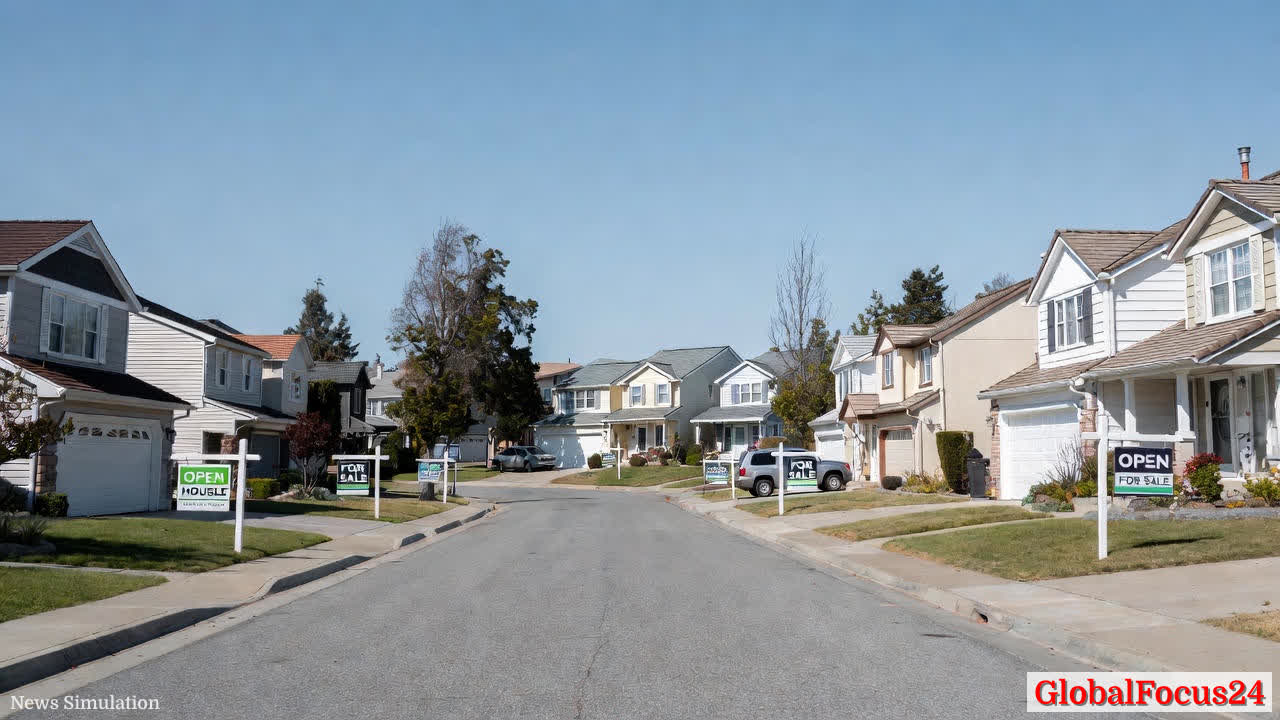
Homebuyers and Sellers Retreat as U.S. Housing Market Slows to a Standstill
The U.S. housing market is entering a pronounced slowdown, with both prospective buyers and sellers pulling back in a pattern not seen in over a decade. November data show the number of active homebuyers sinking to 1,425,100, the second-lowest level in at least 12 years and just above the pandemic-era trough of 1,379,487 in April 2020. Meanwhile, the supply side reflects a parallel retreat: sellers declined to 1,954,870, the lowest figure since February 2025, marking the sixth consecutive monthly drop. The resulting 37.2% imbalance—more sellers than buyers—resembles late-2021 dynamics near a market low and signals a broad freeze across housing activity.
Historical context helps explain why this juncture feels uniquely strained. The U.S. housing market has long operated on the tension between demand from buyers and availability from sellers. Following the extraordinary buyer enthusiasm and price appreciation of the post-pandemic period, many households gained confidence to buy or upgrade. Mortgage conditions, construction costs, and shifts in household formation all played into how quickly demand could respond to price levels. As affordability pressures intensified in recent years—ranging from higher mortgage rates to rising maintenance costs—buyers began to recalibrate, while potential sellers faced a more cautious calculus about listing their homes in a cooling market.
Economic impact of shrinking demand and supply
- Household balance sheets and consumer sentiment: When buyers retreat, housing-related spending and associated services often slow, influencing local economies that rely on real estate turnover, home improvement retail, and mortgage origination. A slower market can temper demand for financing, but may also ease pressure on monthly housing costs for new buyers in high-rate environments.
- Mortgage rates and financing: The trajectory of mortgage rates remains a central driver of market activity. Even modest shifts in rates can tilt the balance between buying now and waiting for a more favorable window. For households already stretched by housing costs, rate volatility adds a layer of uncertainty that can dampen purchase plans and elongate decision timelines.
- Home price momentum and regional disparities: Nationals frequently obscure regional realities. Some markets experience sharper price adjustments due to local supply constraints, job growth patterns, and demographic trends, while other areas may see more modest shifts. The current seller surplus relative to buyers suggests price discovery may become more cautious, with price reductions or slower appreciation appearing more often in listings.
Regional comparisons illuminate the uneven recovery and slowdown. In many coastal and metropolitan areas where demand historically outpaces supply, the backlog of buyers remains brisk but tempered by affordability constraints. In contrast, inland and smaller markets are often more sensitive to changes in mortgage costs, employment data, and inventory turnover, producing a wider range of outcomes from modest price stabilization to noticeable depreciation. This dispersion underscores the importance of local market intelligence for buyers, sellers, and policymakers aiming to understand the nuanced health of housing markets across regions.
Sellers’ perspective and strategies Despite a long period of home value appreciation, many sellers are reassessing expectations in a climate of slower demand and higher financing costs. Properties listed in the latest months commonly face longer days-on-market and more frequent price adjustments. For homeowners who need to transact, tactical considerations include pricing realism, curated property presentation, and flexible closing timelines to accommodate a market with less urgency from buyers. Real estate professionals emphasize the importance of accurate comparables, transparent disclosures, and targeted marketing to attract qualified buyers who can close without protracted negotiations.
Buyers’ perspective and strategies For buyers, reduced competition can create opportunities to secure more favorable terms, particularly in markets where inventory remains lean but not depleted. However, affordability remains a critical hurdle. Larger down payments, careful budgeting for rising insurance and maintenance costs, and a focus on total cost of ownership—beyond the sticker price—are essential for making sustainable purchasing decisions in a slower environment. Prospective buyers may also explore options such as fixed-rate financing for predictability, or consider longer-term plans that align with personal and financial goals rather than short-term market timing.
Impact on rental markets and housing policy A cooling market for sales can have a ripple effect on rental markets. Some would-be buyers transition to renting, potentially boosting rental demand and rents in areas with tight rental stock. Conversely, slower sales may relieve some price pressure in the ownership segment, offering alternative housing pathways for households that previously felt priced out. Policymakers watching affordability trends may consider strategies that support stable housing markets, including incentives for first-time buyers, investments in affordable housing supply, or adjustments in lending standards to balance risk and accessibility.
Economic indicators and market signals to monitor
- Inventory dynamics: Ongoing monitoring of active listings versus new inventory can reveal whether the current standstill is temporary or part of a broader structural shift. A sustained gap between buyers and sellers signals slow turnover and price adjustment cycles.
- Mortgage rate trajectory: Short- and long-term rate movements influence buyer confidence and lender risk appetites. Any significant changes can quickly reaccelerate demand or further dampen activity.
- Employment and wage trends: Local job creation and wage growth underpin housing affordability. Strong labor markets can support demand even in higher-rate environments, while slowing employment may dampen it further.
- Home-price trajectories: Understanding whether prices stabilize, appreciate at a slower pace, or decline will determine buyer sentiment and seller expectations in subsequent months.
Public reaction and market sentiment The current market climate has elicited a pragmatic response from households, brokerages, and lenders. Buyers who once perceived urgency to lock in historically low mortgage costs are recalibrating expectations, while sellers weigh the certainty of a closing timeline against the risk of extended market exposure. Real estate professionals report a cautious optimism in markets where inventory is improving and interest costs are tempered, balanced by a pragmatic approach to pricing and marketing. The sense of urgency that once characterized the market’s spring and summer seasons has softened, replaced by a more deliberate, data-driven decision-making process.
Conclusion: navigating a transitional housing market The present slowdown reflects a confluence of affordability challenges, financing costs, and evolving consumer expectations. While the numbers depict a market retreat, they also reveal opportunities for strategic buyers and responsive sellers who align pricing, terms, and timing with current conditions. The regional variations underscore the need for localized analysis and tailored strategies. As policymakers and financial institutions monitor indicators, the housing ecosystem remains adaptable, with both buyers and sellers seeking stability in a climate of gradual rebalancing. The coming months will clarify whether the current standstill represents a temporary pause within a broader expansion cycle or a longer-term recalibration of housing demand in the United States.